Arduino coding kit
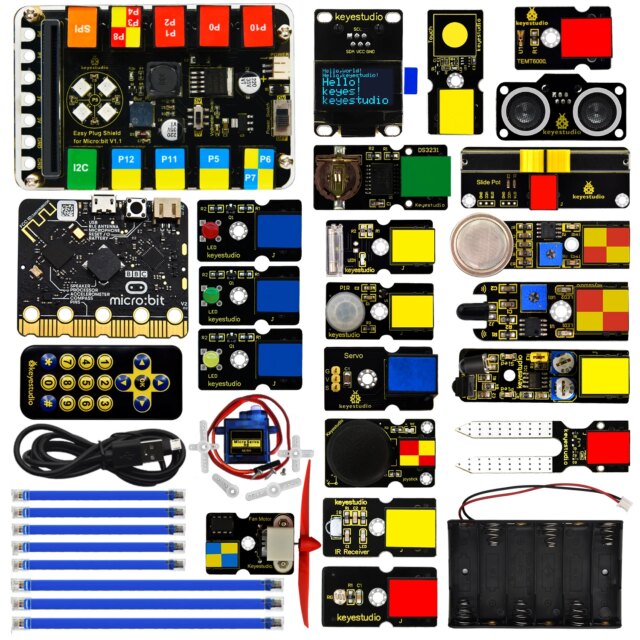
Designed for project-based learning, this Arduino coding kit helps students explore electronics, programming, sensors, and automation through simple EASY PLUG connections. Moreover, the RJ11-style module system reduces wiring mistakes, so learners can focus on coding logic and experiment results.
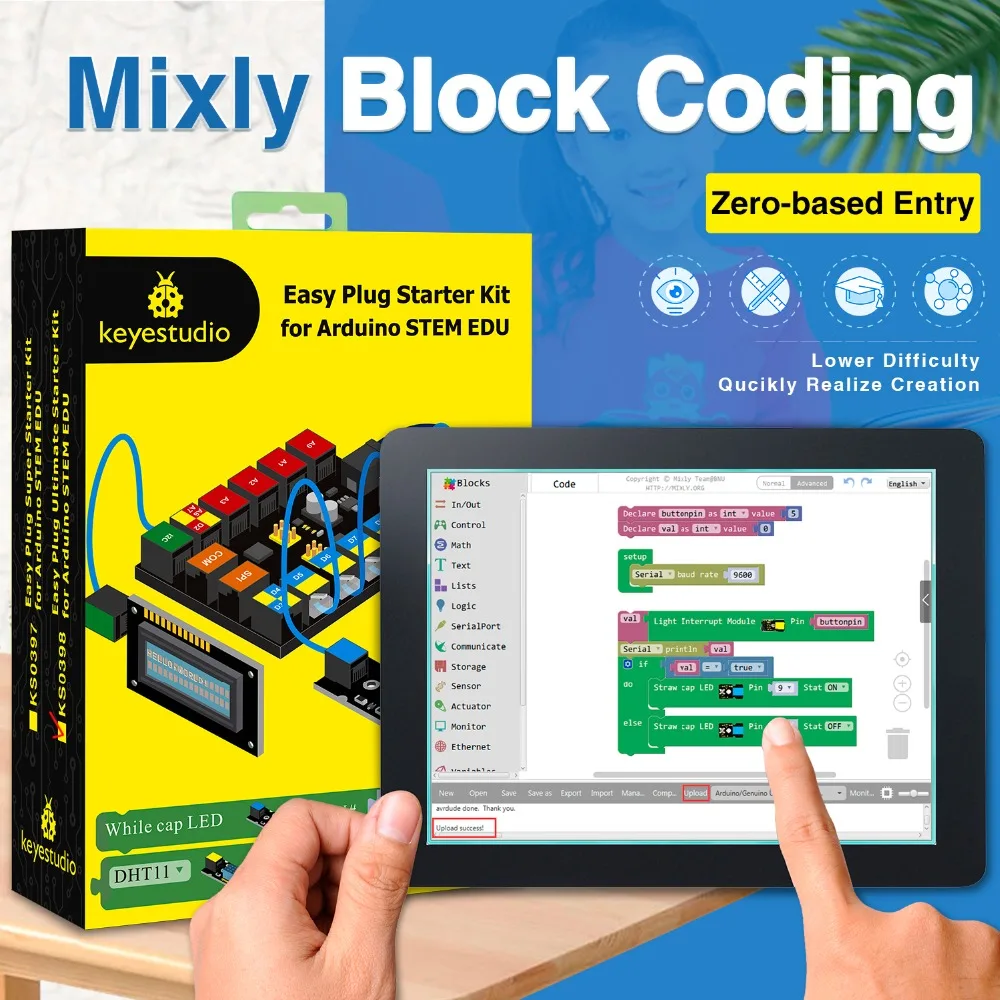
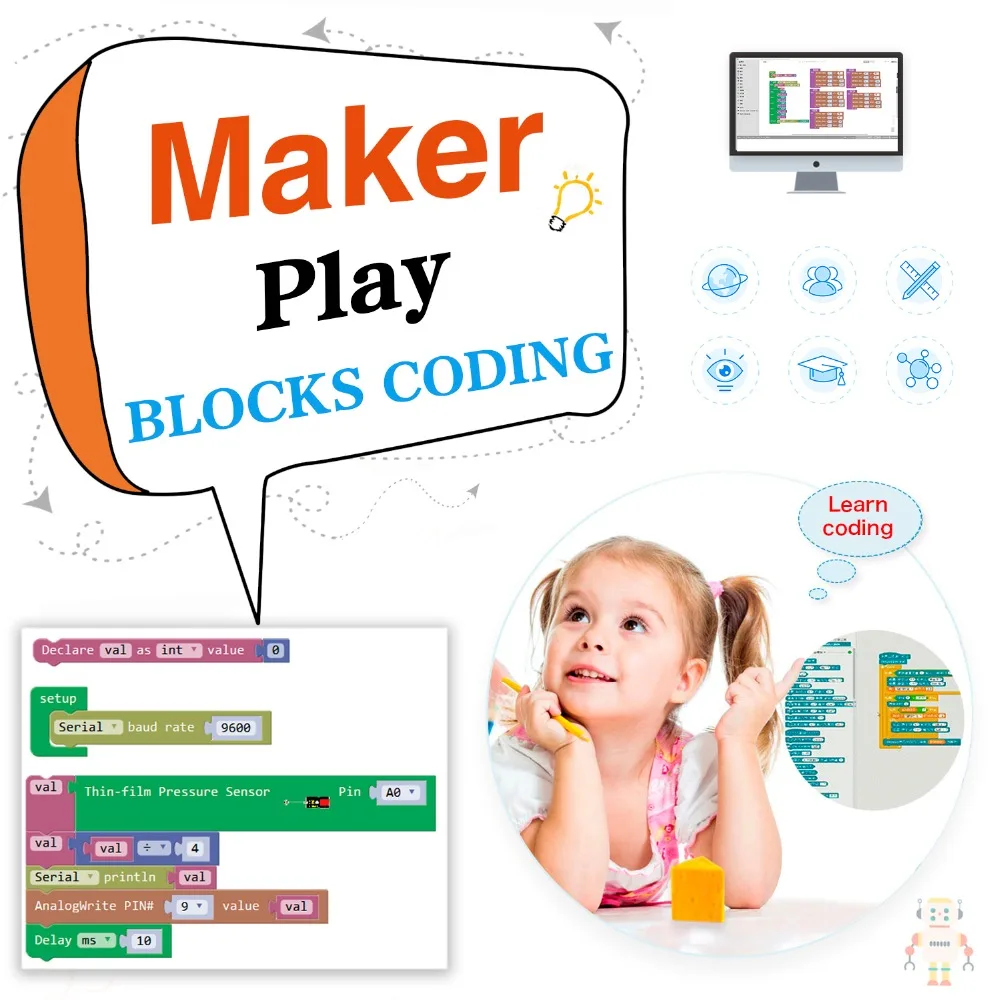
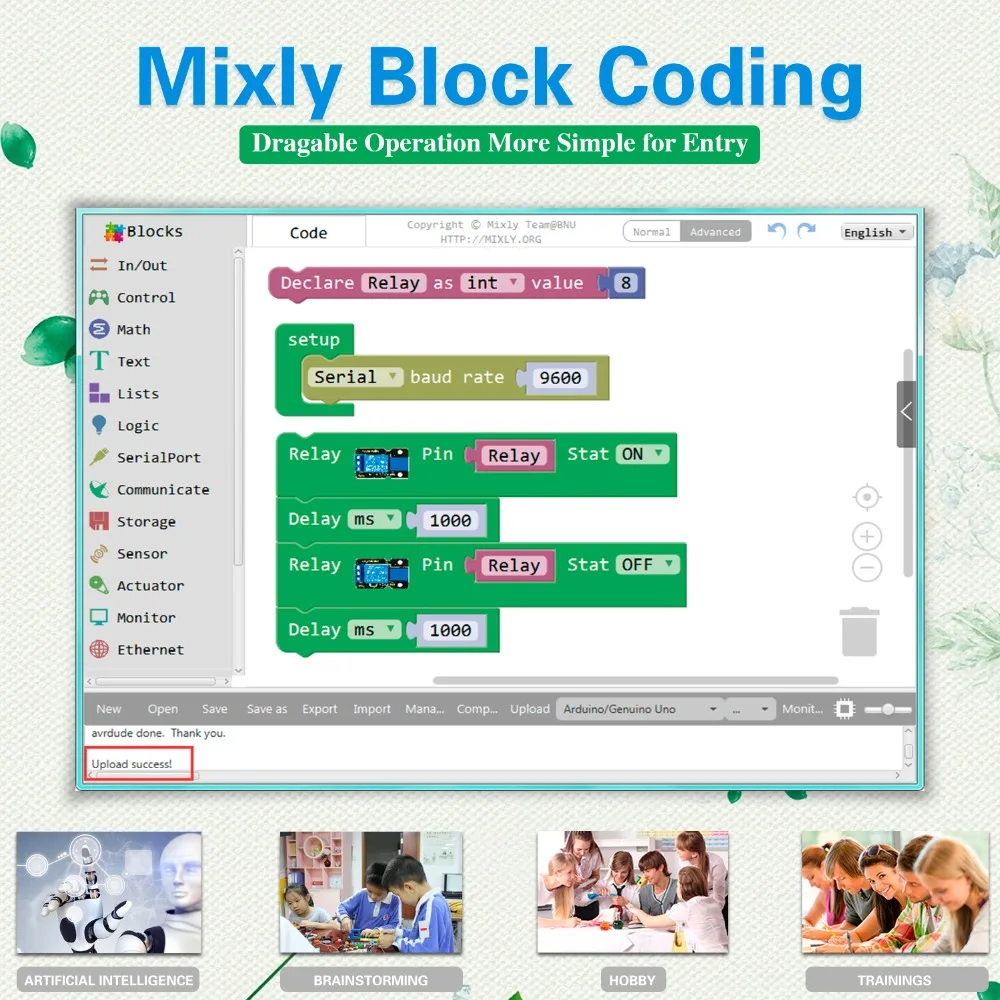
Built for Arduino STEM education, the kit supports Mixly block programming, while it also introduces learners to the structure of Arduino-based control. Therefore, beginners can start with visual coding before they move toward more advanced programming concepts.
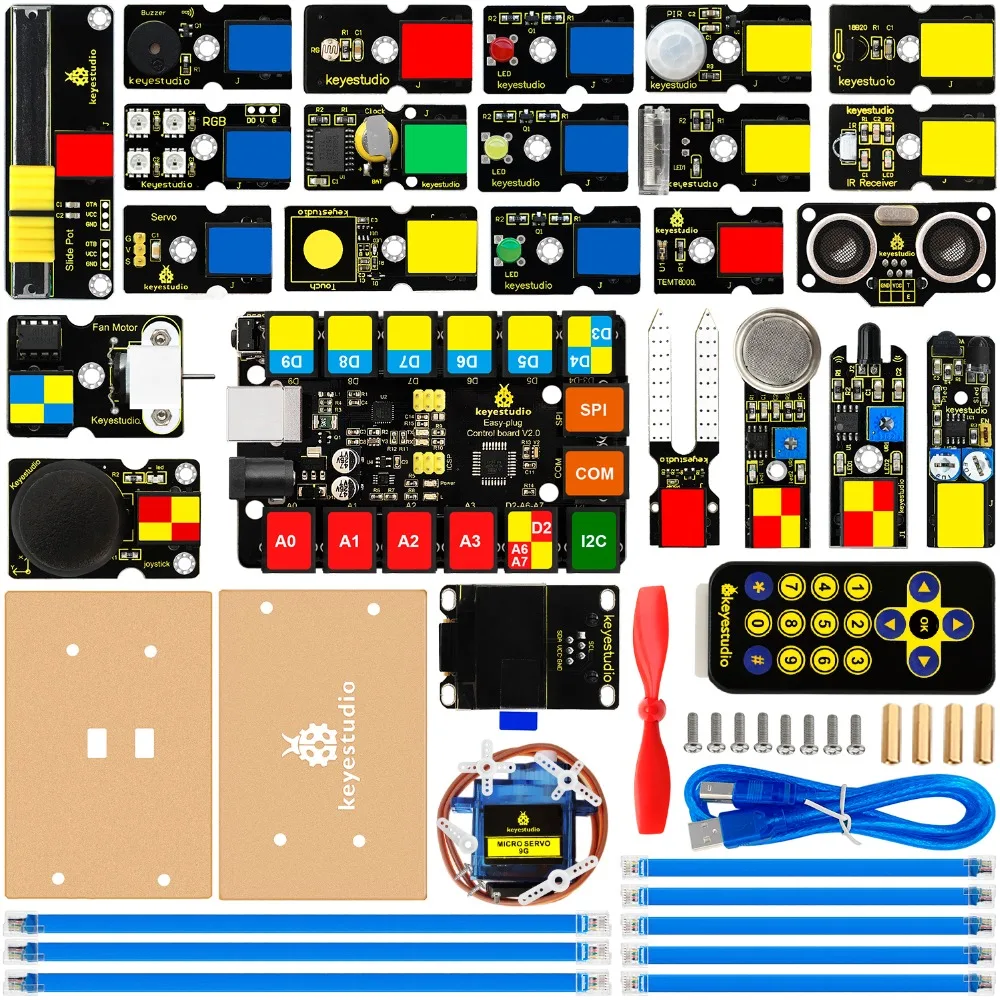
Through guided experiments, students can test light, sound, touch, flame, motion, gas, distance, temperature, time, and infrared signal activities. Additionally, the included project path supports gradual learning from a basic “Hello World” activity to more complex sensor and display applications.
Because the kit includes multiple modules and 22 tutorial-style projects, teachers can build complete STEM lessons around coding, electronics, science observation, and engineering design. As a result, this product is useful for classrooms, coding clubs, homeschool programs, maker spaces, and beginner robotics labs.
Scientific-Style Specifications
| Specification | Details |
|---|---|
| Product type | Arduino-compatible educational electronics starter kit |
| Product series | Keyestudio EASY PLUG Ultimate Starter Kit |
| Model reference | KS0398 |
| Learning platform | Arduino STEM EDU with Mixly block coding |
| Programming method | Mixly graphical programming with Arduino learning pathway |
| Connection method | EASY PLUG modular cable connection |
| Learning method | Sensor input, programmed processing, and electronic output |
| Tutorial support | 22 guided projects from basic to complex activities |
| Main learning fields | Coding, electronics, sensors, robotics basics, automation, and STEM projects |
| Input modules | Light, knock, capacitive touch, flame, obstacle, slide, PIR motion, joystick, water, gas, ultrasonic, temperature, clock, and IR-related modules |
| Output modules | LED, buzzer, servo, RGB light, display, and signal-response modules |
| Recommended users | Students, teachers, beginners, STEM labs, coding clubs, and homeschool learners |
| Skill level | Beginner to intermediate |
| Classroom value | Supports observation, testing, debugging, teamwork, and project presentation |
Subjects Covered by This Product
Arduino Programming: Students learn sequences, loops, conditions, variables, input reading, and output control. Furthermore, Mixly block coding makes programming more accessible because learners can organize logic visually before writing text-based code.
Electronics Fundamentals: Learners explore how sensors, actuators, displays, and control boards work together. Therefore, the kit helps students understand electronic input, processing, output, signal response, and circuit behavior.
STEM Education: The product connects science, technology, engineering, and mathematics through practical projects. Additionally, students apply measurement, comparison, prediction, testing, and redesign during each experiment.
Sensor Technology: Activities cover light sensing, sound or knock detection, capacitive touch, flame detection, motion detection, water response, gas sensing, ultrasonic distance measurement, and temperature reading. Consequently, students learn how digital systems collect real-world information.
Robotics and Automation: Obstacle avoidance, servo control, joystick input, PIR detection, and infrared receiving activities introduce automation principles. Moreover, learners can understand how smart devices respond to people, objects, distance, and movement.
Environmental Monitoring: Water, gas, light, flame, and temperature activities support science-based observation. Similarly, teachers can connect these projects to safety systems, weather discussions, smart homes, and environmental awareness.
Data Display and Communication: Display, clock, and infrared signal projects help learners show information and respond to transmitted signals. As a result, students practice communication, timing, feedback, and user-interface thinking.
Exact Activities Performed by This Product
Mixly Block Coding: Learners create programs by arranging visual coding blocks. Therefore, beginners can understand logic, sequence, and conditions without being blocked by syntax errors.
Hello World Programming: Students begin with a basic output project to confirm the board and software setup. Moreover, this first activity builds confidence before sensor-based lessons begin.
LED Light Control: Learners turn lights on and off, create blinking effects, and connect timing commands to visible output. As a result, students understand digital output and program timing.
Knock Detection: Students use a knock-related sensor to detect vibration or impact. Additionally, this activity introduces event-based programming and threshold response.
Light Measurement: Learners detect ambient light and compare brightness values. Consequently, they can build smart lighting activities or day-night response projects.
Buzzer Sound Control: Students program a buzzer to create tick sounds or alert signals. Therefore, lessons can cover audio feedback, warnings, and programmed timing.
Capacitive Touch Projects: Learners use touch input to trigger electronic responses. In addition, this activity supports interactive design and human-machine interface learning.
Flame and Fire-Related Experiments: Students test flame detection and response concepts. However, teachers should supervise these activities carefully and use safe classroom procedures.
Obstacle Avoidance: Learners detect nearby objects and program a response. Moreover, this activity supports beginner robotics, navigation logic, and smart device behavior.
Servo Motor Control: Students control angular movement with programmed commands. As a result, they explore motion control, mechanical response, and simple robotic movement.
Slide Position Reading: Learners use a slide input to change values or control outputs. Additionally, this activity introduces analog input and variable-based control.
RGB Light Projects: Students create color effects and visual alerts with RGB output. Therefore, they practice multi-output control and creative coding.
PIR Motion Detection: Learners detect movement in an area and trigger a response. Consequently, this activity supports security-system models and smart-room projects.
Joystick Control: Students use joystick input to control direction, values, or interactive outputs. Likewise, the activity supports game-style control and robotics foundations.
Water Detection: Learners create “I’m thirsty” or water-response activities using a water-related module. Moreover, this project connects coding with environmental observation.
Gas Leakage Detection: Students test gas-sensing concepts and programmed alerts. Therefore, teachers can introduce safety monitoring, sensor thresholds, and responsible technology use.
Ultrasonic Ranging: Learners measure distance using ultrasonic sensing. As a result, they practice measurement, comparison, obstacle detection, and automation logic.
Temperature Monitoring: Students read temperature data and use results in programs. Additionally, this activity supports science lessons, data collection, and environmental reporting.
Clock and Time Projects: Learners explore time-based functions with a clock-related module. Consequently, they can build timers, schedules, and time-display projects.
IR Signal Receiving: Students receive infrared signals and program responses. Moreover, this activity introduces remote-control systems and wireless input concepts.
How This Product Helps Students
Students benefit from this Arduino coding kit because they can see their programs create real physical results. Moreover, the EASY PLUG connection system lowers technical frustration and helps learners focus on logic, creativity, and problem-solving.
Hands-on tasks support different learning styles. For example, visual learners observe lights and displays, while active learners build, test, and improve working projects.
Problem-solving becomes more natural as learners adjust code, compare sensor readings, and debug project behavior. Consequently, students build confidence in coding, electronics, science, and engineering design.
How This Product Helps Teachers
Teachers can use this kit to create structured STEM lessons with clear objectives, visible outcomes, and practical assessment opportunities. Additionally, the 22-project learning path helps educators move students from simple coding activities toward more advanced sensor and automation projects.
Classroom preparation becomes easier because EASY PLUG modules reduce wiring complexity. Therefore, teachers can spend more time explaining concepts, guiding teamwork, and evaluating student understanding.
Assessment also becomes more meaningful because students can demonstrate learning through working outputs, sensor reactions, and project explanations. As a result, educators can evaluate coding logic, scientific thinking, collaboration, and creativity in one learning activity.