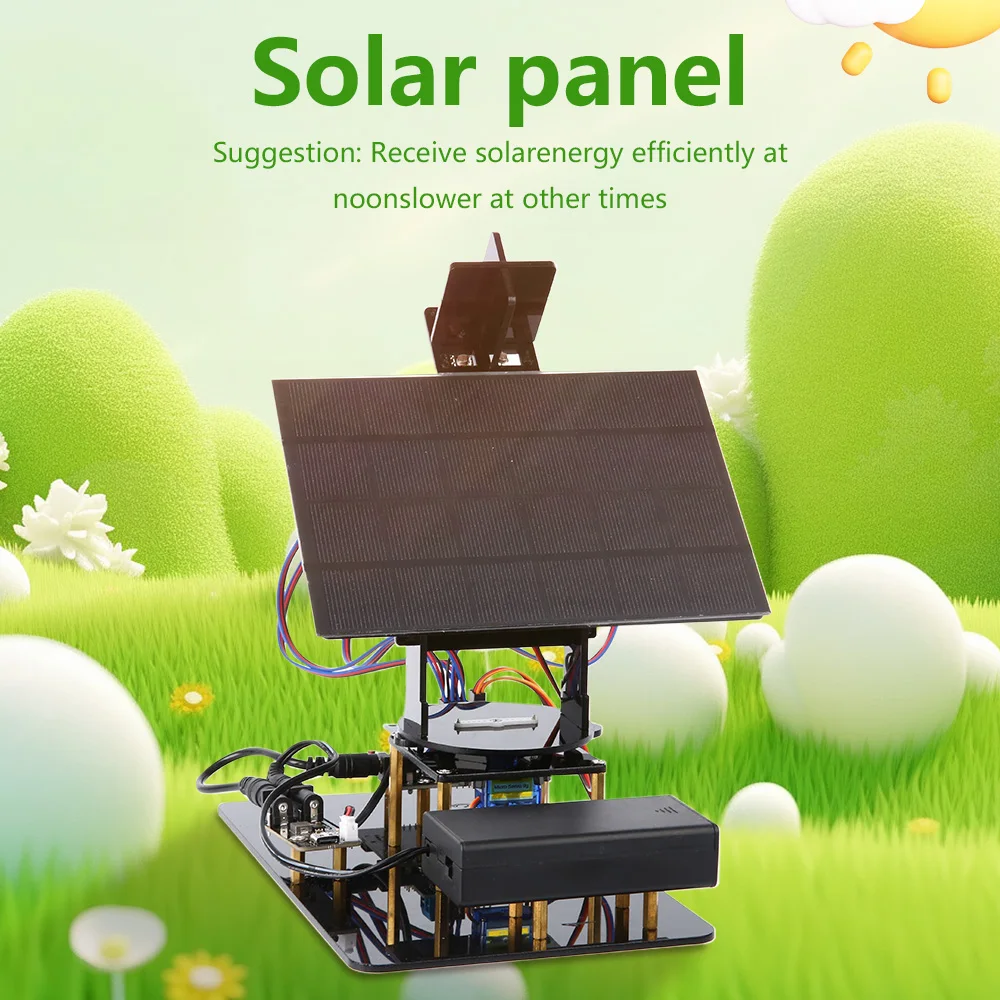

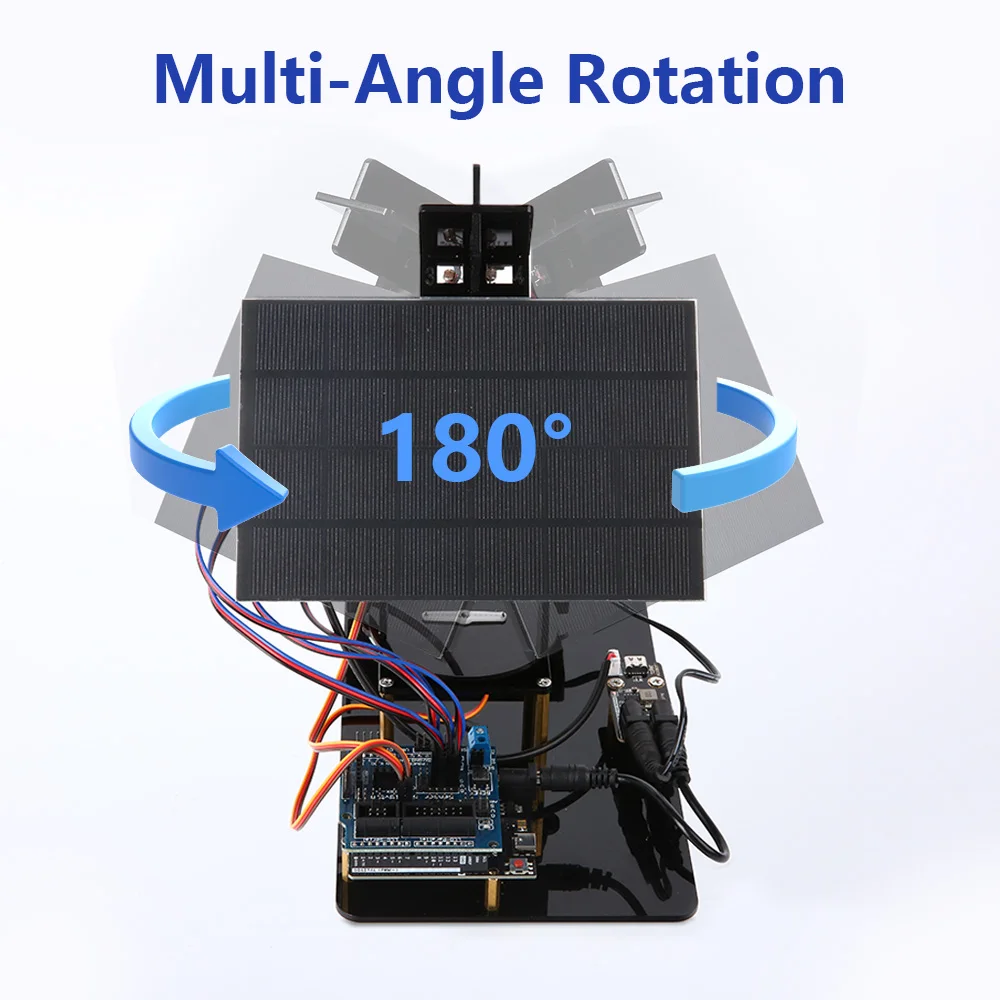
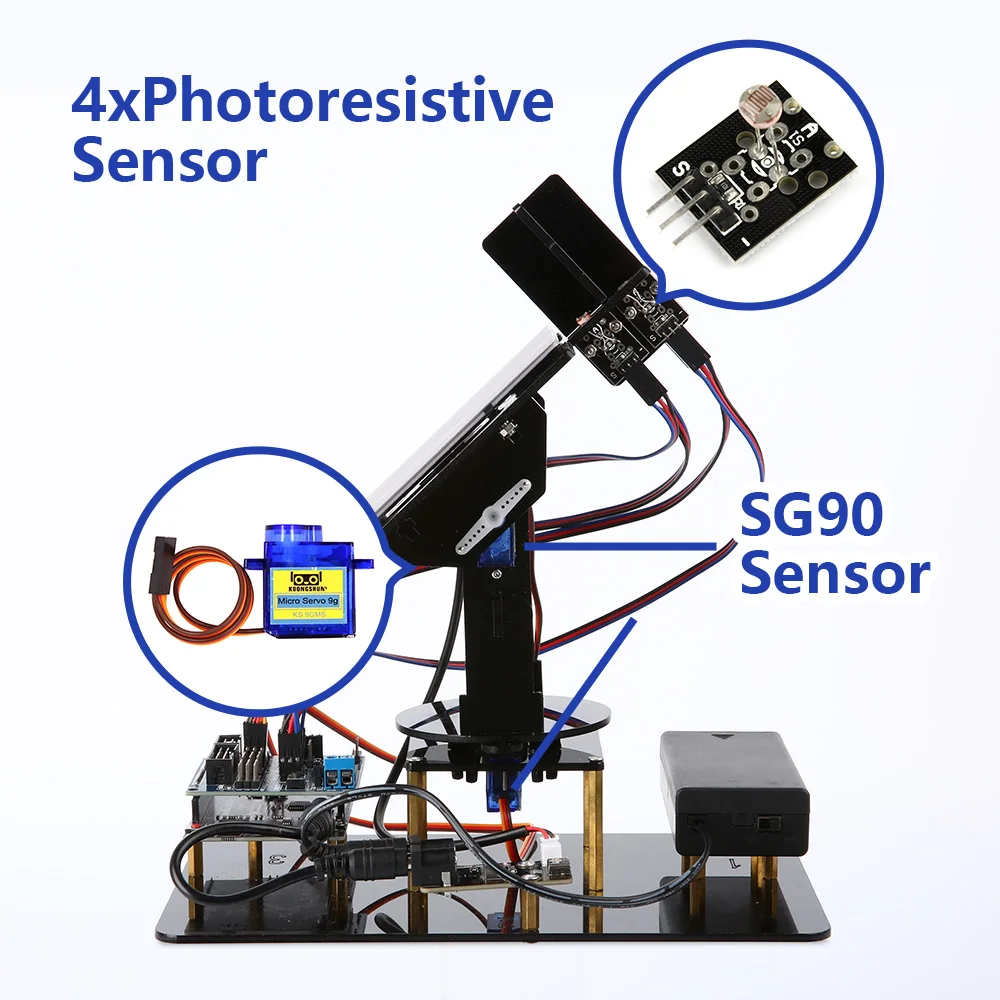
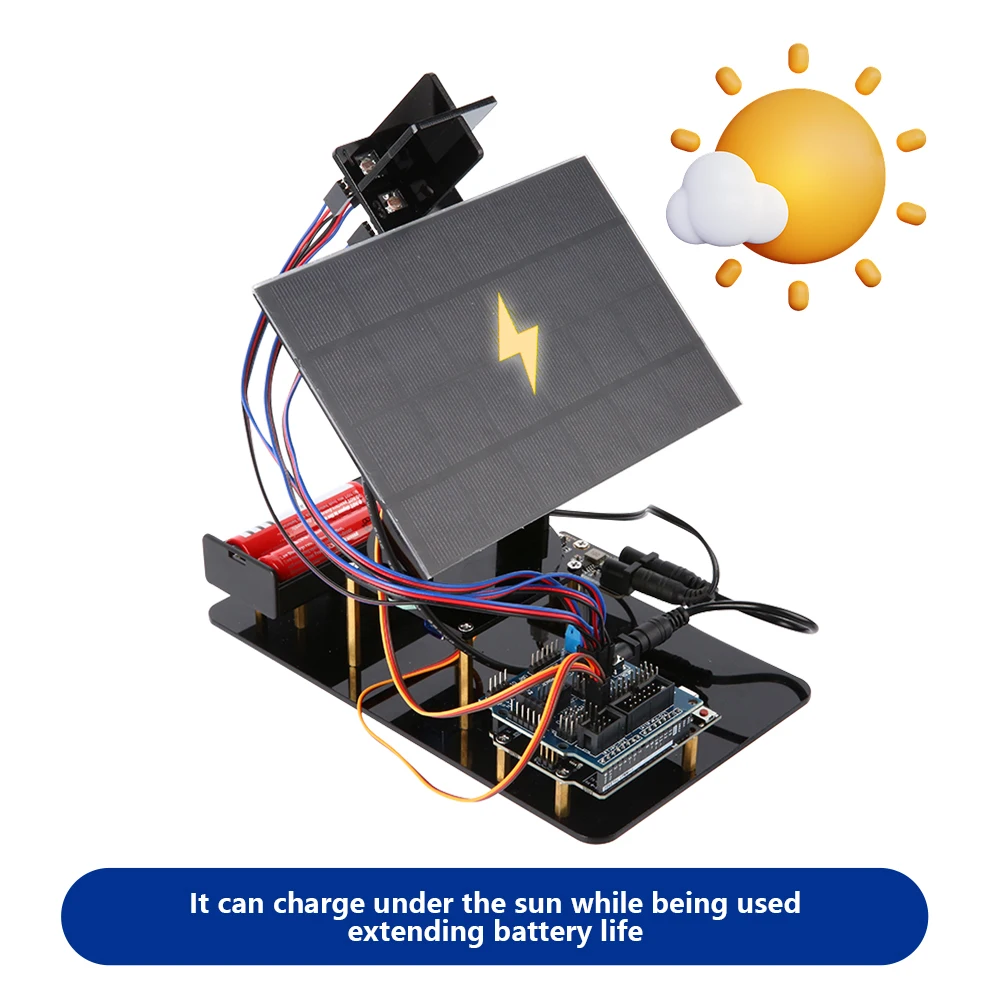
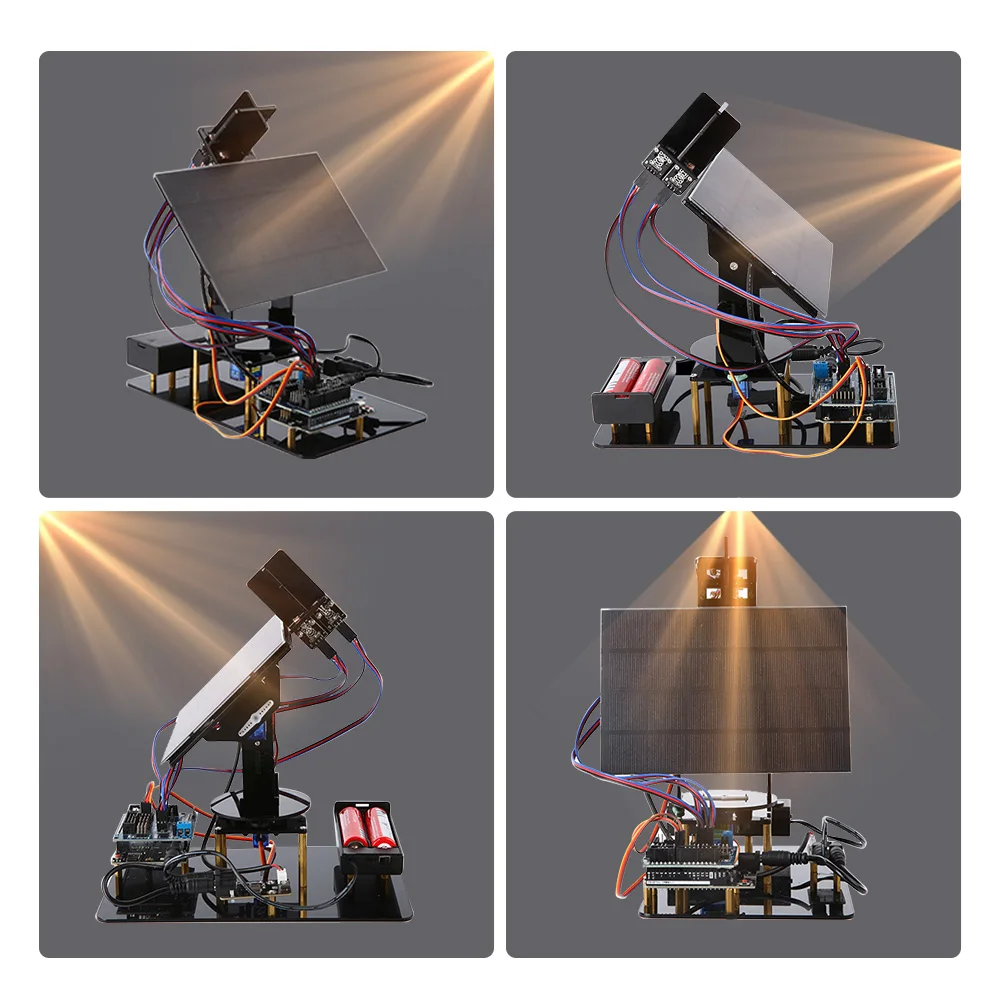
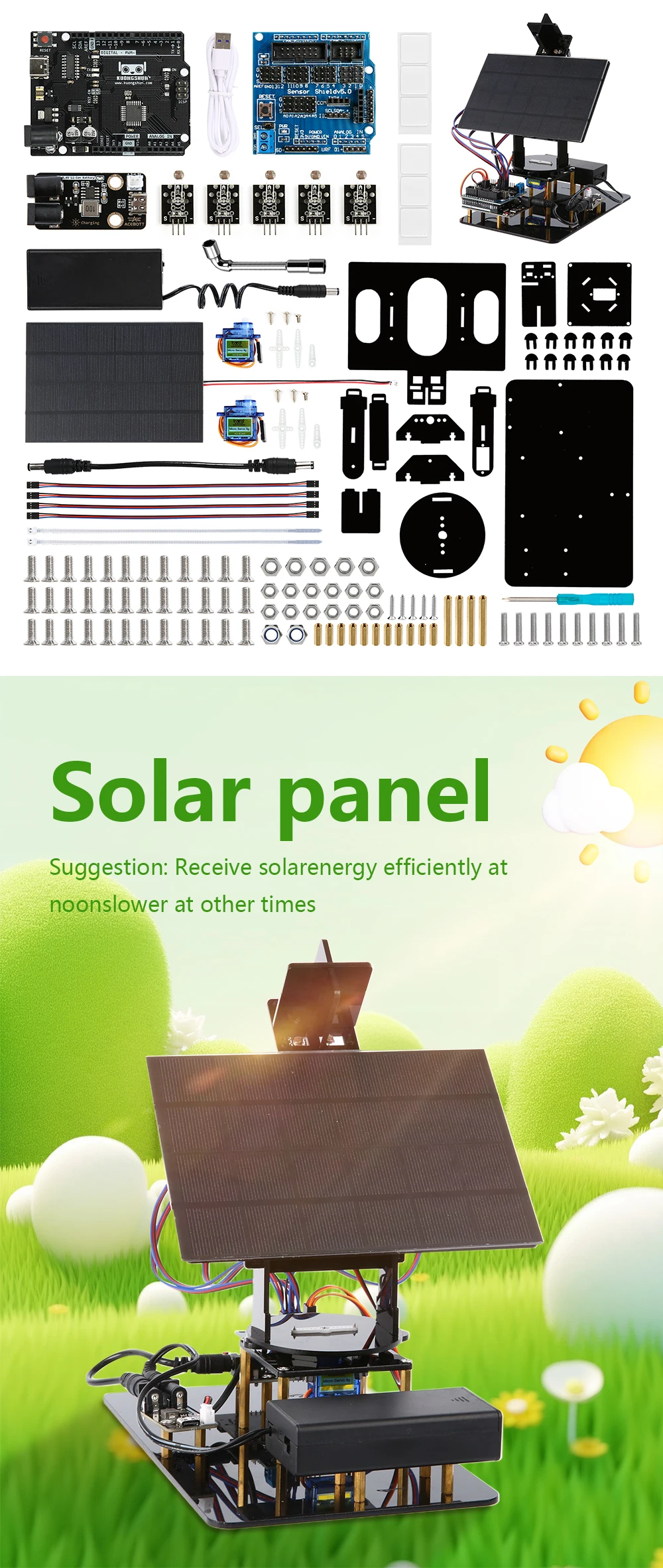
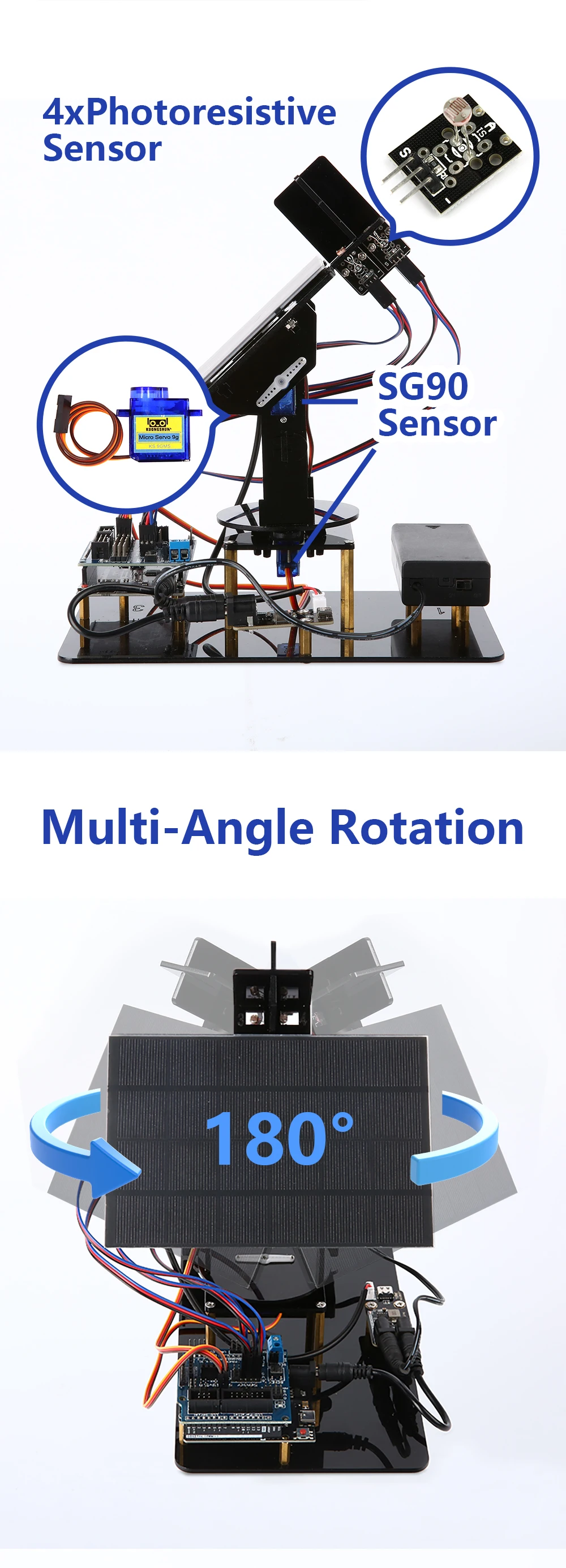
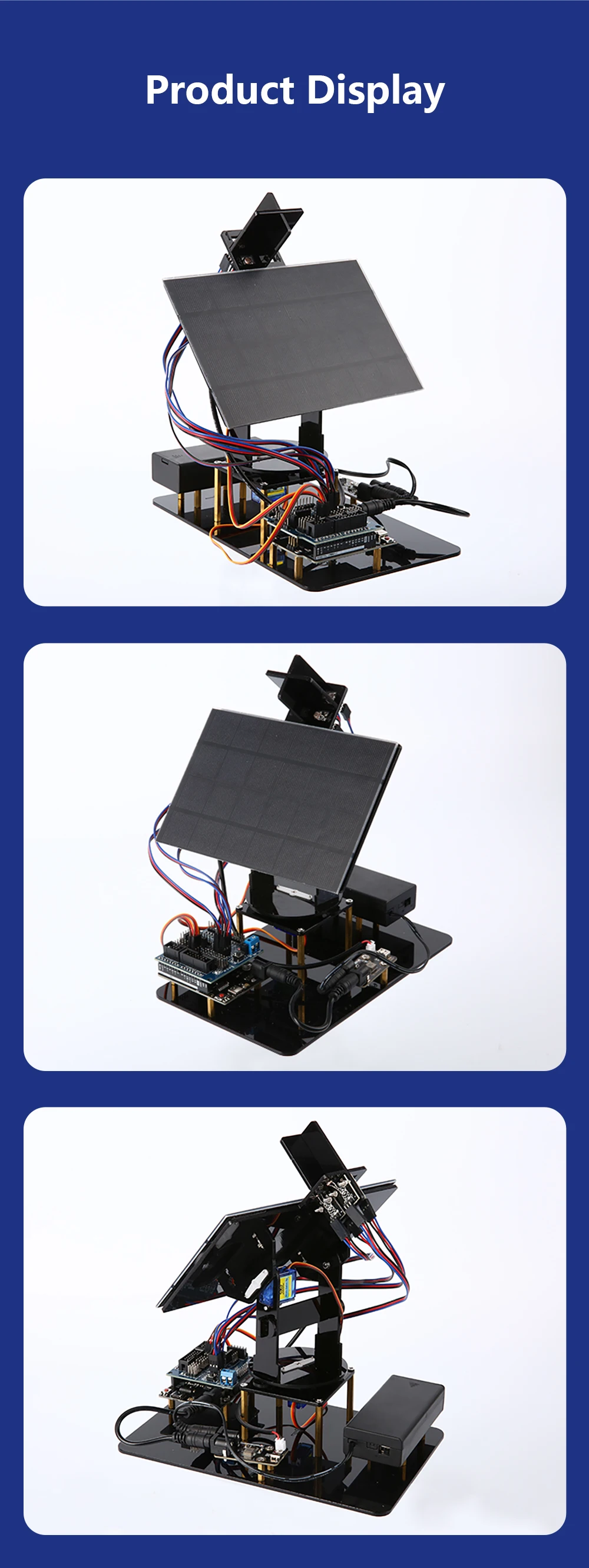
KUONGSHUN Age 8+ Educational kit Smart Solar Tracker System Tracking Starter Kit For Arduino STEM
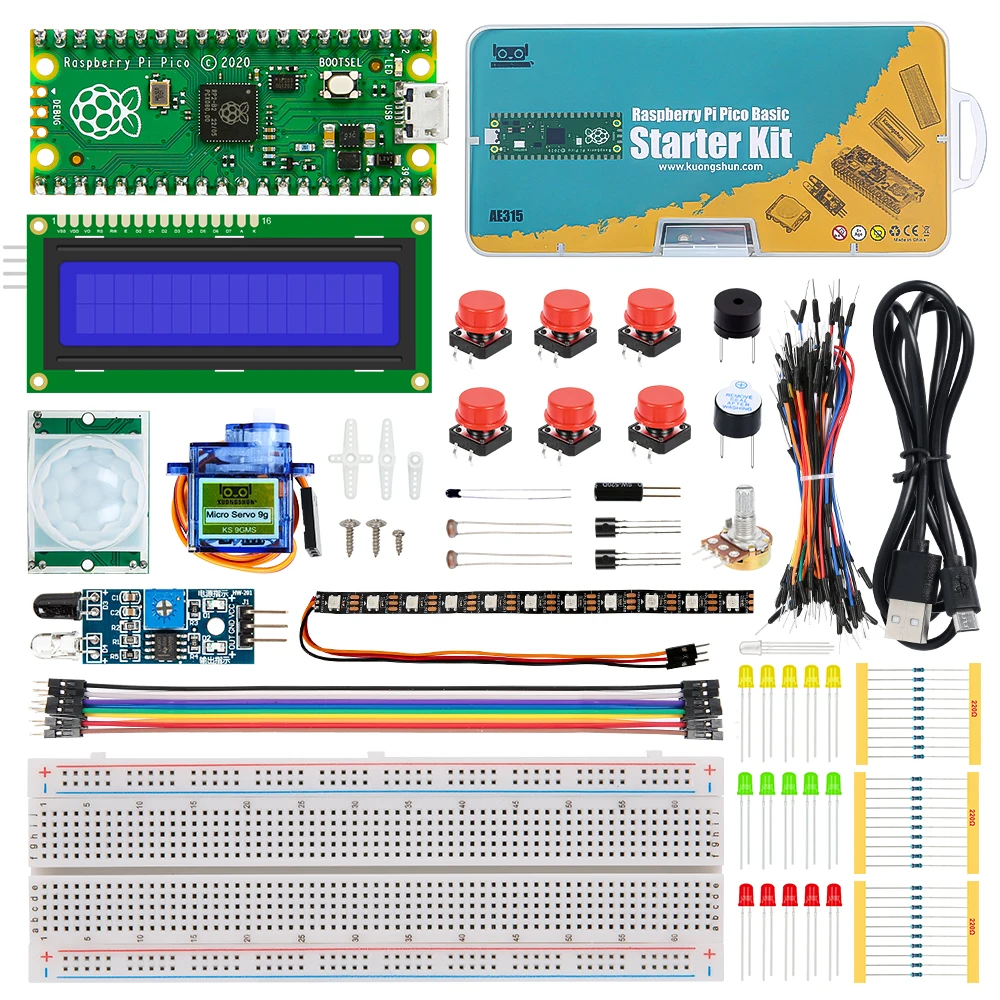
Starter kit that everyone can use to learn electronics
Electronics is not as complicated as you imagine especially with KUONGSHUN Starter Kit. For advanced users like professional lab engineers, electronic major students and experienced hobbyists compatible with Arduino projects, they can use this kit to do various kinds of tests and experiments with so many sensors available at hand.
This course and learning kit is designed for 8+ children and teenagers to Arduino-compatible boards,
shields, sensors, and components. If you just start making with Arduino, this kit could provide the
knowledge and components to create innovative projects.
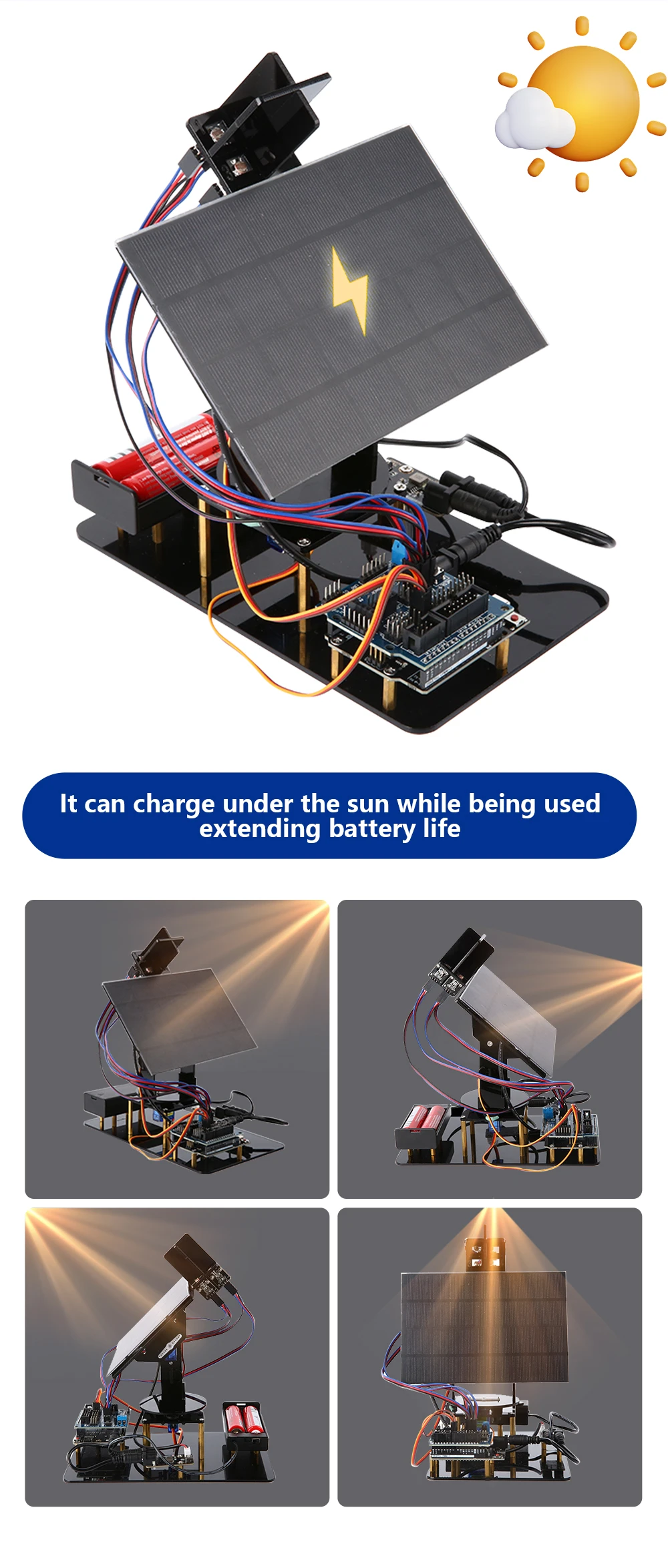
Motherboard power supply mode: ① Battery box power supply ② Charging module TYPE-C power supply (requires connection to the battery box)
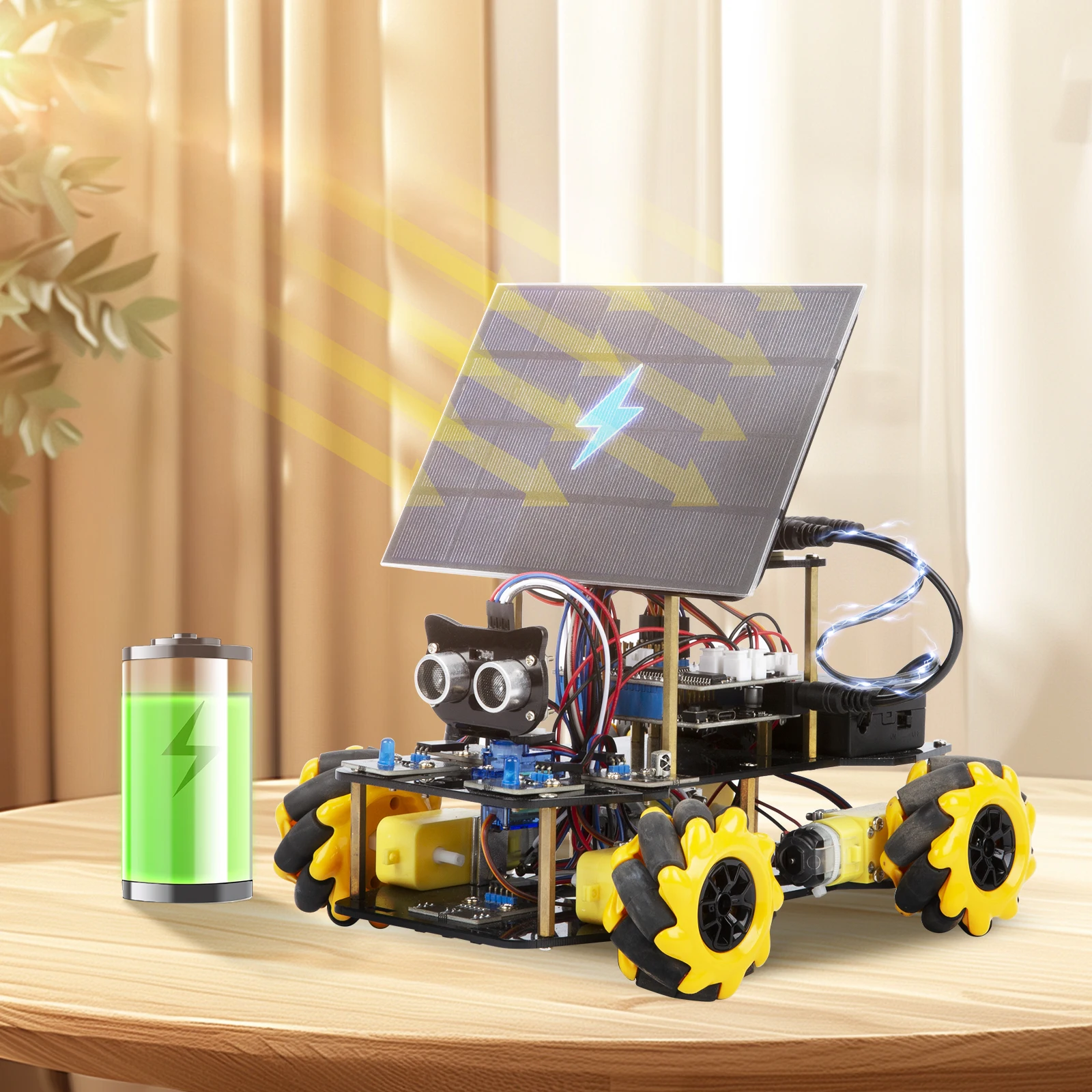
Charging methods: ① Solar energy ②TYPE-C
Advantages: ① Stable operation without overheating due to power supply. ② Can be used while charging

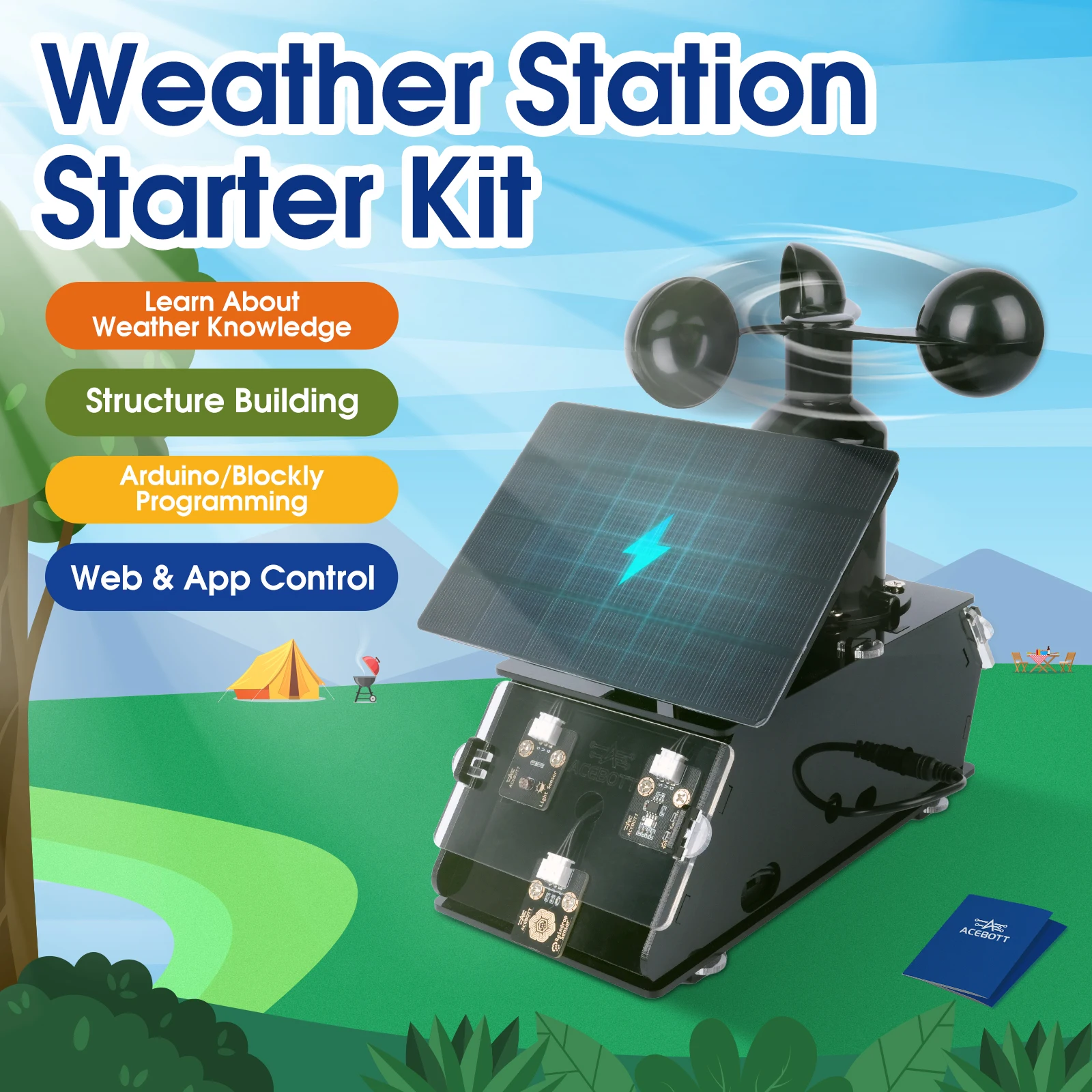
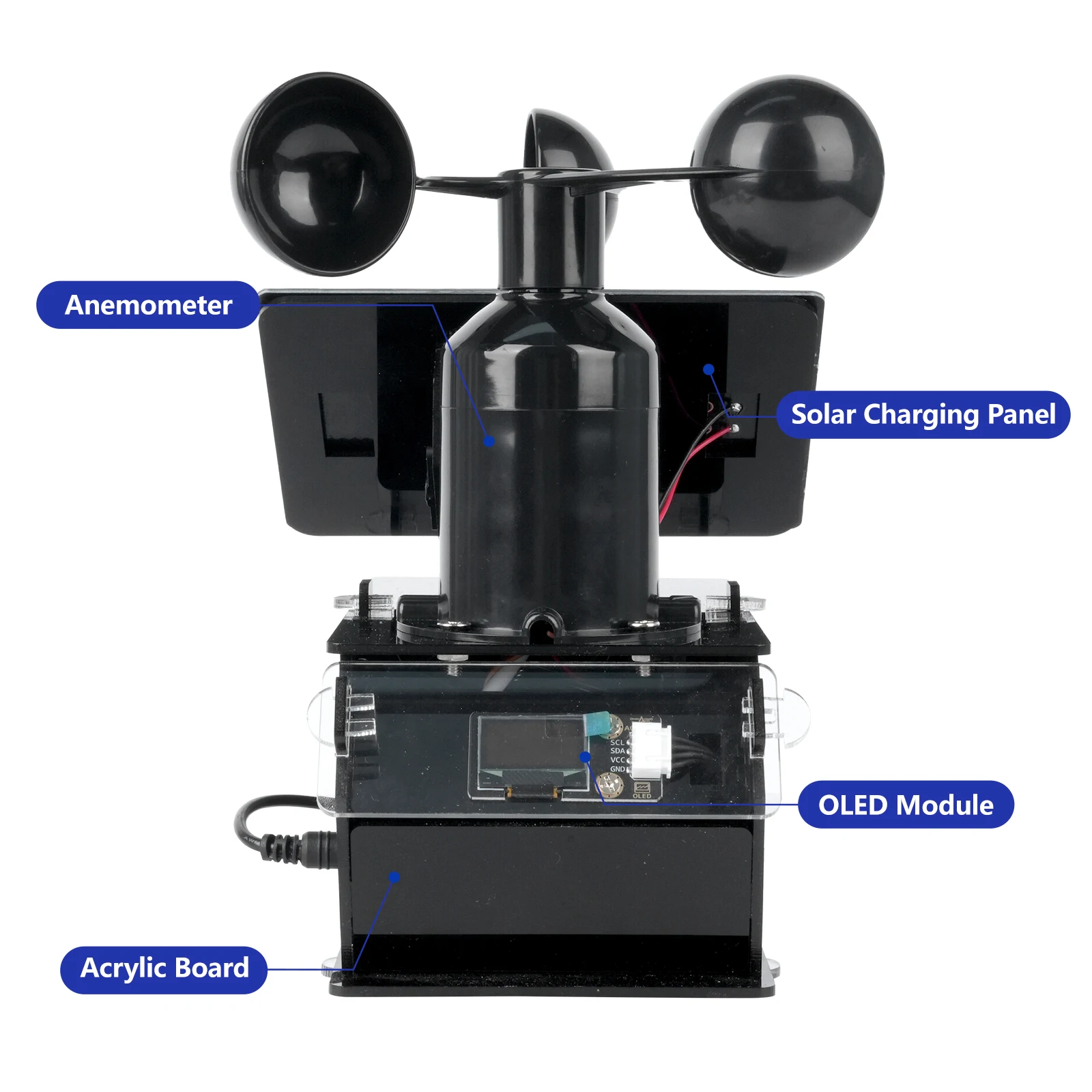
ACEBOTT QE011 STEM Weather Station Starter Kit
-
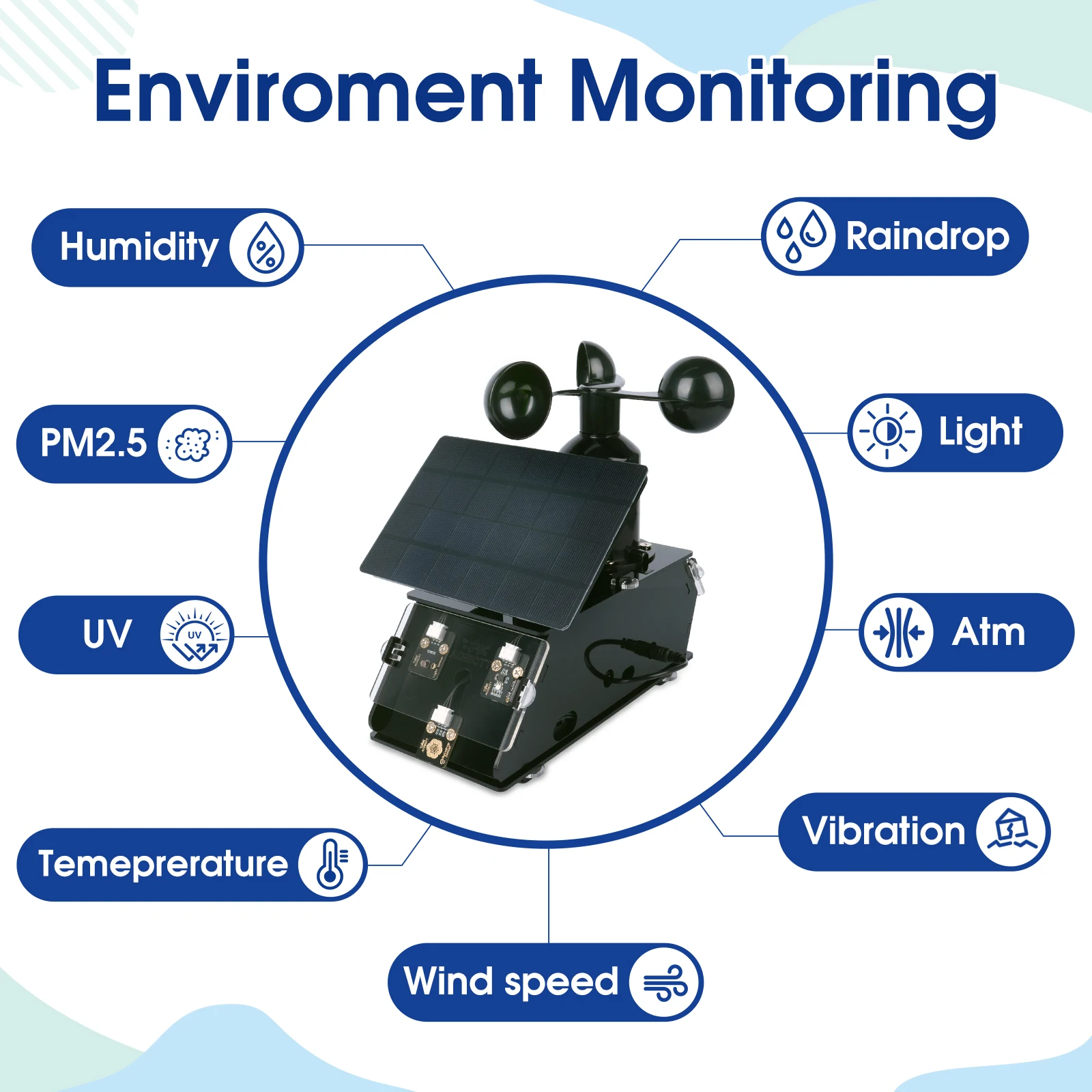
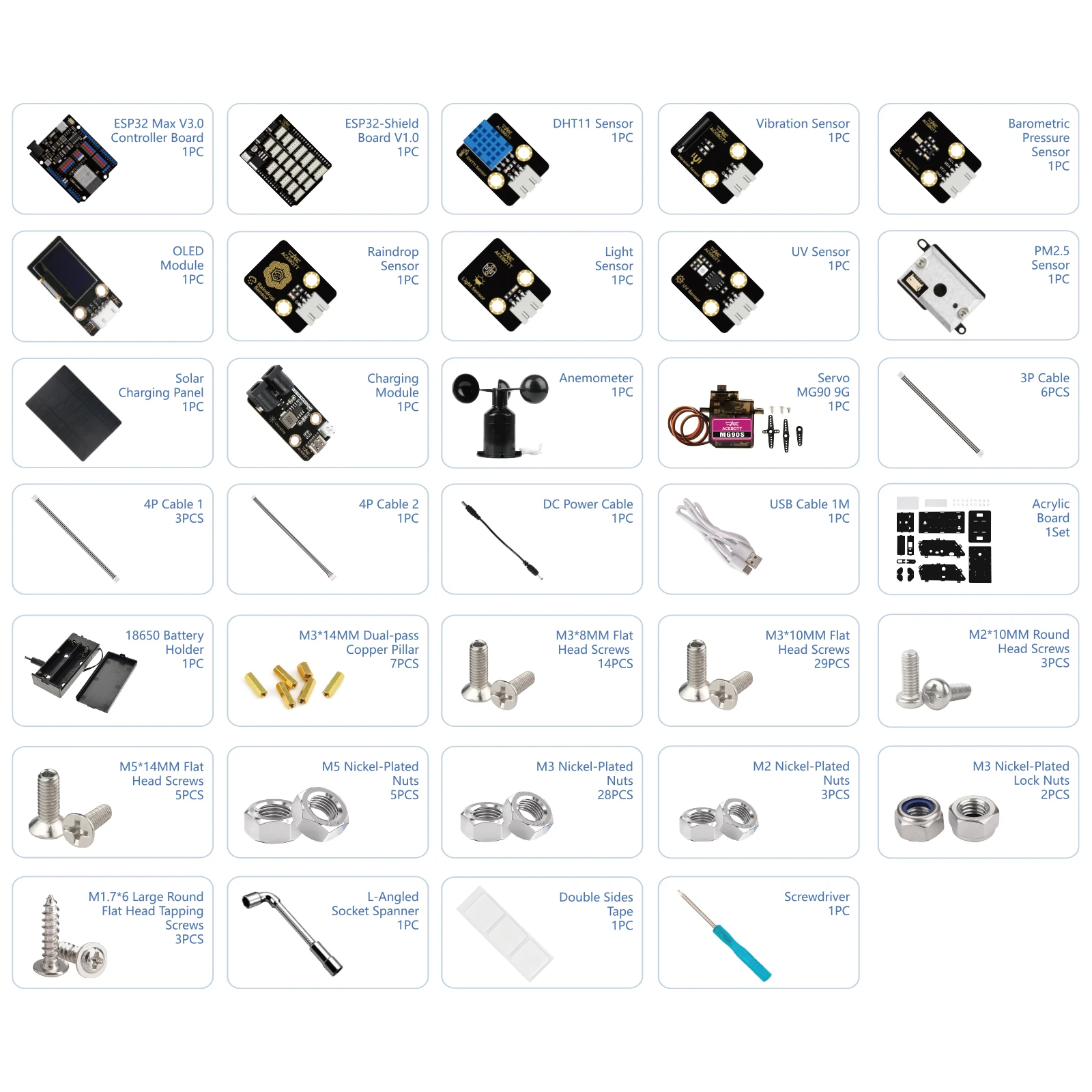
Advanced Weather Monitoring with 8 Sensors: Track 9 environmental parameters, including temperature, humidity, wind speed, UV, and air quality, for accurate and reliable weather data.
-
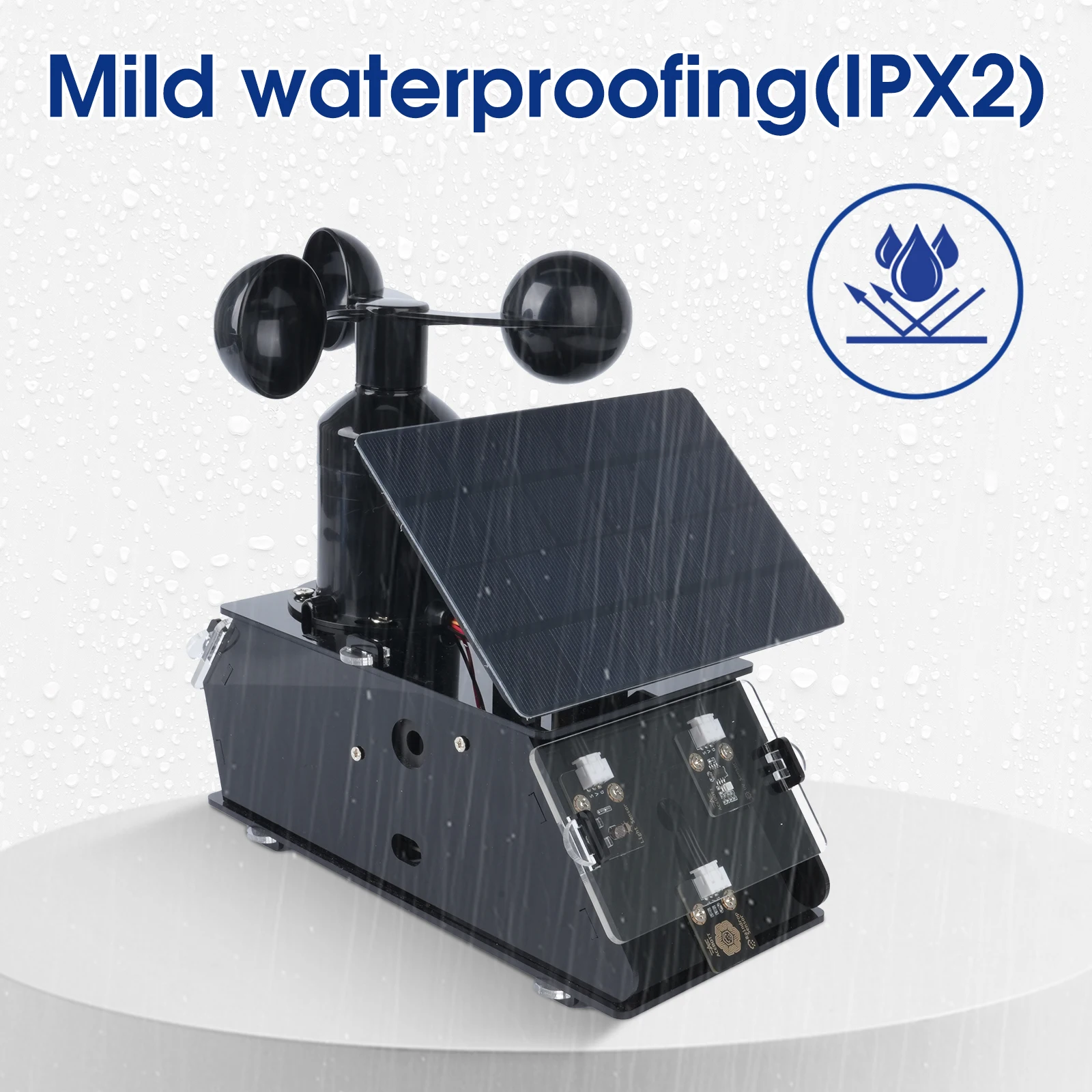
Waterproof & Durable Design (IPX2): Built for outdoor use, this weather station performs reliably even in humid or wet conditions, offering long-lasting performance.
-
High-Quality Construction: Made with premium materials, reinforced casing, precision sensors, and a durable MG90 metal servo for a robust and long-lasting product.
-
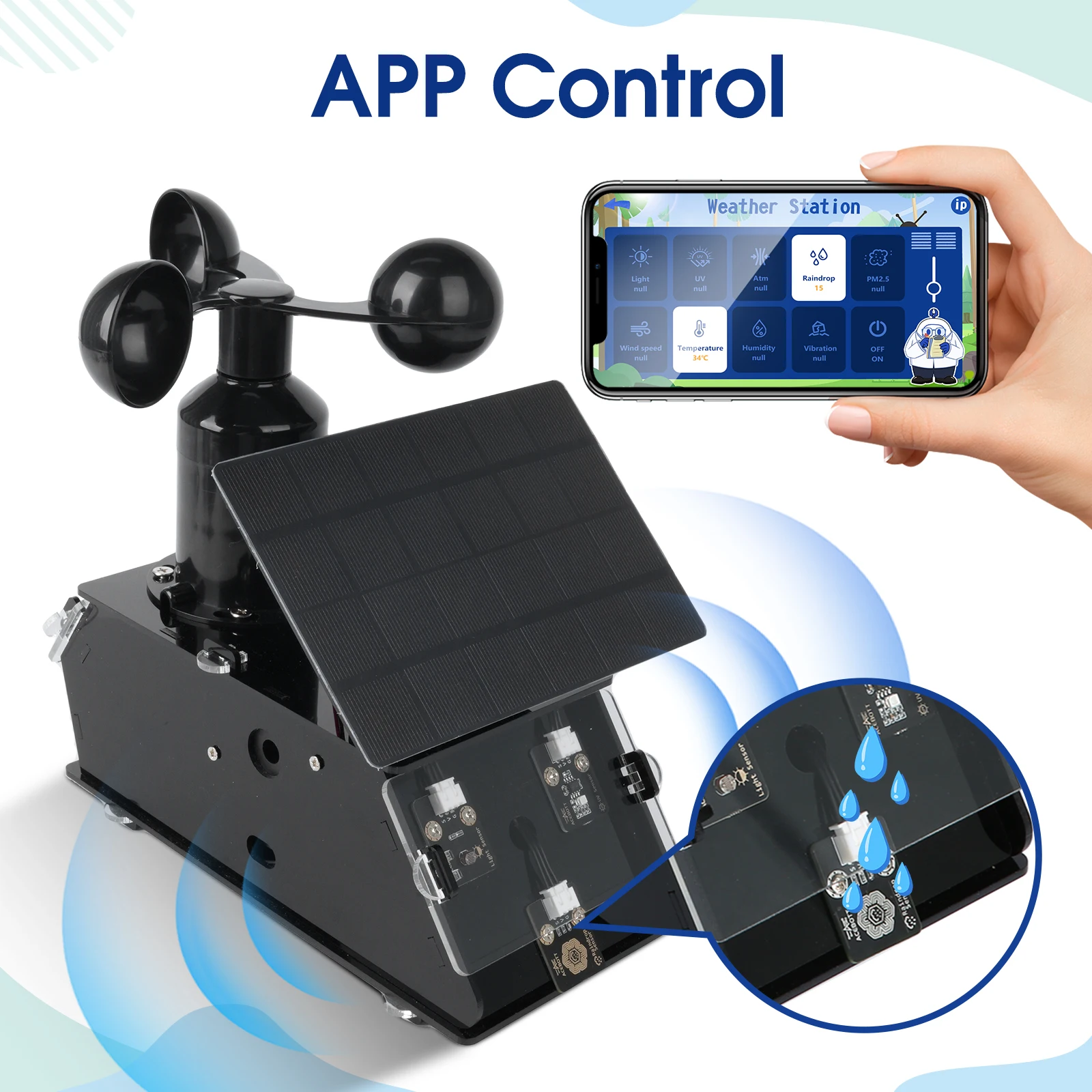
Convenient App Control: Monitor and control your weather station remotely via an intuitive mobile app, allowing for real-time weather updates and easy customization.
-
Hands-On STEM Learning: Students gain essential skills in weather monitoring, ESP32 programming, sensor integration, solar energy, and problem-solving—all while building a functional weather station.
What Can Students Learn with ACEBOTT Weather Station Coding Kit?
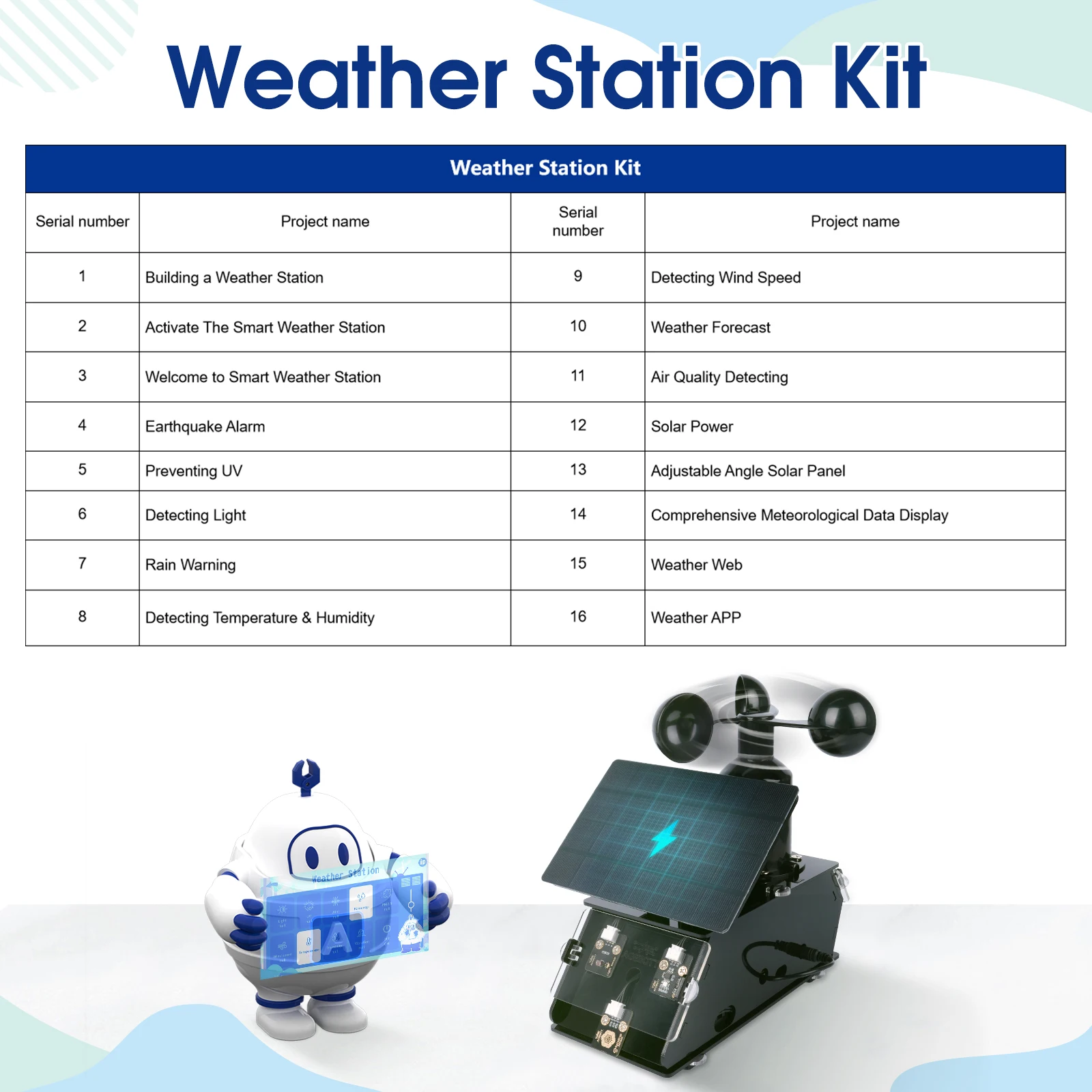
1. Weather Monitoring: Understanding sensors for temperature, humidity, wind speed, UV, and air quality.
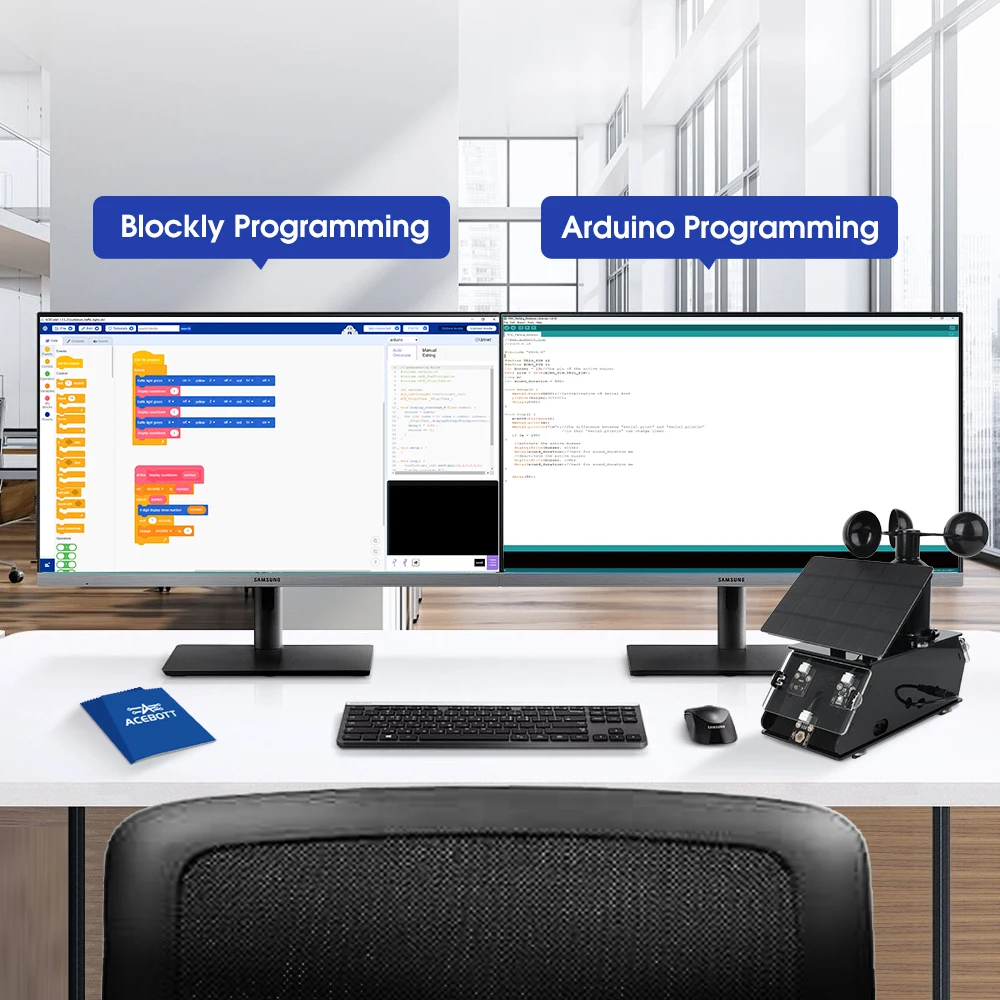
2. ESP32 Programming: Learning to code for IoT applications, such as weather stations that send and receive data.
3. Web & App Control: Mastering web-based IoT technologies through app and web interface control.
4. Sensor Integration: Integrating multiple sensors to collect and interpret meteorological data.
5. Solar Power & Sustainability: Exploring solar energy and environmental sustainability, including solar panel optimization.
6. Problem-Solving & System Design: Developing practical skills in system design, assembly, and troubleshooting.