ESP32 Smart Farm Kit
ESP32 Smart Farm Kit,
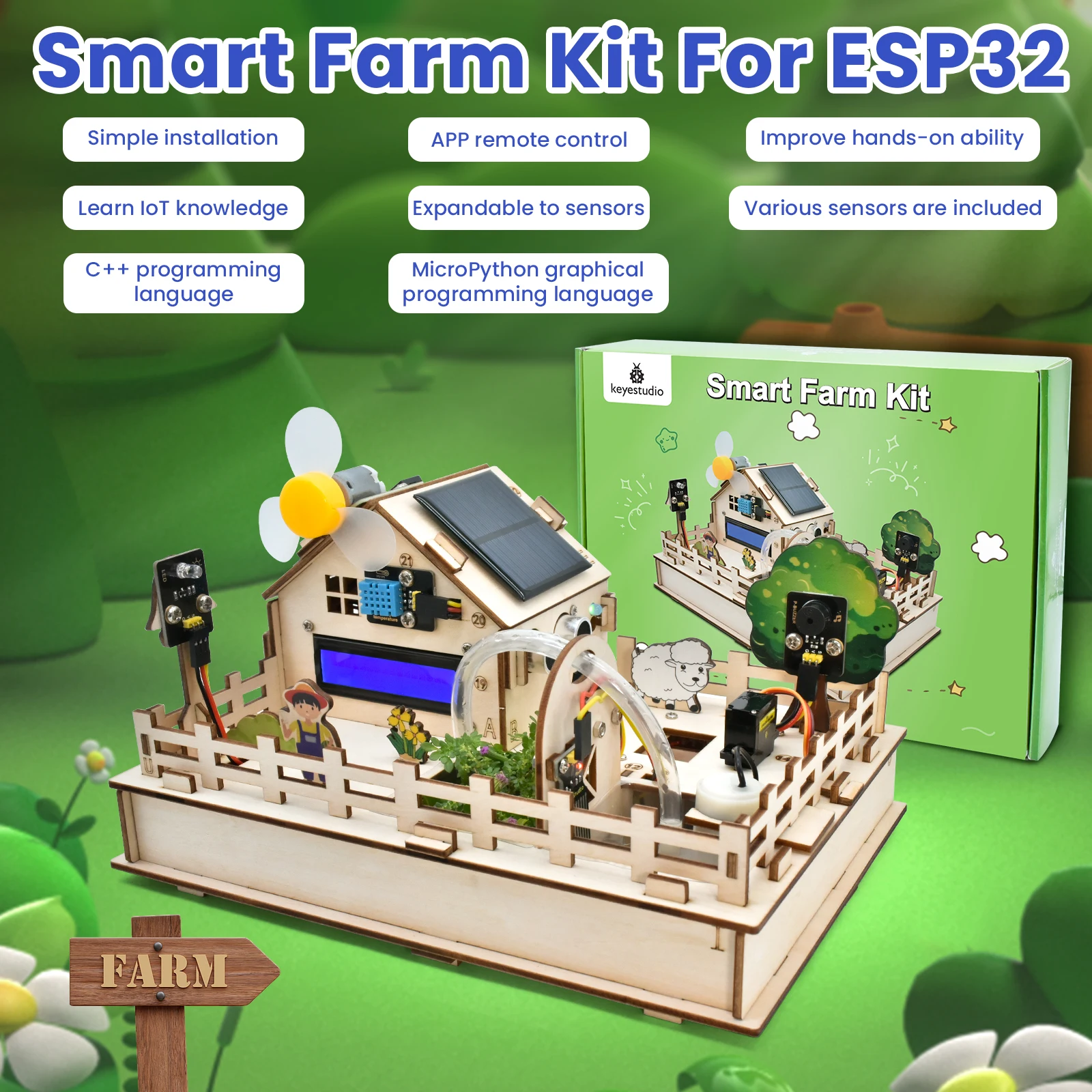
a complete STEM solution that combines coding, electronics, and real-world agricultural technology. Designed for beginners and advanced learners alike, this kit allows users to build, program, and control a smart farming system from scratch.
With powerful ESP32 wireless capabilities and multiple integrated sensors, learners can create automated systems that monitor environmental conditions and respond intelligently — just like real smart farms.
🚀 Key Features & Benefits
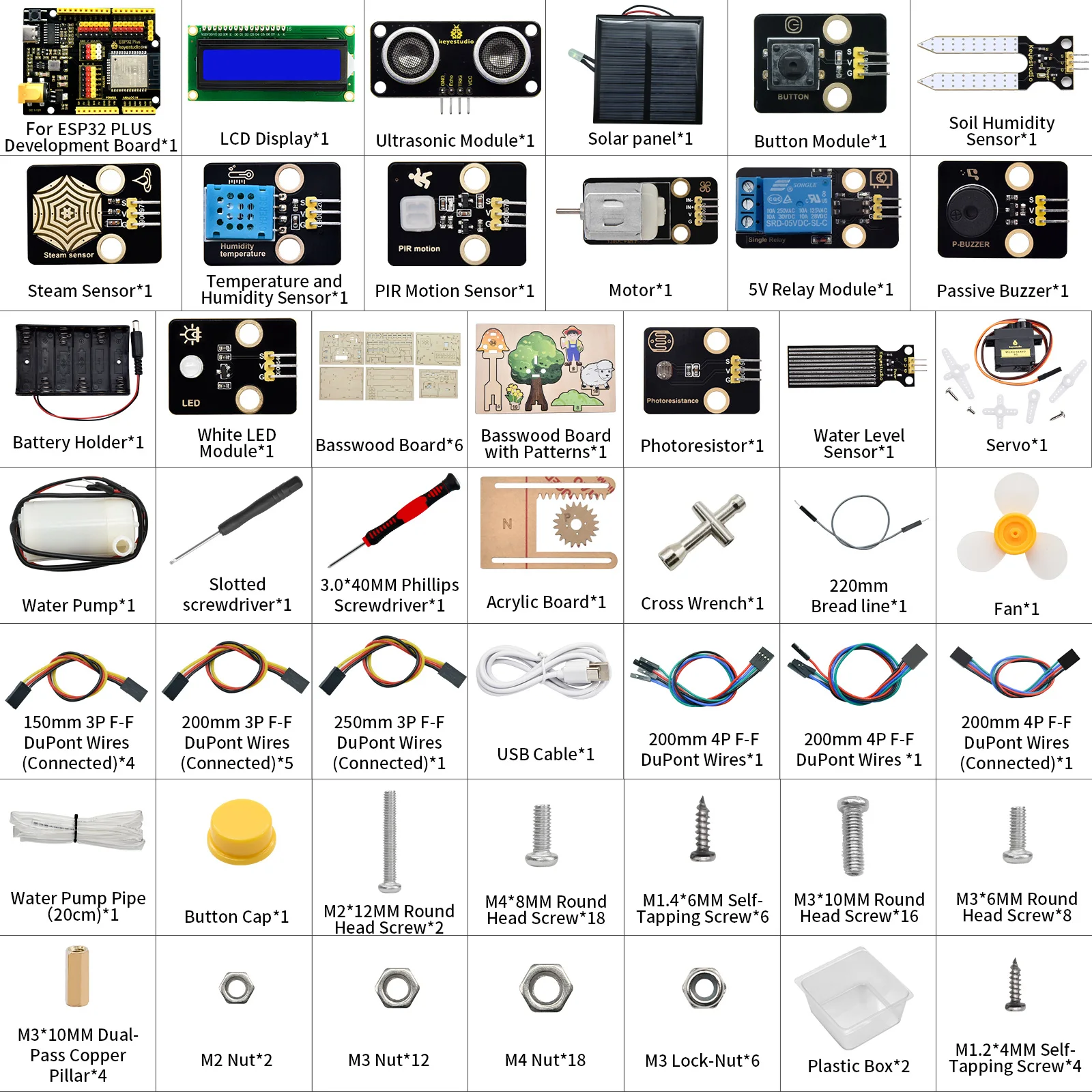
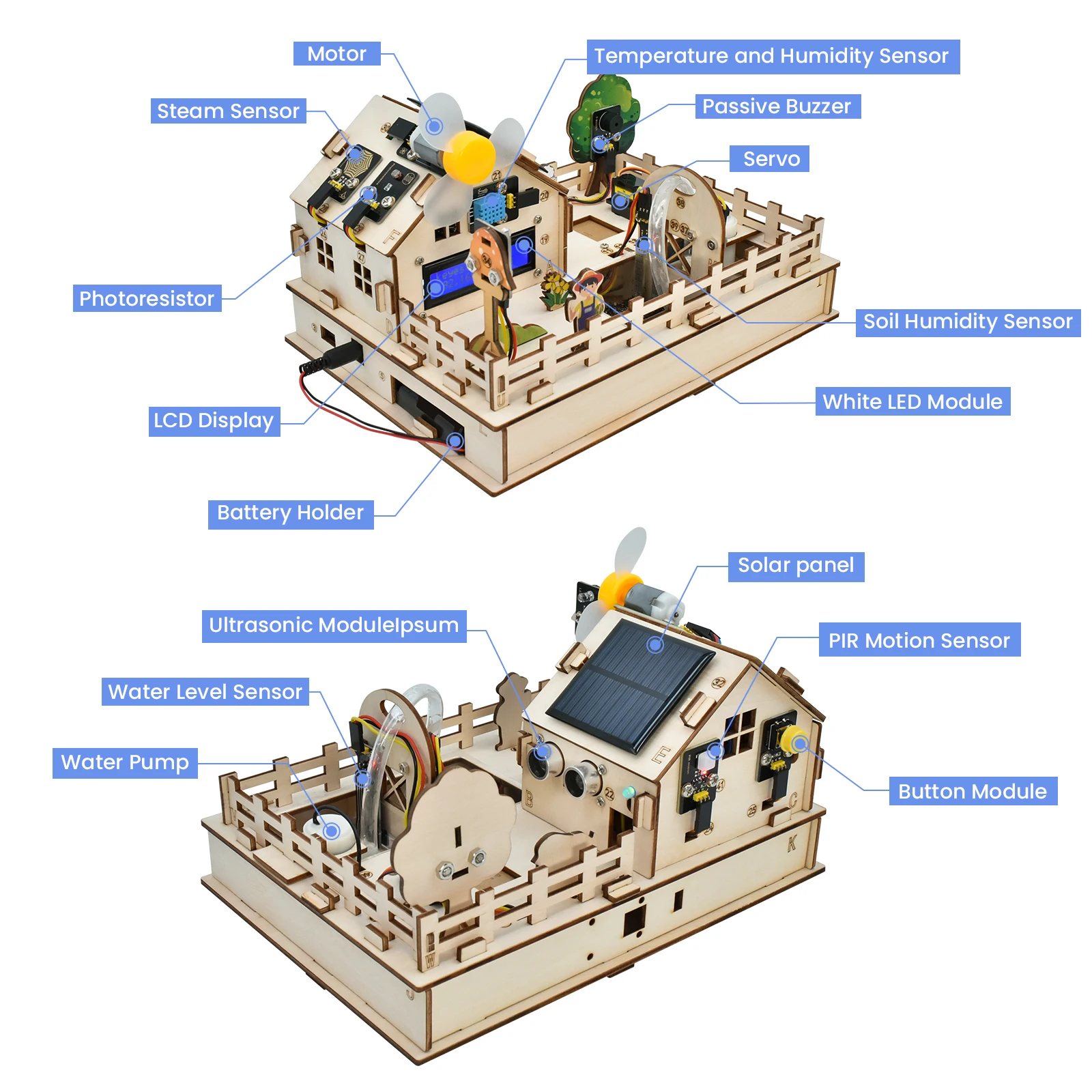
- All-in-One Smart Farming System – Includes soil moisture, water level, and light sensors for real-time environmental monitoring
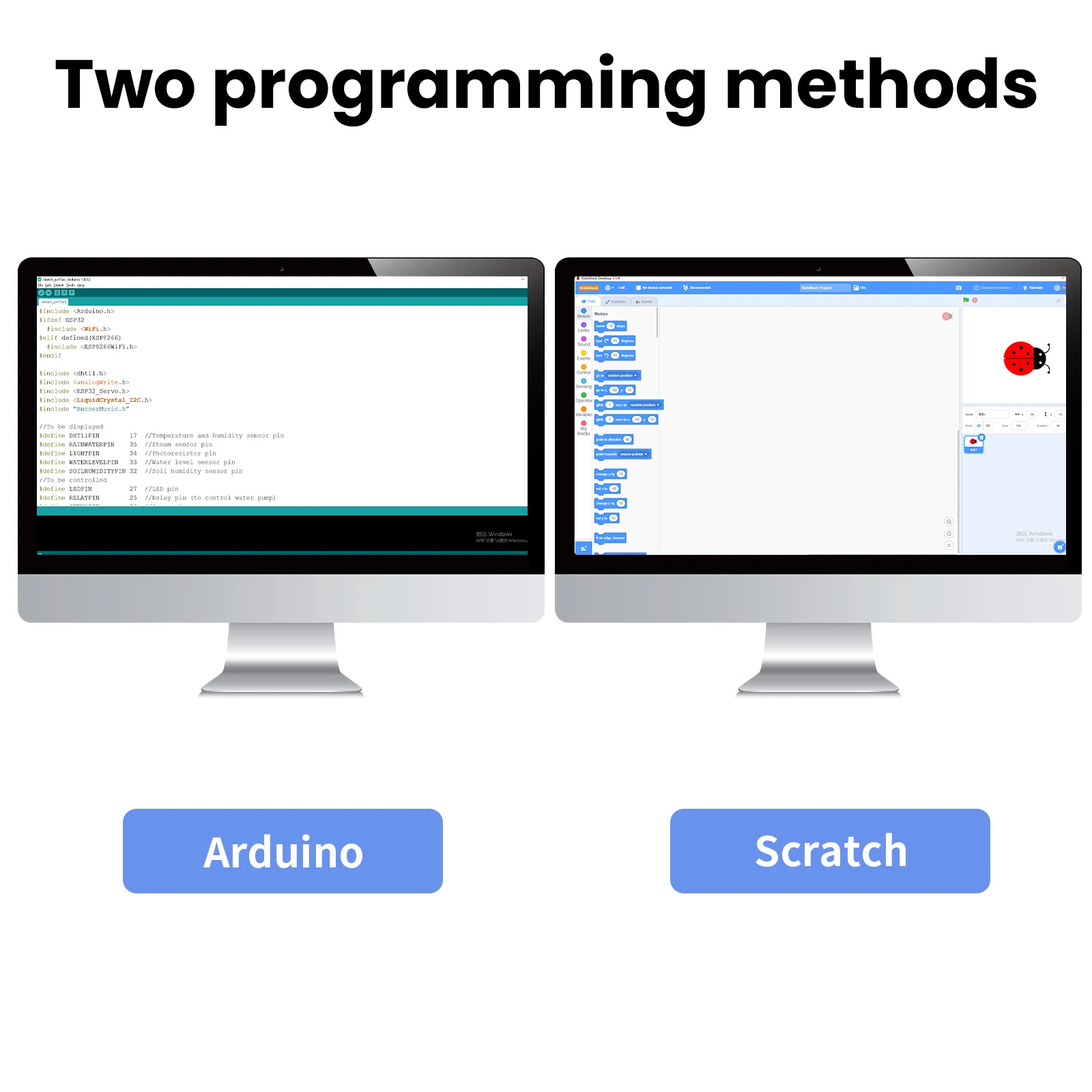
- Dual Programming Support – Learn using Scratch (visual coding) or Arduino (C++)
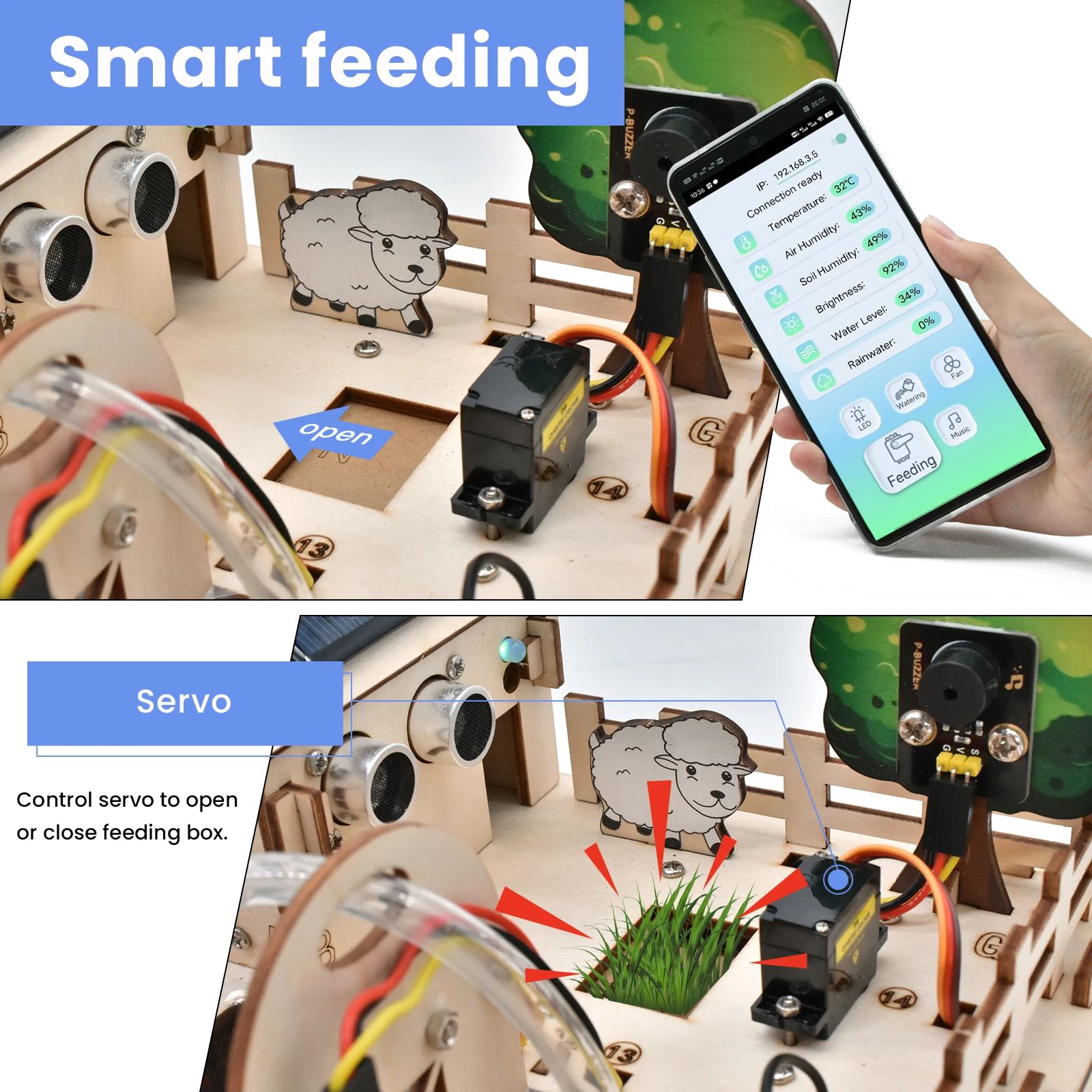
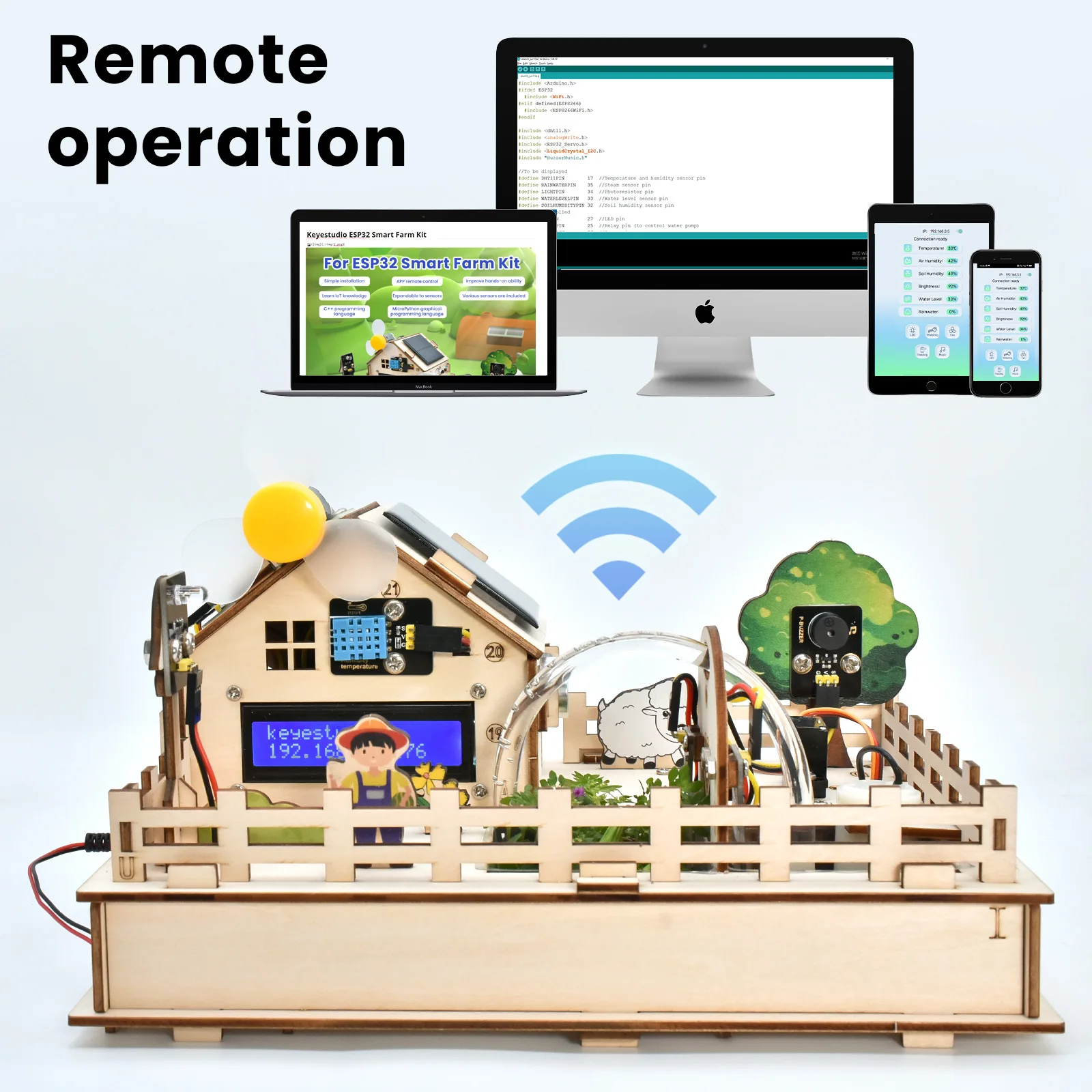
- IoT & App Control – Control and monitor your farm remotely via WiFi
- Hands-On STEM Learning – Build real projects that simulate modern agriculture
- Expandable & Customizable – Modify and scale your projects easily
- Interactive Tutorials Included – Step-by-step guides, videos, and sample codes
👉 Perfect for classrooms, STEM labs, homeschooling, and tech enthusiasts.
🧠 What Makes It Unique?
This is not just a toy — it’s a real IoT learning platform where users build automated systems using sensors and wireless communication, simulating real agricultural automation systems.
🟢 Product Specifications
- Main Board: ESP32 (WiFi + Bluetooth)
- Programming: Arduino (C++), Scratch / MicroPython
- Sensors Included:
- Soil moisture sensor
- Water level sensor
- Light (photoresistor) sensor
- Connectivity: WiFi (2.4G), Bluetooth 4.2
- Power Supply: 5V / 9V battery
- Max Power Consumption: ≤10W
- Dimensions: ~255 × 185 × 130 mm
- Control: Mobile App + manual programming
- Assembly: DIY (not pre-assembled)
- Recommended Age: 12+ / Teens / Students
🟢 Subjects Covered (Detailed Breakdown)
1. 🌐 Internet of Things (IoT)
- Understanding how devices connect and communicate over the internet
- Learning wireless communication using WiFi and ESP32
- Real-time data collection and remote monitoring
- Introduction to smart systems used in real industries
2. 💻 Programming & Coding
- Visual Programming (Scratch 3.0):
- Drag-and-drop coding for beginners
- Understanding logic, sequences, loops, and conditions
- Text-Based Programming (Arduino C++):
- Writing and modifying code
- Controlling sensors and actuators
- Debugging and testing programs
3. ⚡ Electronics & Circuit Design
- Understanding basic electronic components (resistors, sensors, modules)
- Learning how circuits are connected and powered
- Signal input/output concepts
- Interfacing sensors with microcontrollers
4. 🌱 Environmental Science & Smart Agriculture
- Monitoring environmental factors:
- Soil moisture
- Light intensity
- Water levels
- Understanding plant growth conditions
- Learning how technology improves farming efficiency
5. 🤖 Automation & Smart Systems
- Designing automated responses (e.g., watering plants automatically)
- Using sensor data to trigger actions
- Understanding real-world automation systems
6. 🧠 STEM Integration
- Combines:
- Science (environmental factors)
- Technology (IoT systems)
- Engineering (building the model)
- Mathematics (logic, measurement, calibration)
🟢 Activities Performed (Detailed & Practical)
🔧 1. Assembling the Smart Farm Model
- Building the physical farm structure
- Installing sensors and modules
- Connecting wiring and components
- Understanding system layout and design
💻 2. Programming the System
- Writing Scratch or Arduino code to:
- Read sensor data
- Control outputs (e.g., water pump, lights)
- Modifying code to test different behaviors
- Learning debugging techniques
🌡️ 3. Monitoring Environmental Conditions
- Measuring:
- Soil moisture levels
- Light intensity
- Water levels
- Displaying real-time data on screens or apps
- Interpreting sensor readings
💧 4. Automated Irrigation Simulation
- Creating a system that:
- Detects dry soil
- Automatically activates watering
- Adjusting thresholds for smart responses
- Simulating real smart farming solutions
📱 5. Remote Control & IoT Interaction
- Connecting the ESP32 to WiFi
- Controlling the system via mobile app
- Monitoring farm conditions remotely
- Sending/receiving data in real time
🚨 6. Alert & Feedback Systems
- Programming alerts when:
- Soil is too dry
- Water level is low
- Using buzzers or notifications
- Creating smart warning systems
🔍 7. Experimentation & Testing
- Testing different environmental conditions
- Changing sensor thresholds
- Observing system responses
- Comparing manual vs automated control
🧩 8. Project-Based Learning & Customization
- Expanding the system with new sensors
- Creating new automation scenarios
- Designing personalized smart farm setups
- Building independent STEM projects
🎯 9. Problem-Solving Activities
- Identifying system errors
- Fixing wiring or coding issues
- Optimizing performance
- Improving system efficiency