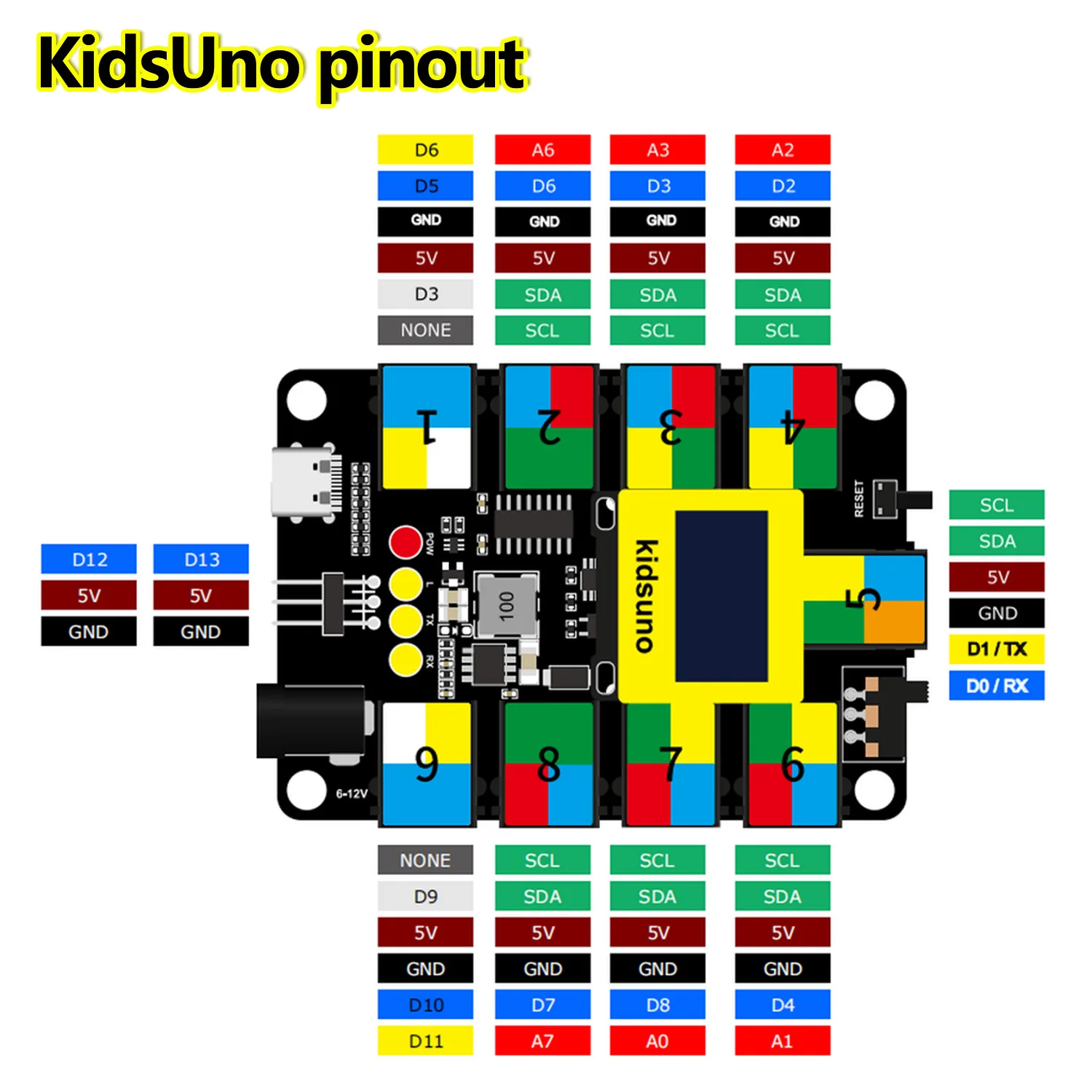
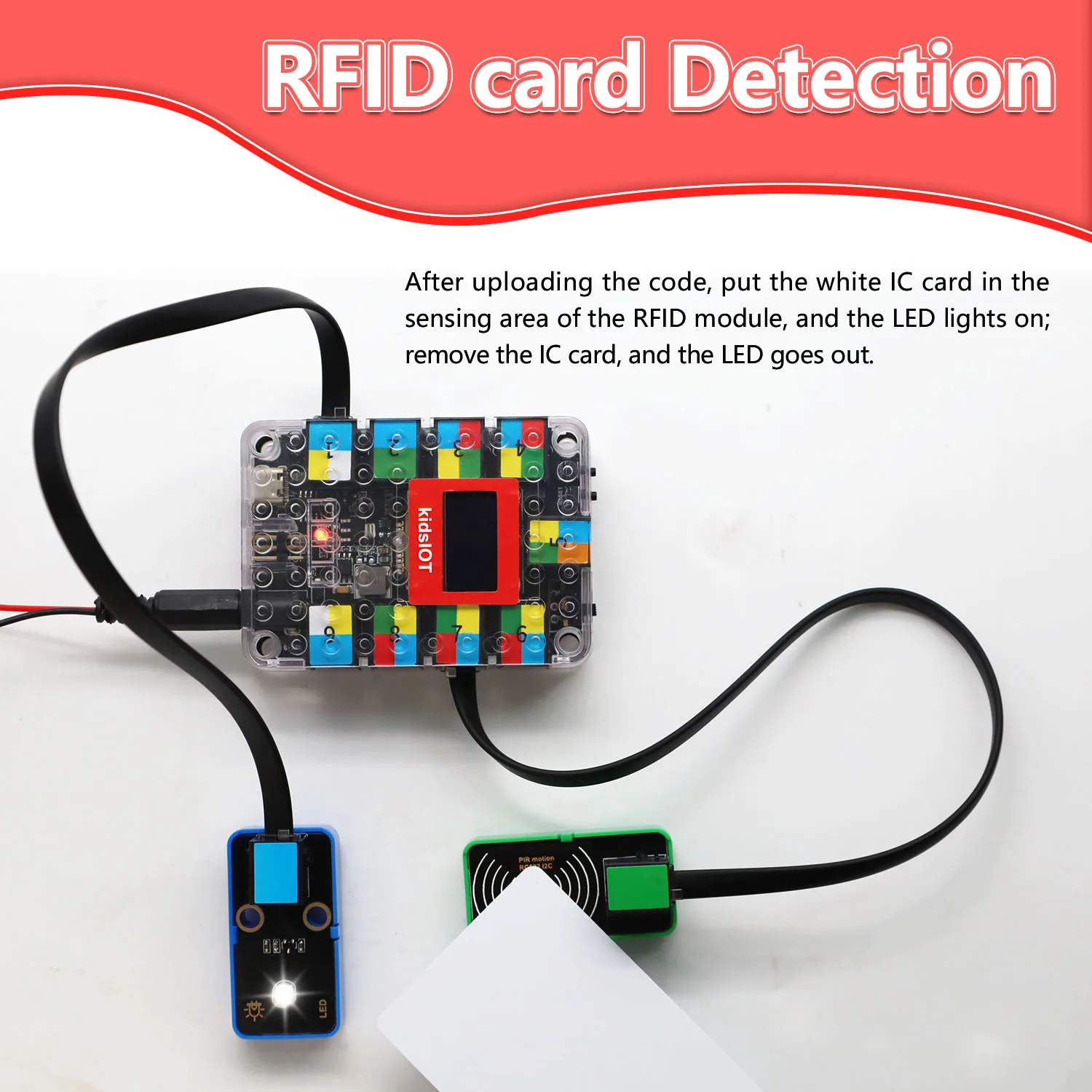
KidsUNO STEM development board compatible with Lego blocks
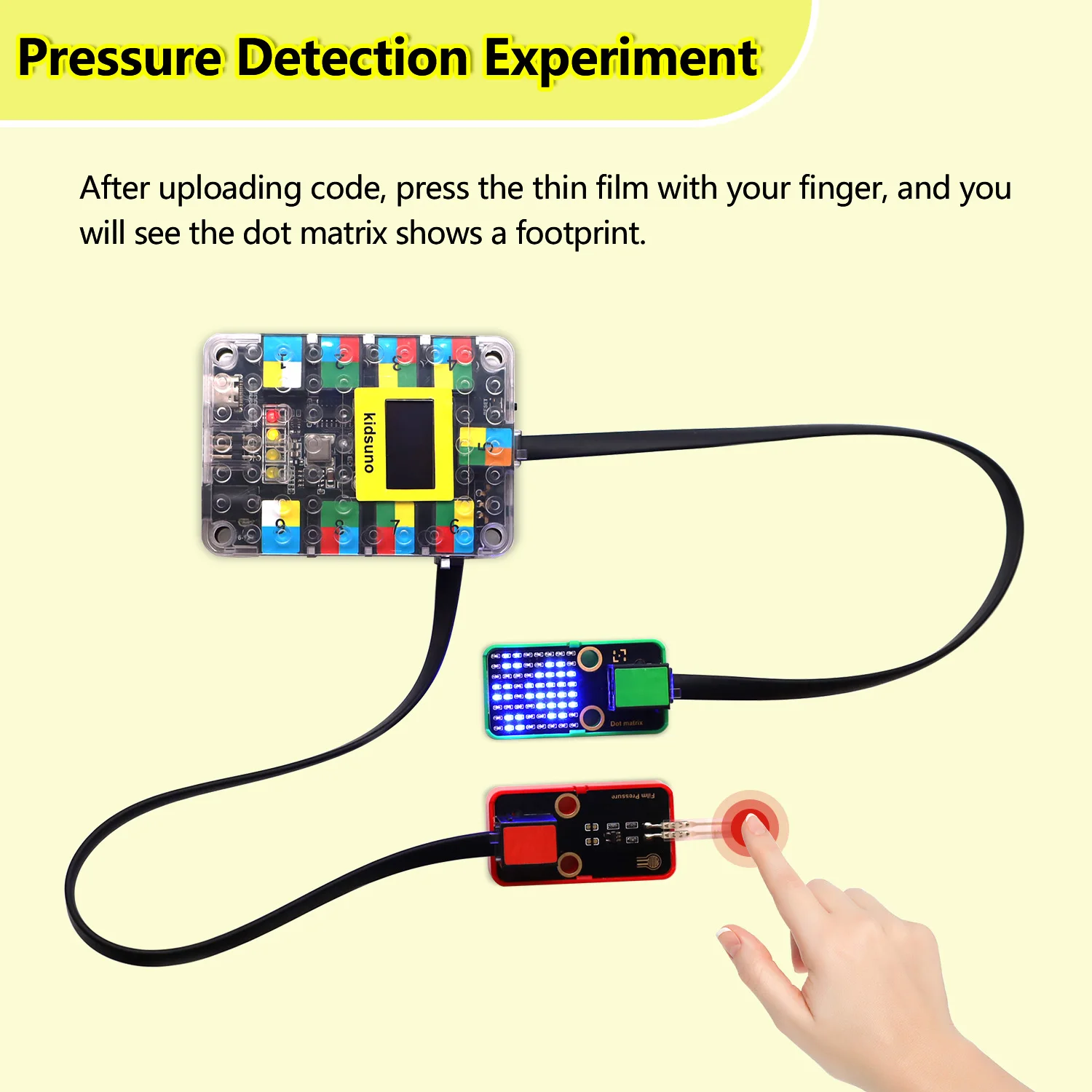
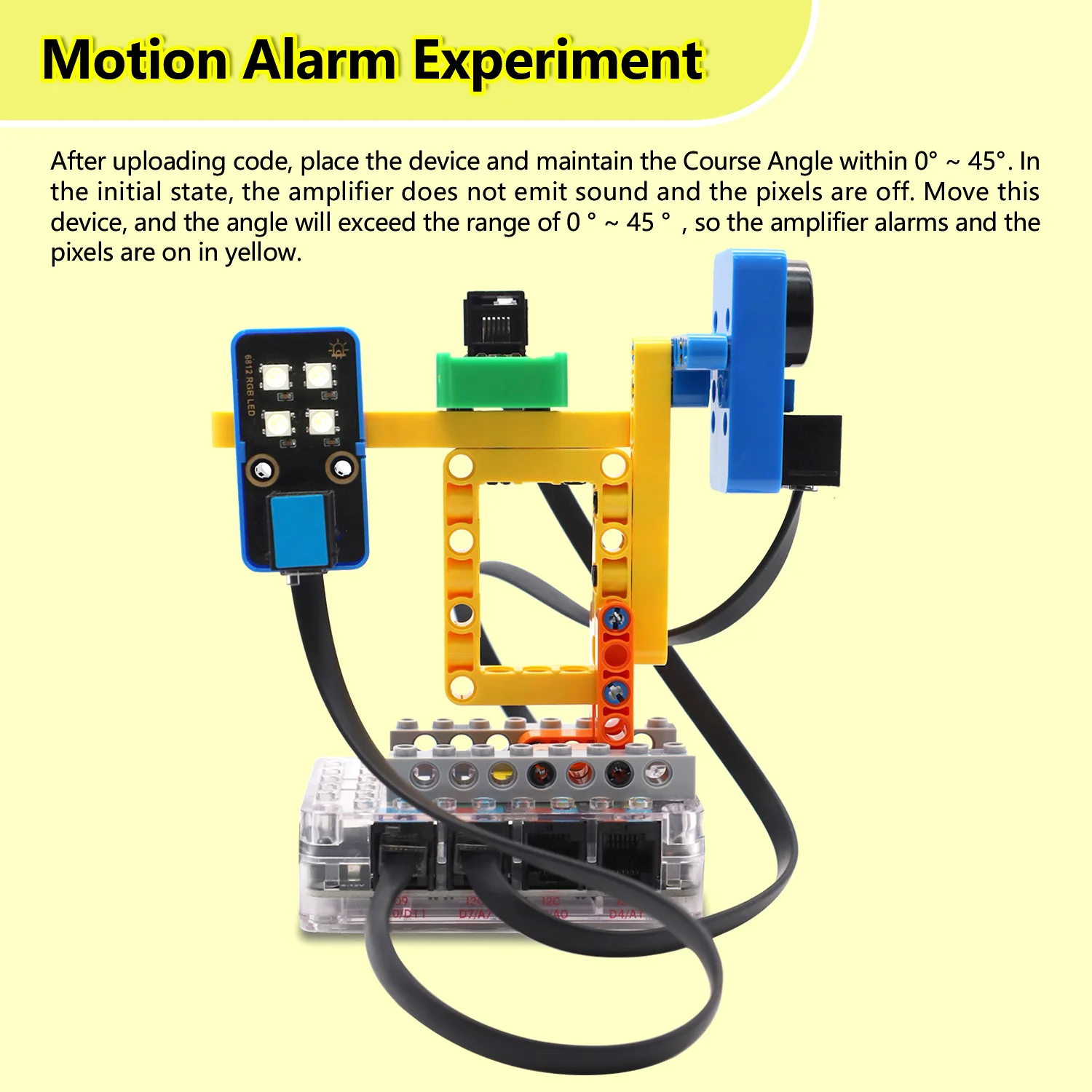
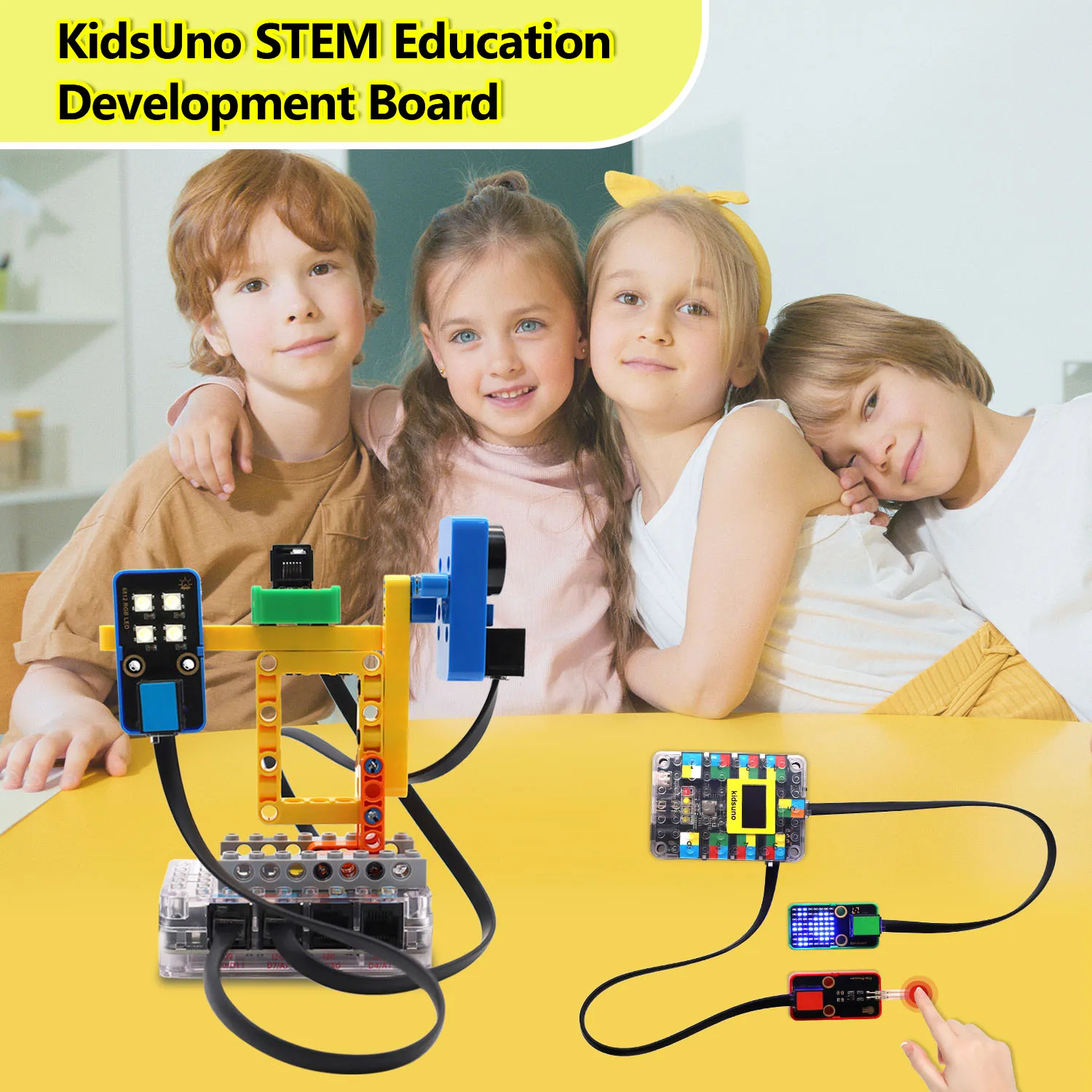
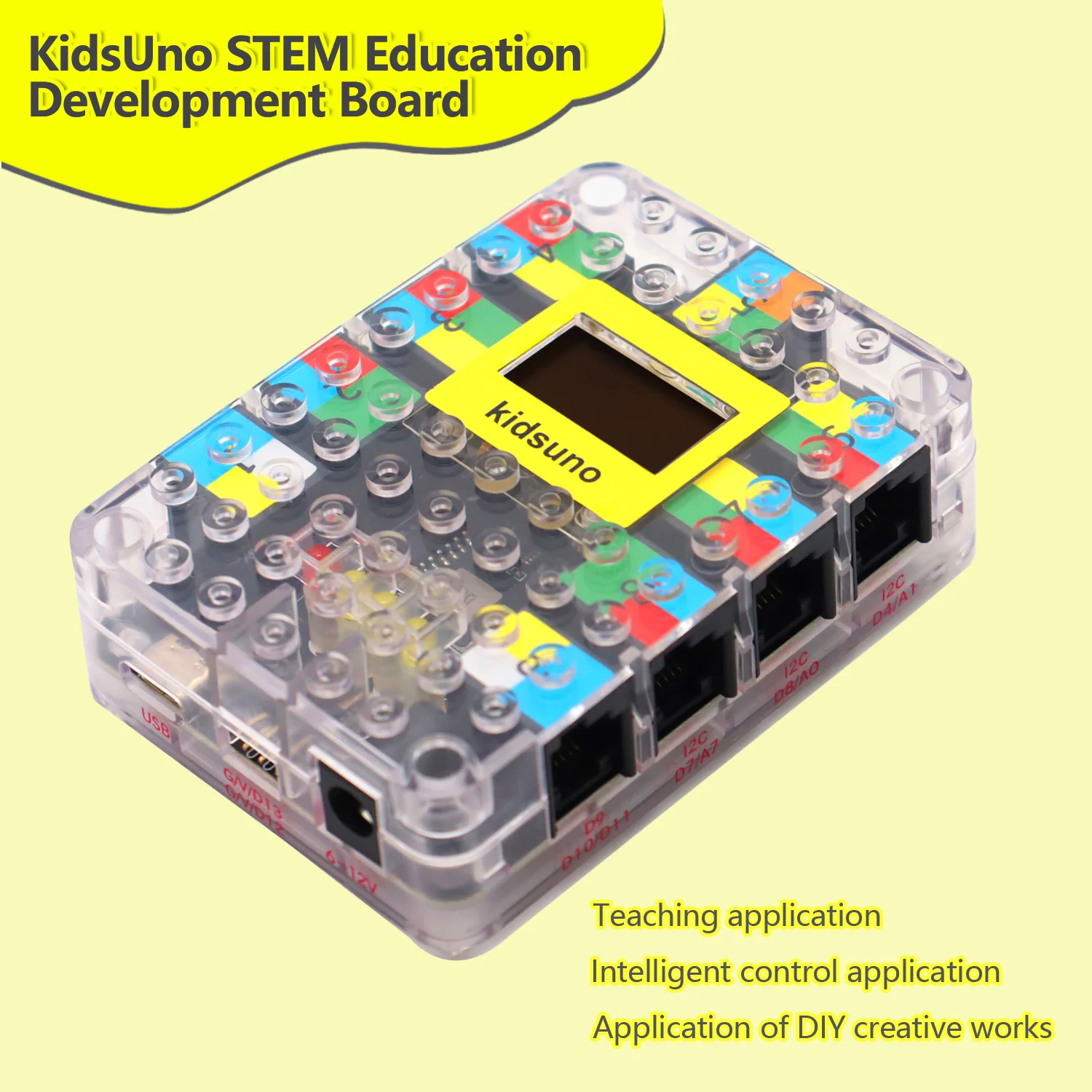
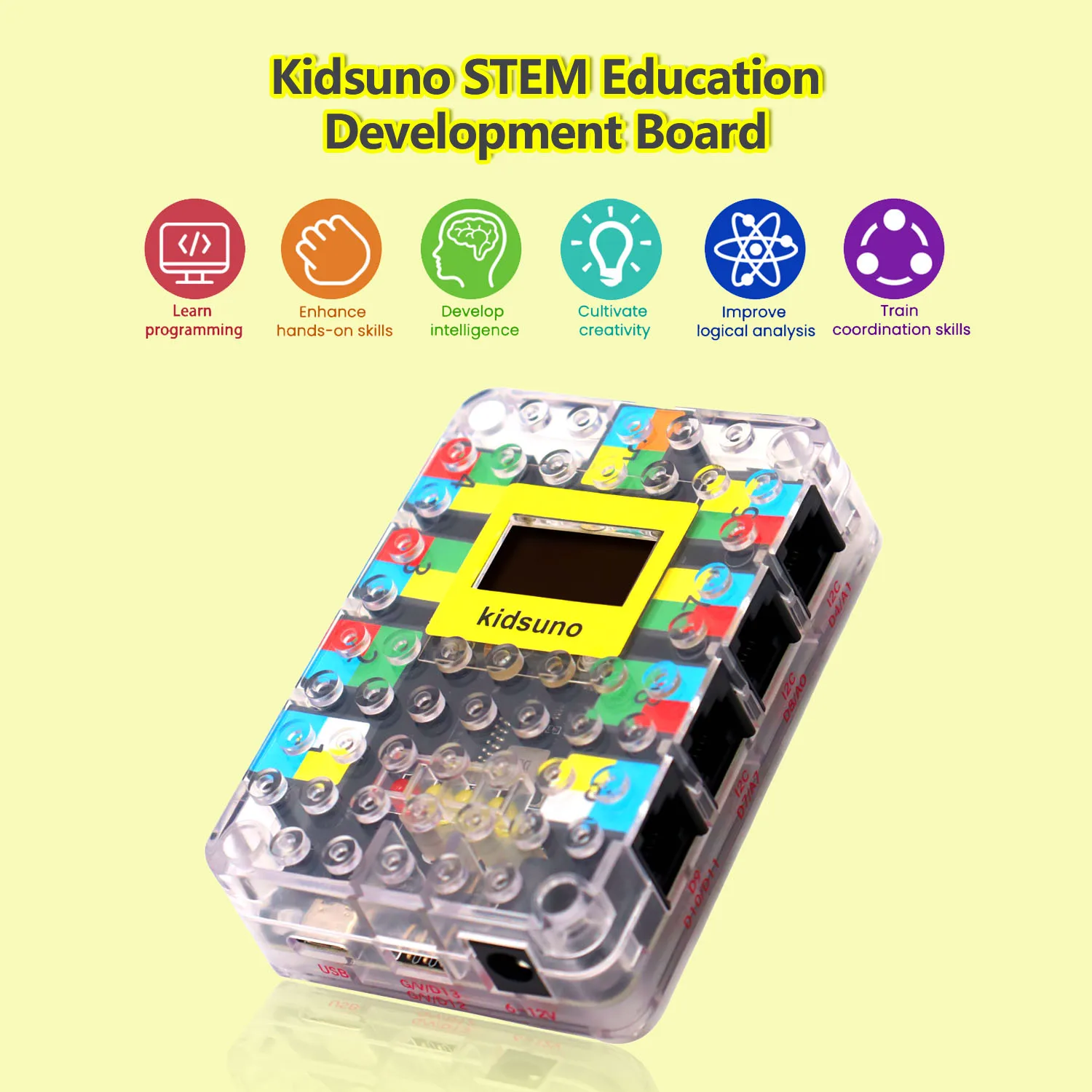
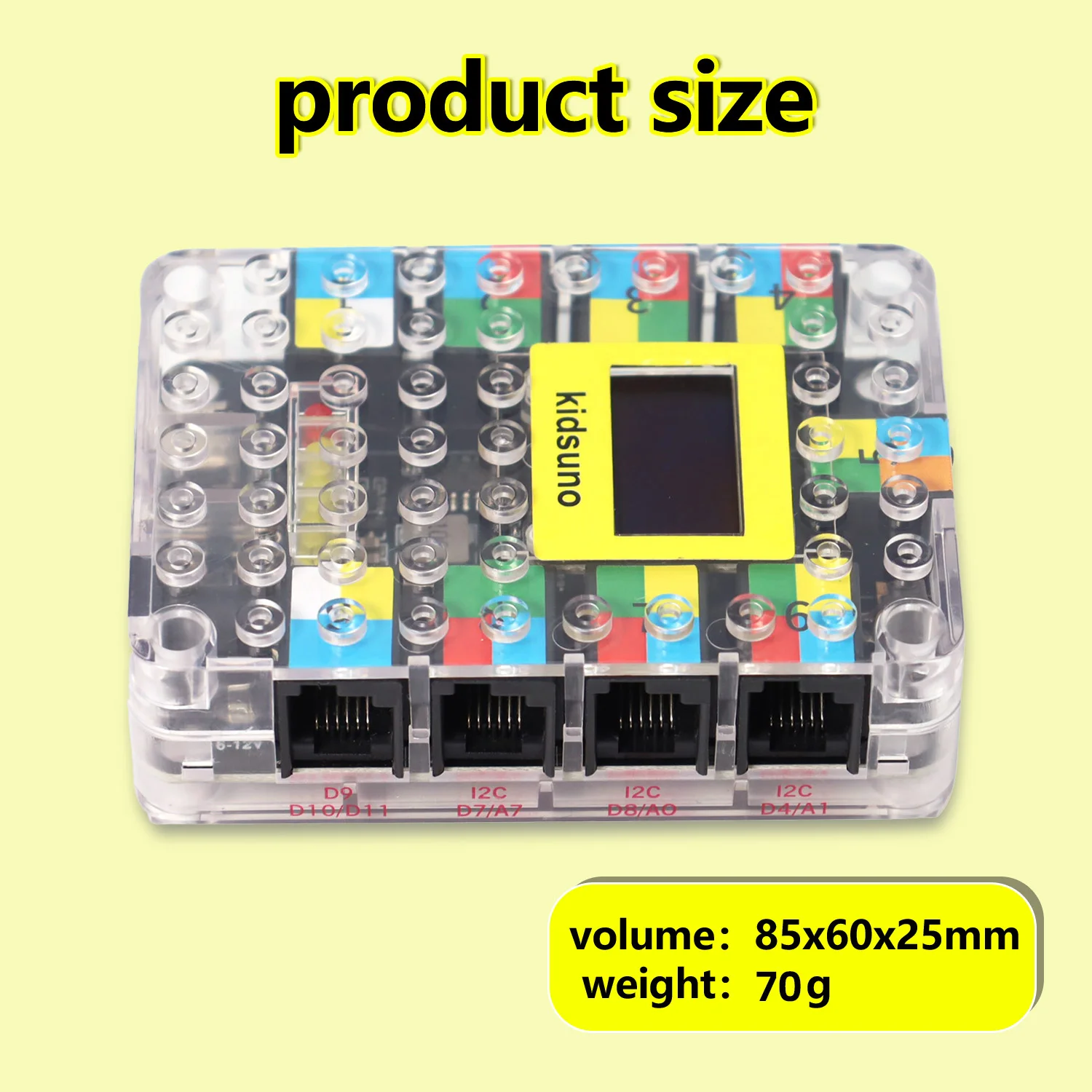
What is KidsIOT?
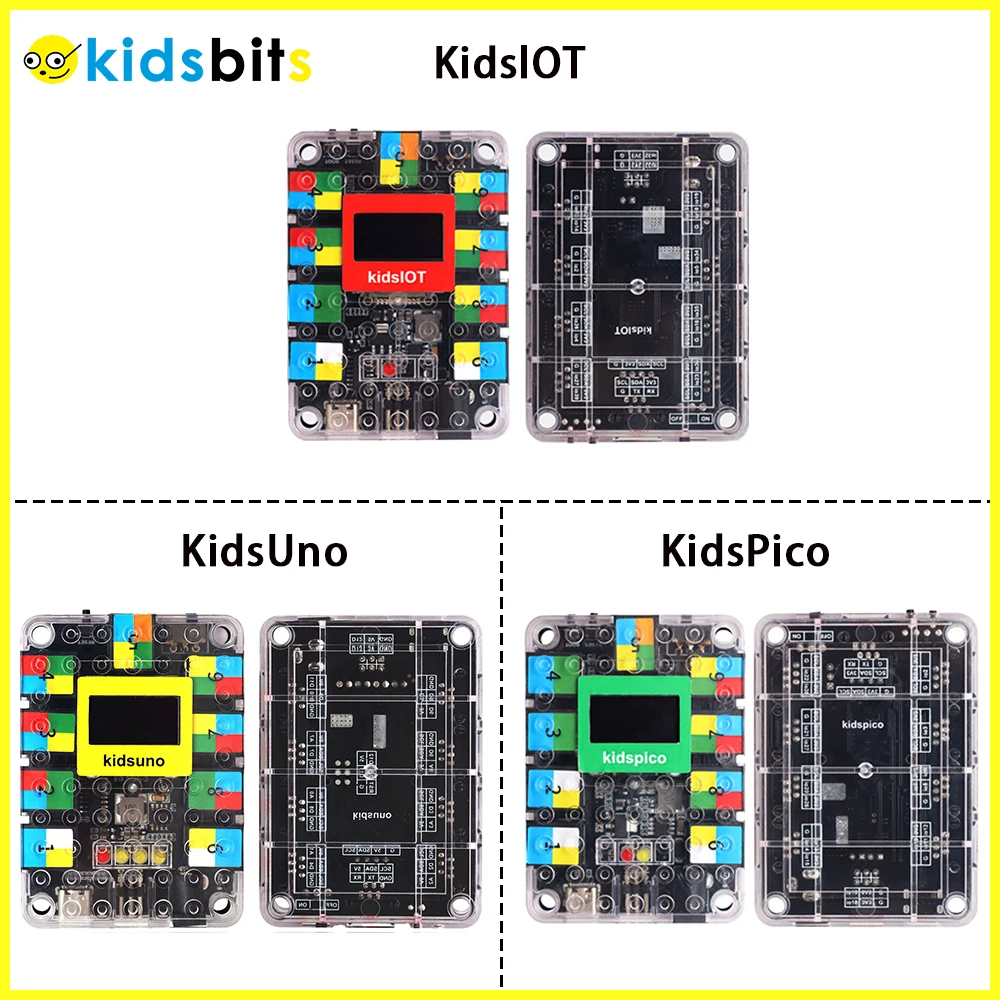
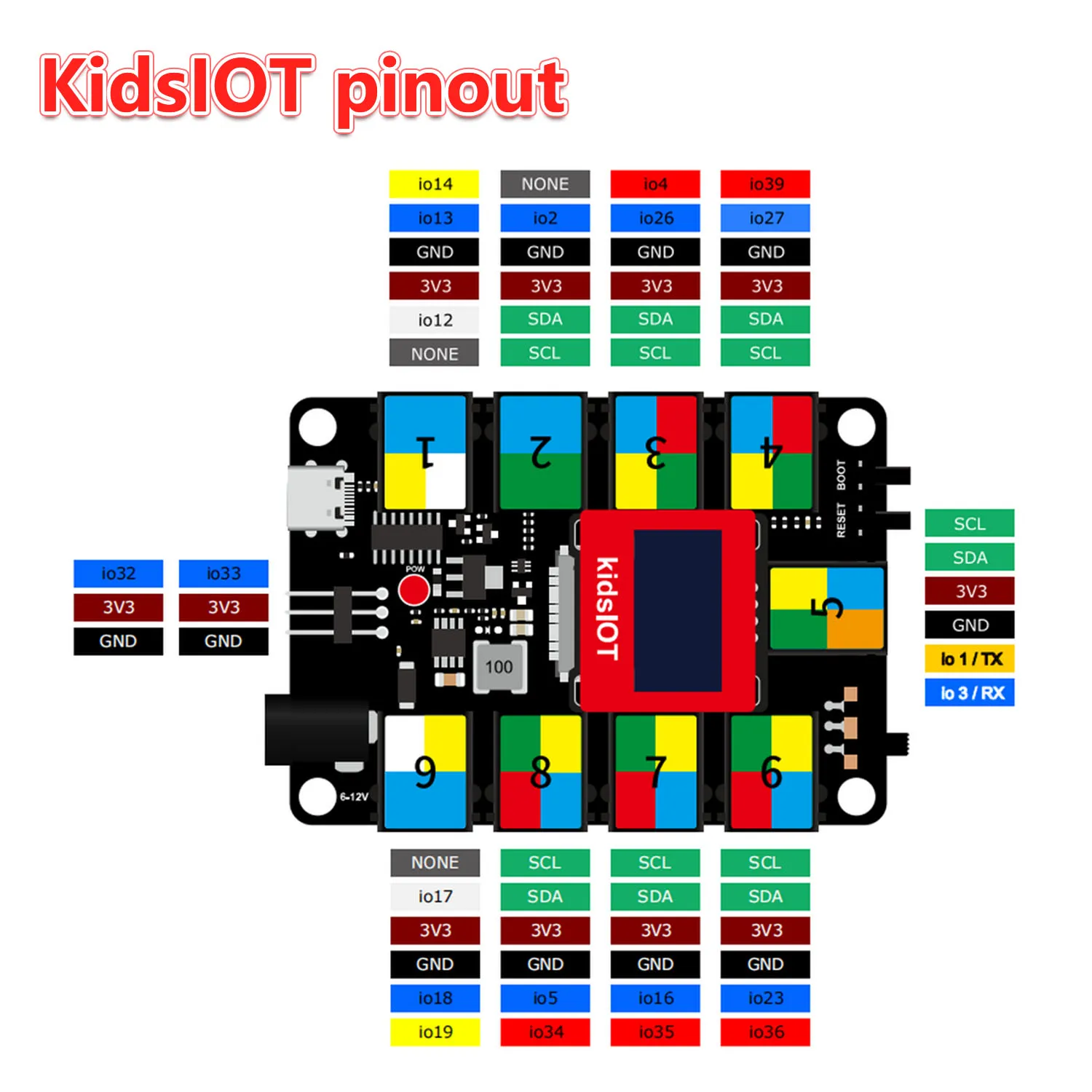
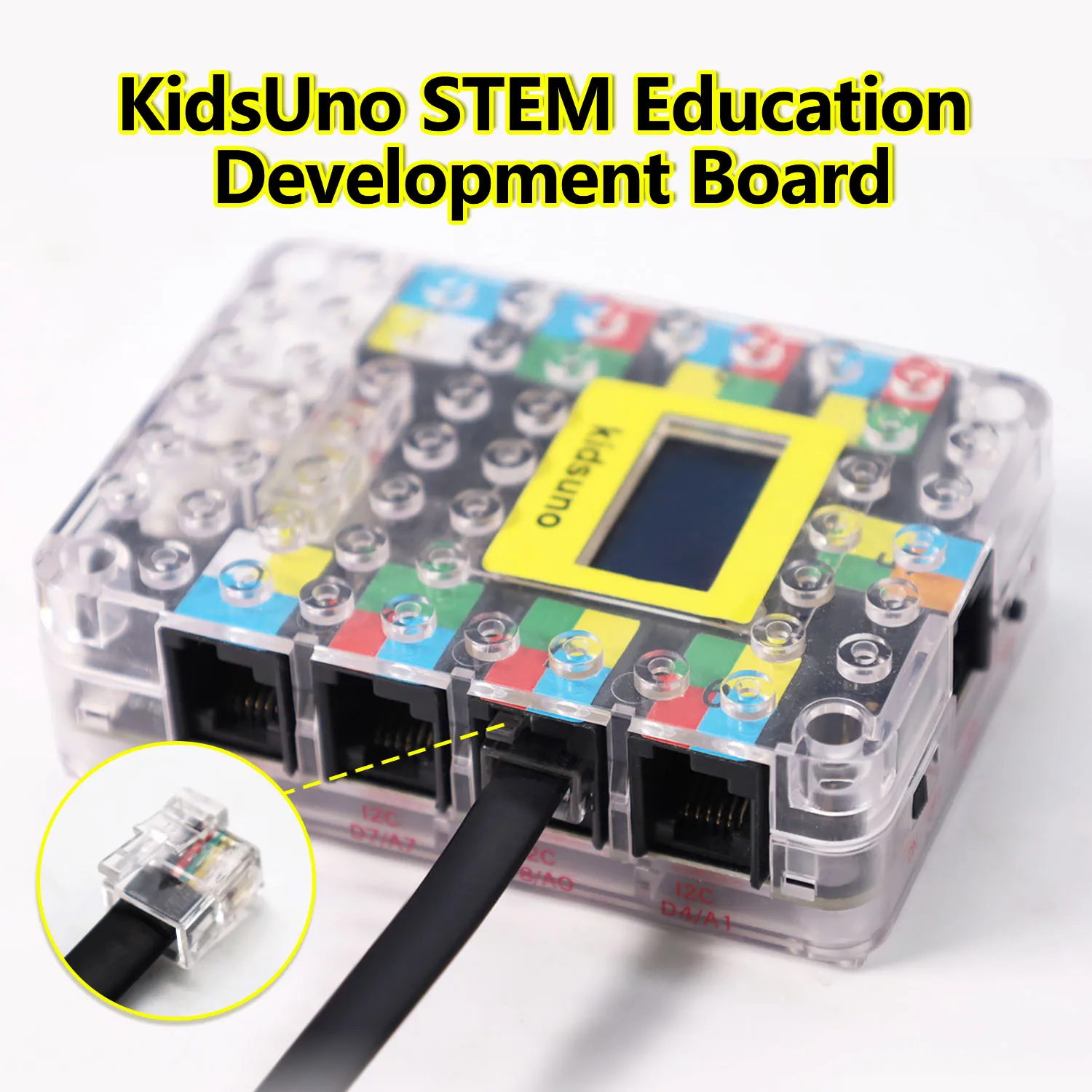
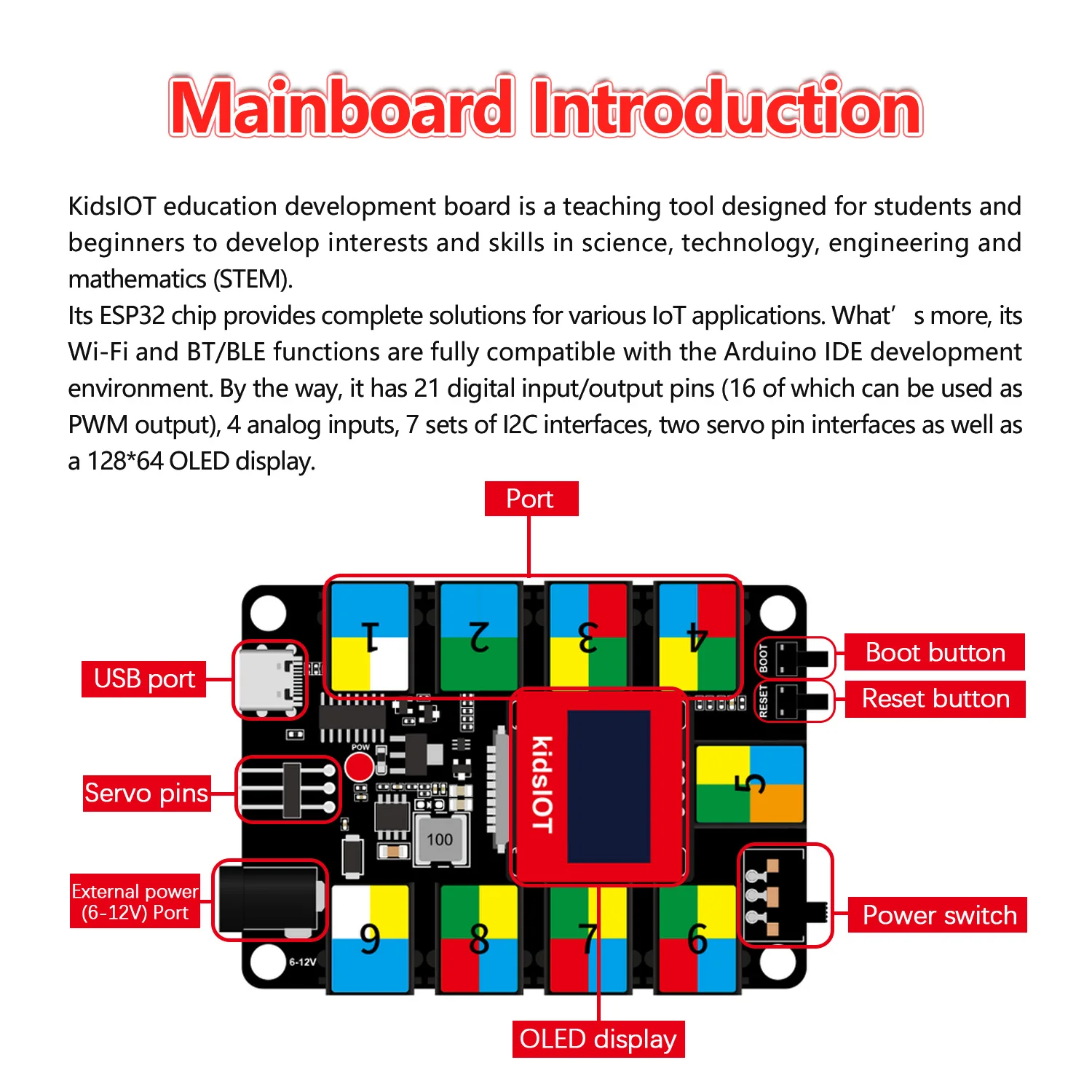
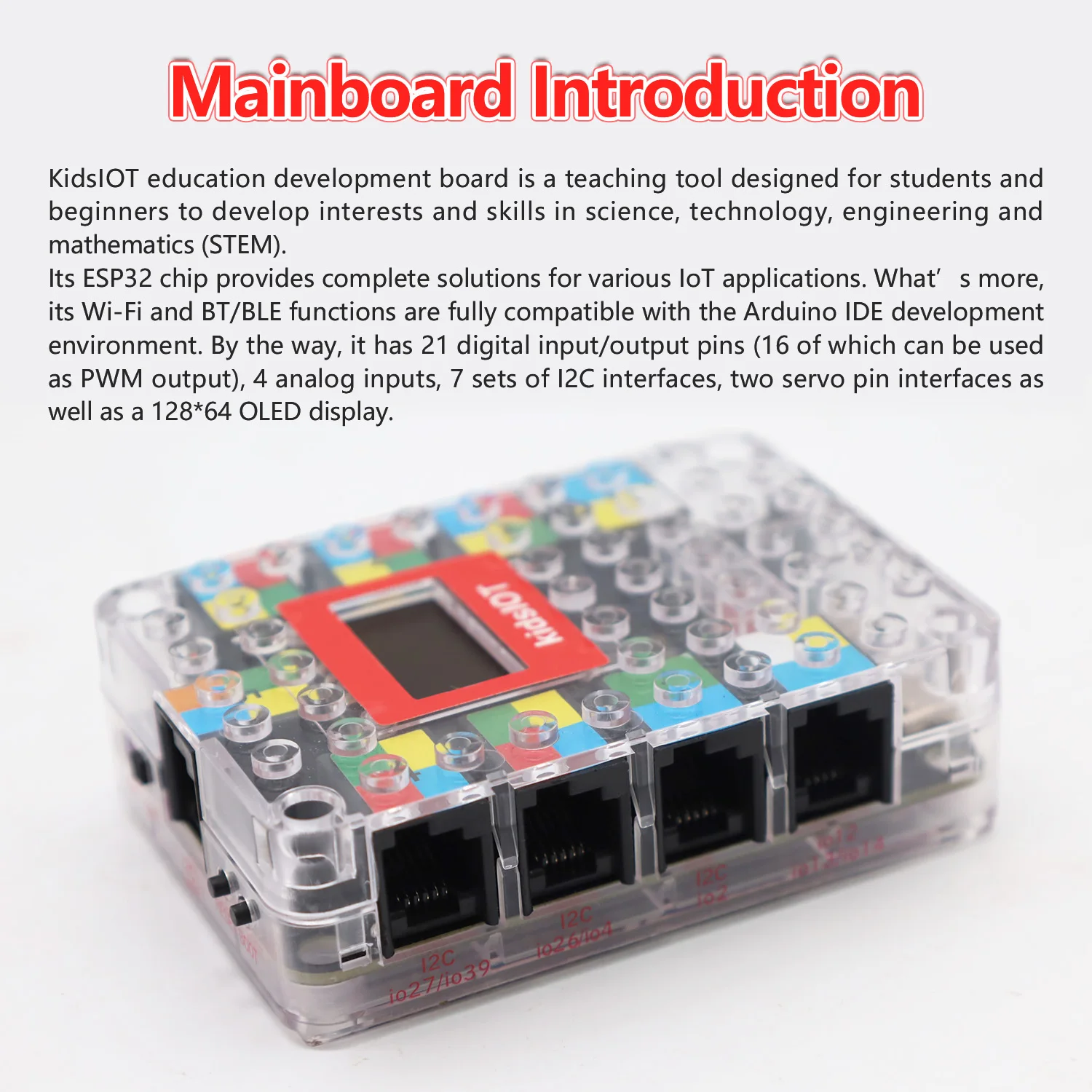
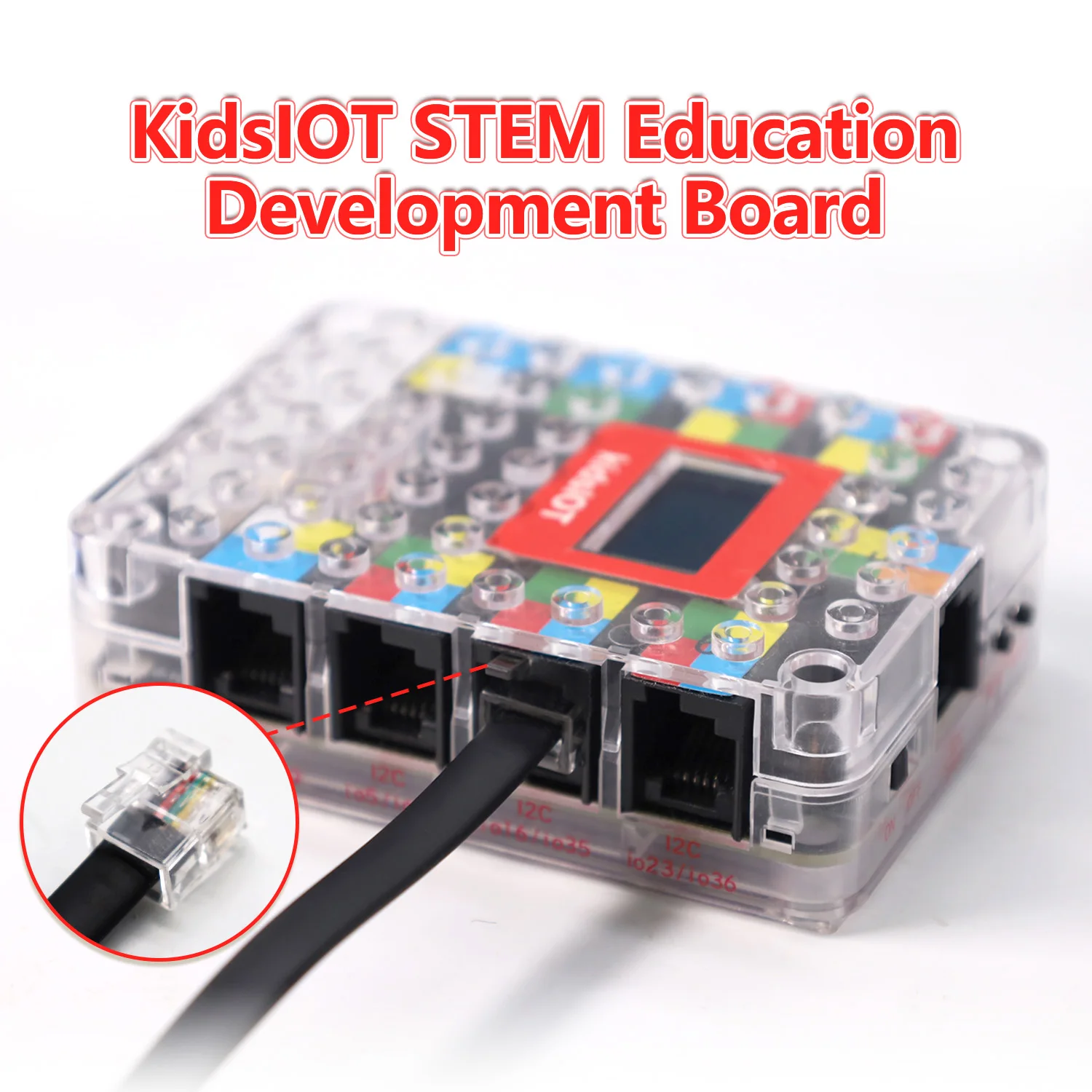
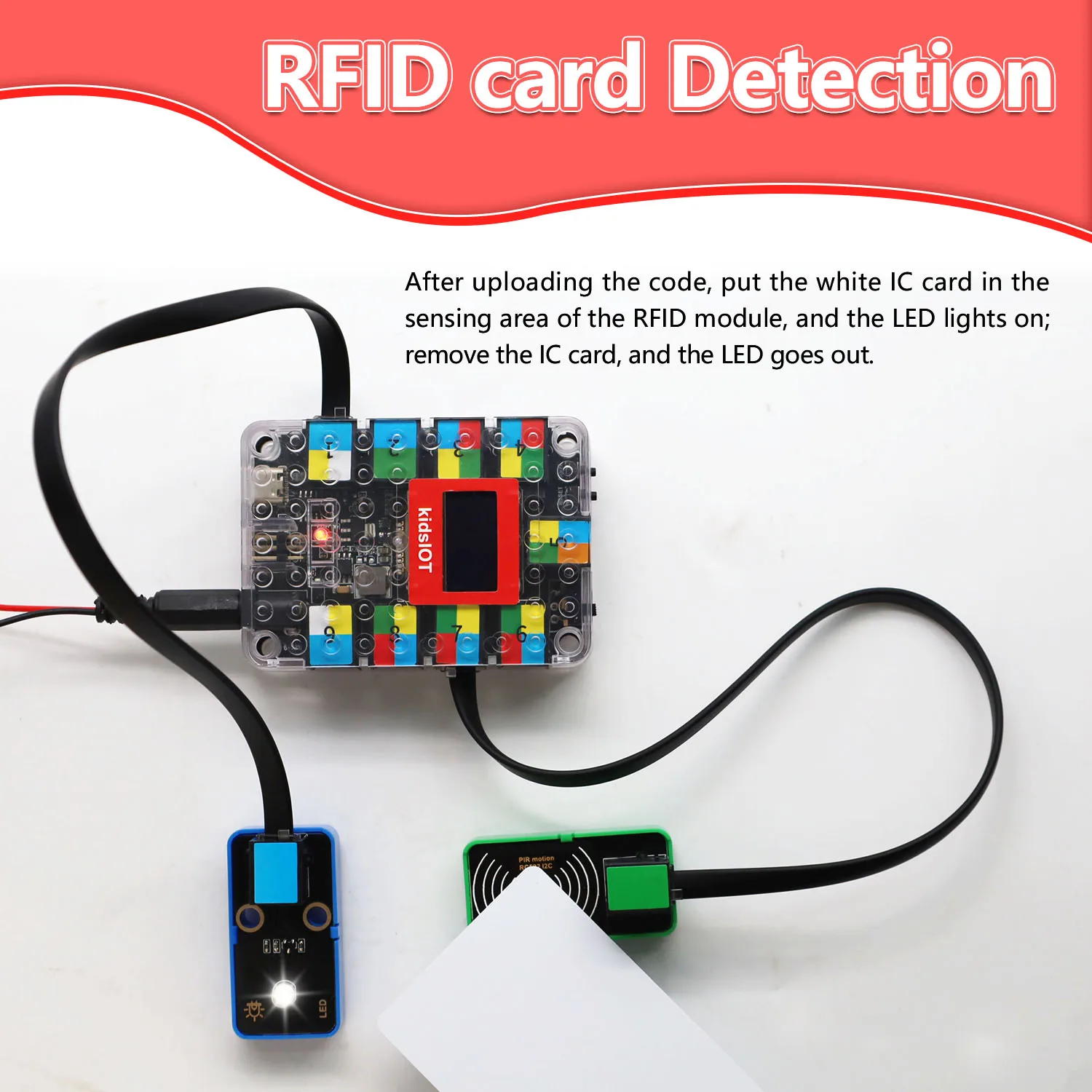
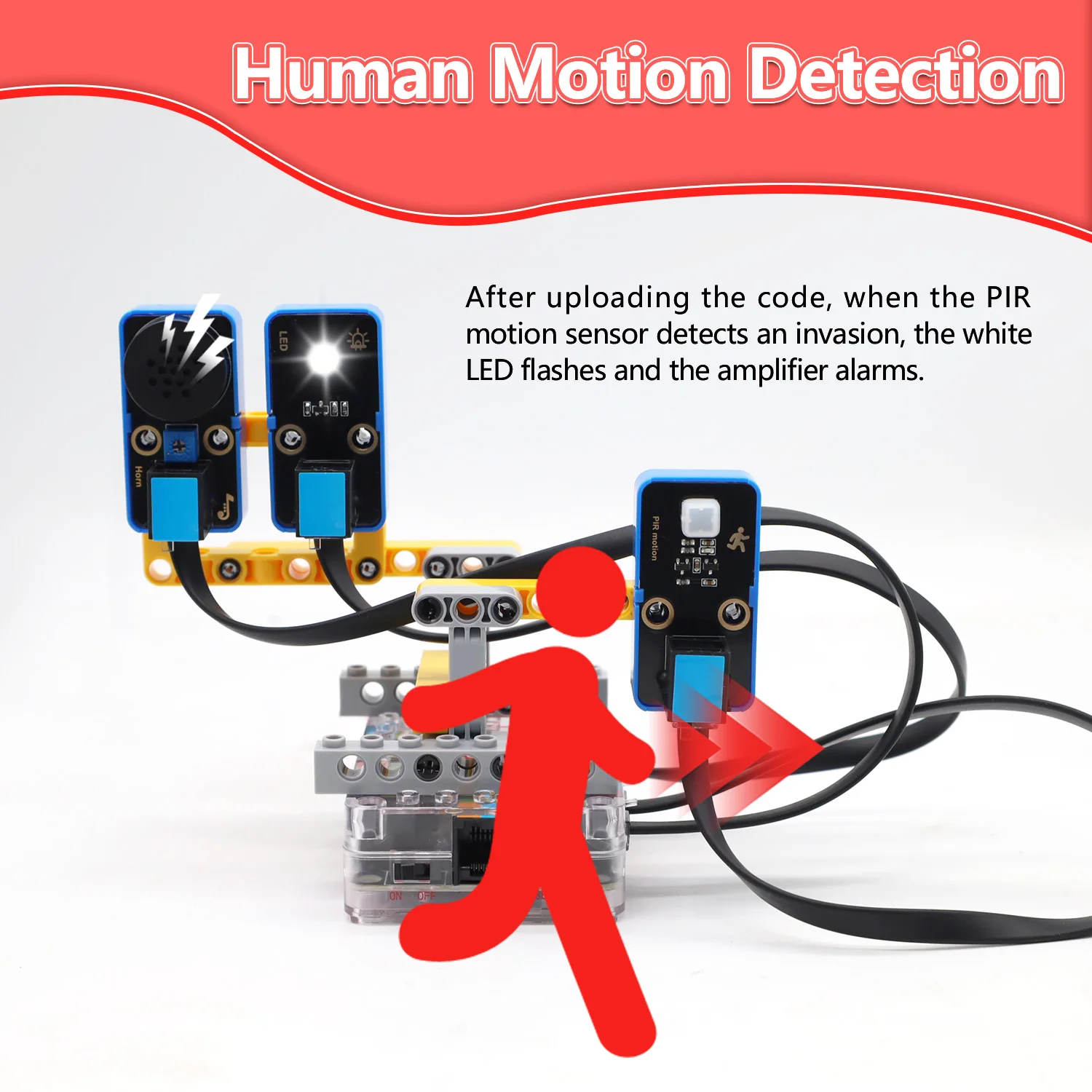
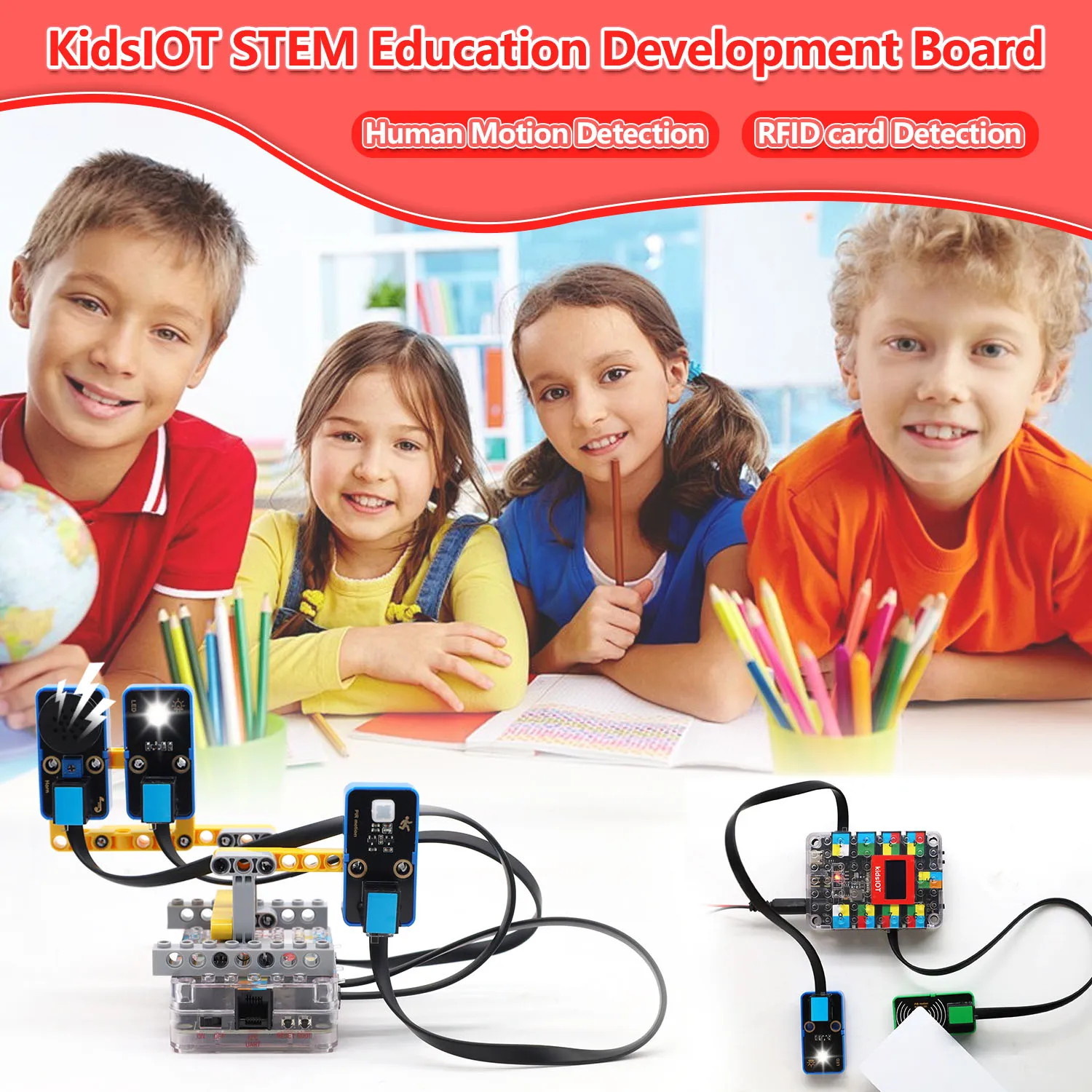
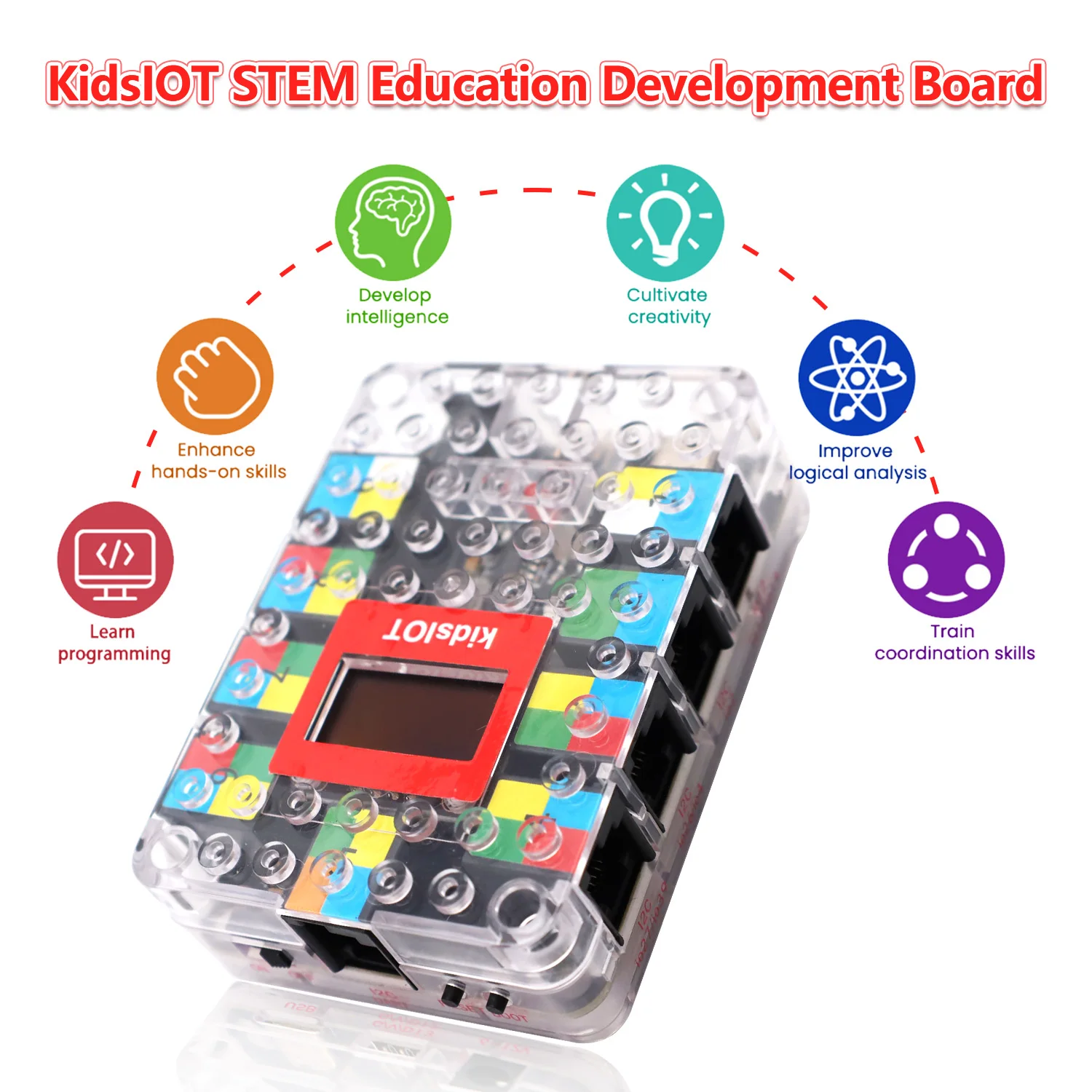
KidsIOT education development board is a teaching tool designed for students and beginners to develop interests and skills in science, technology, engineering and mathematics (STEM).
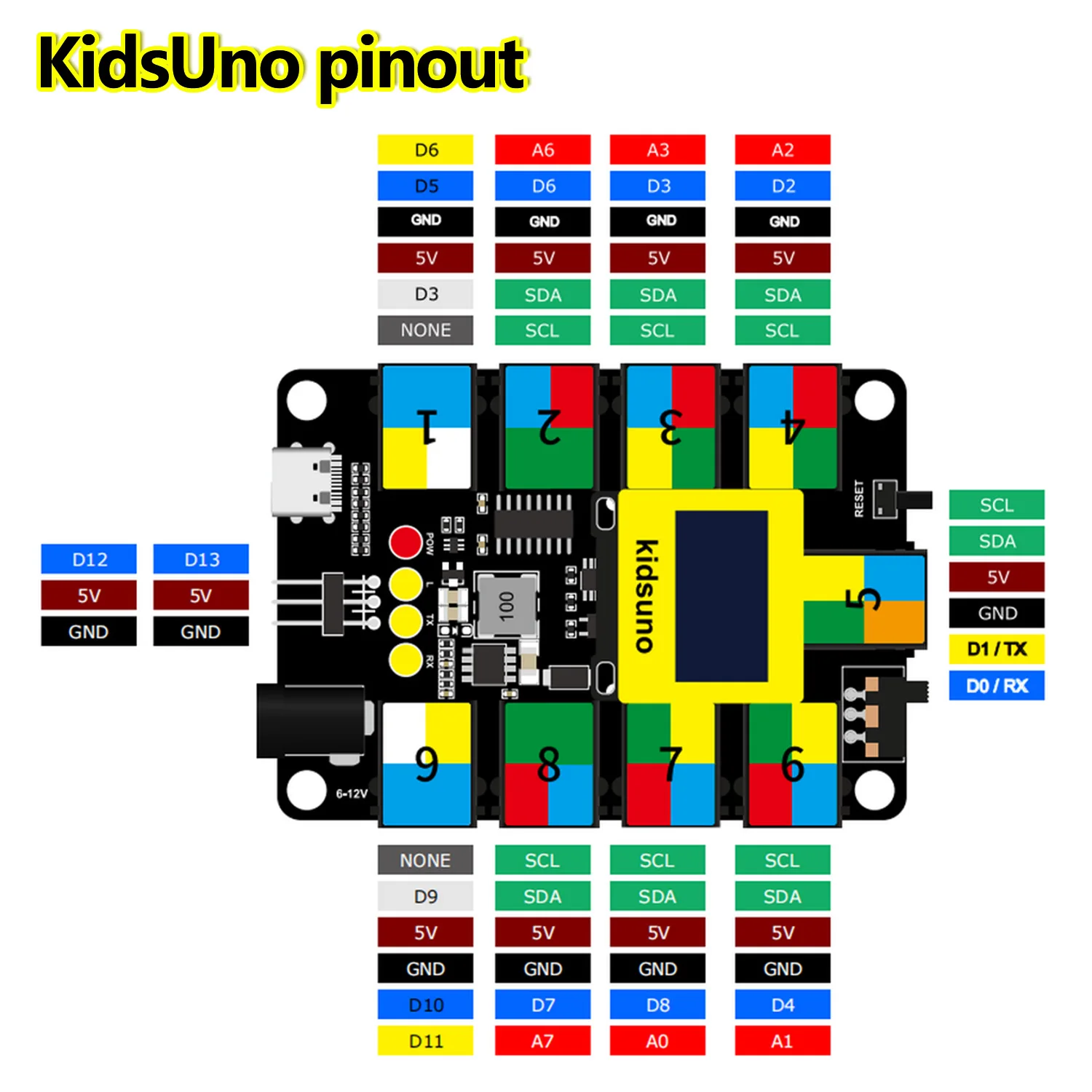
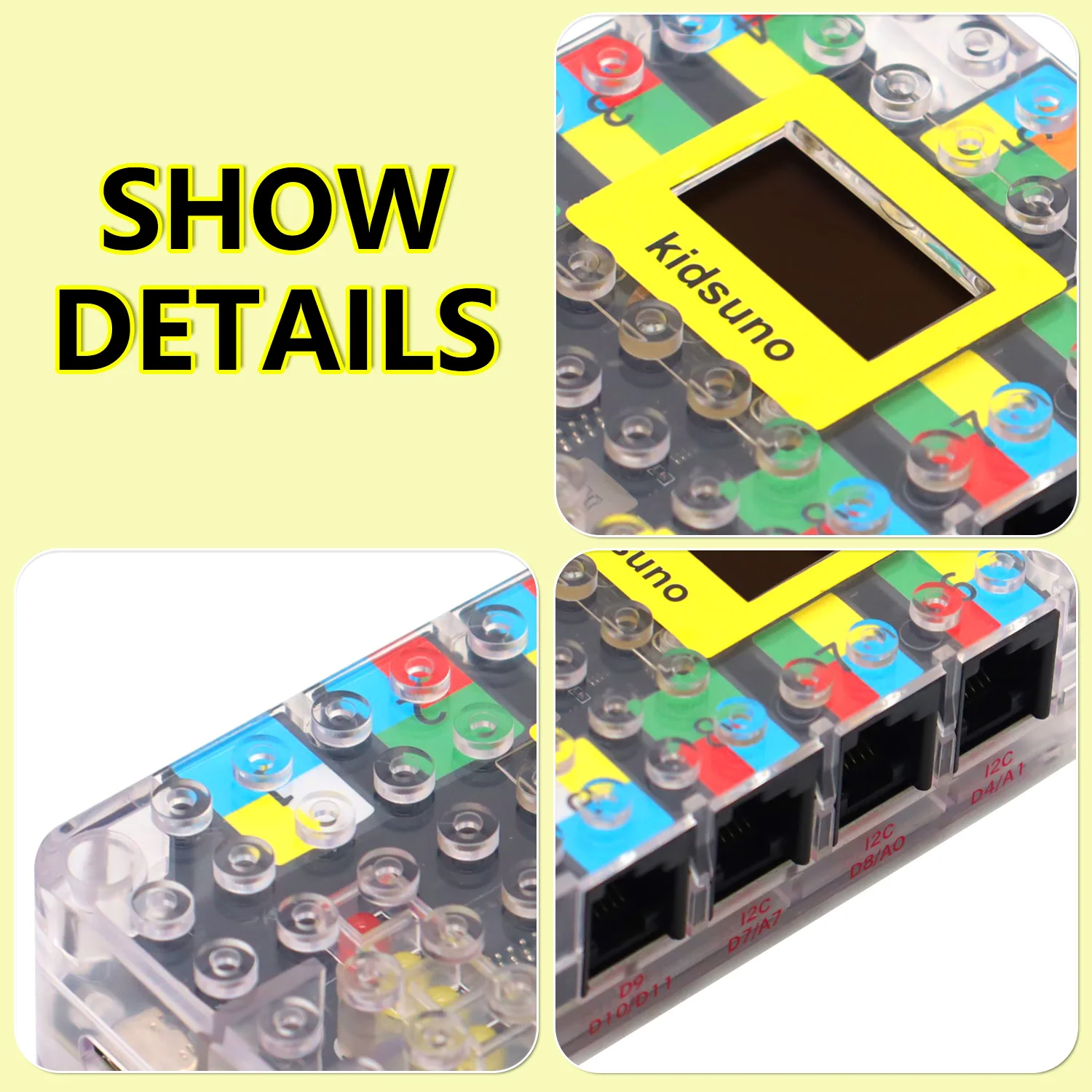
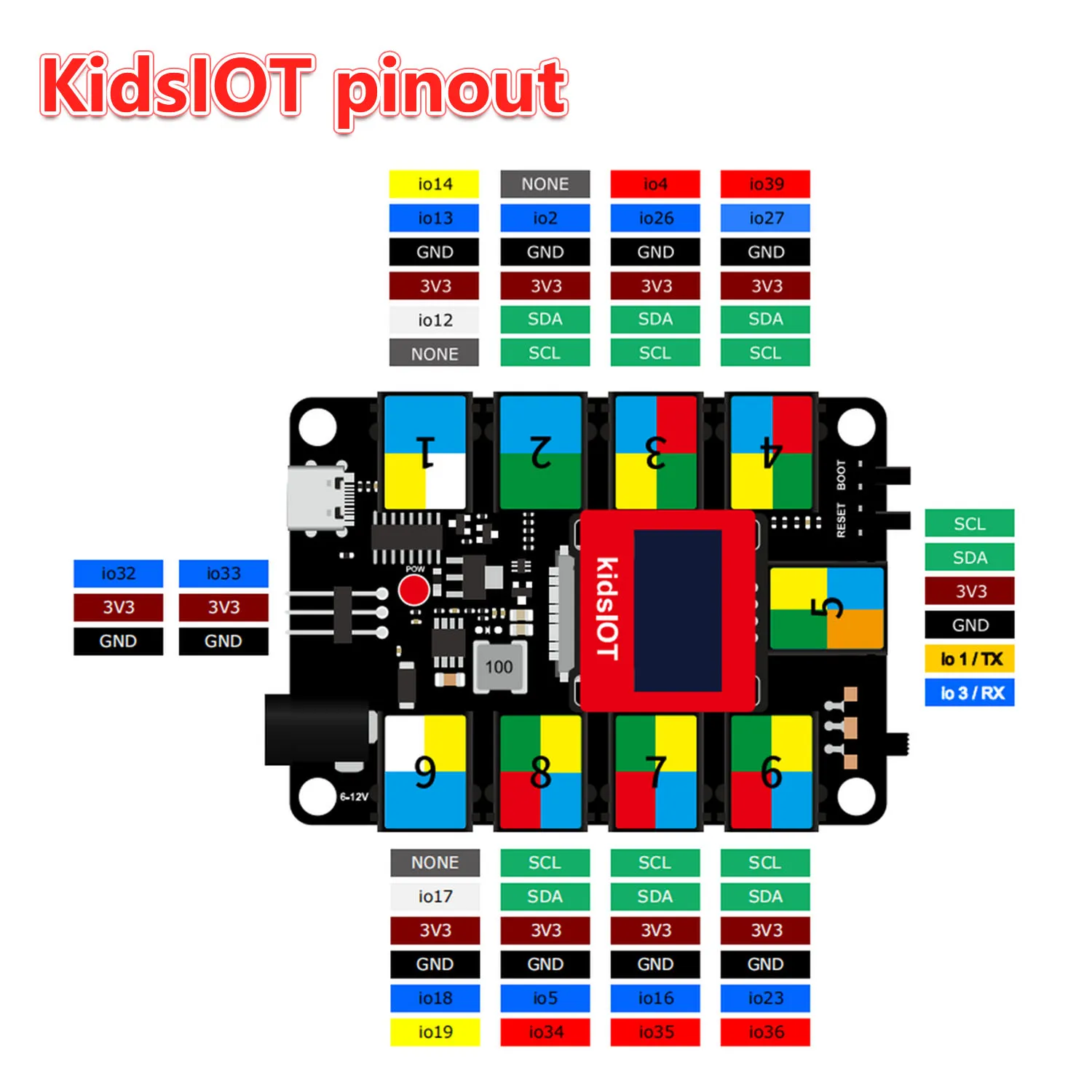
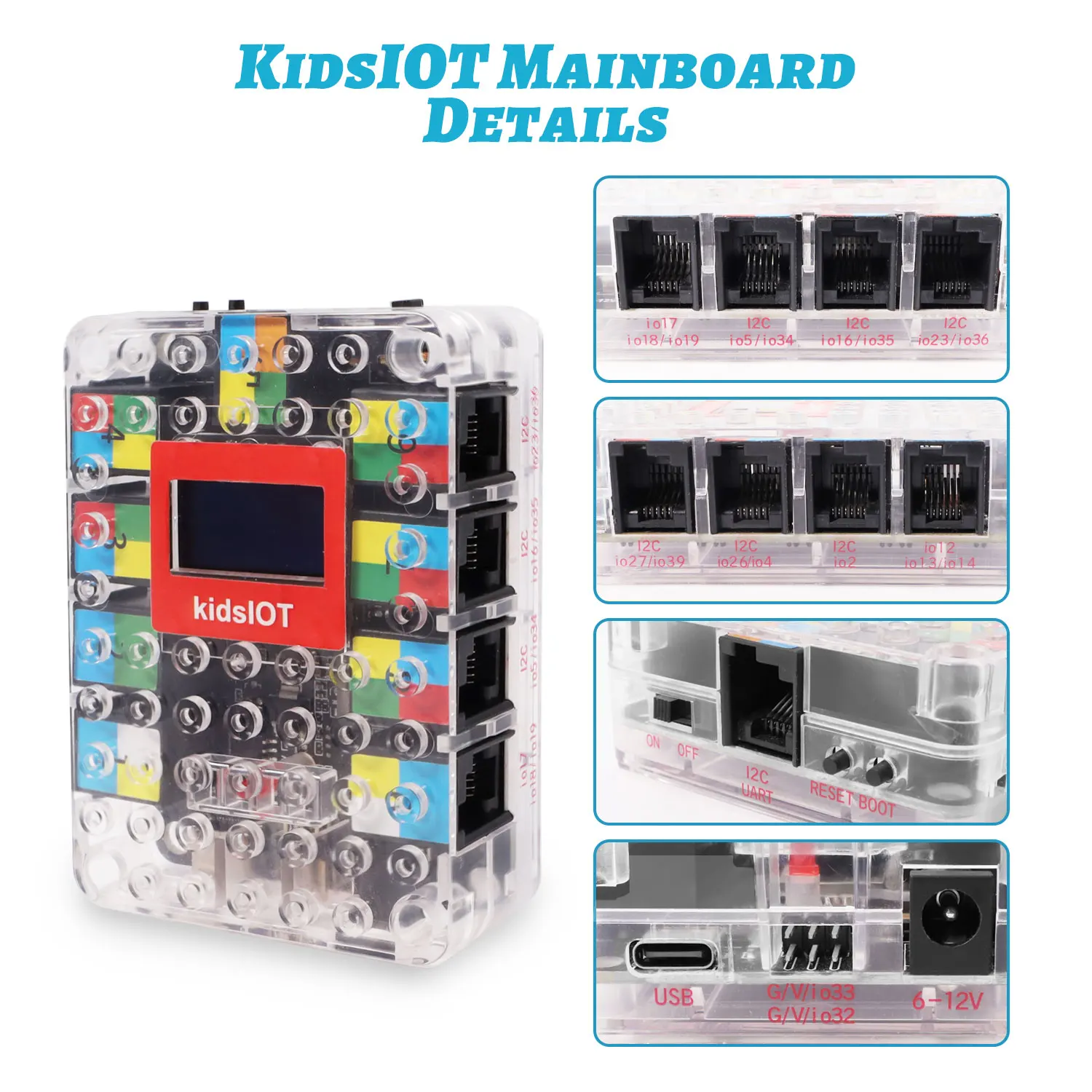
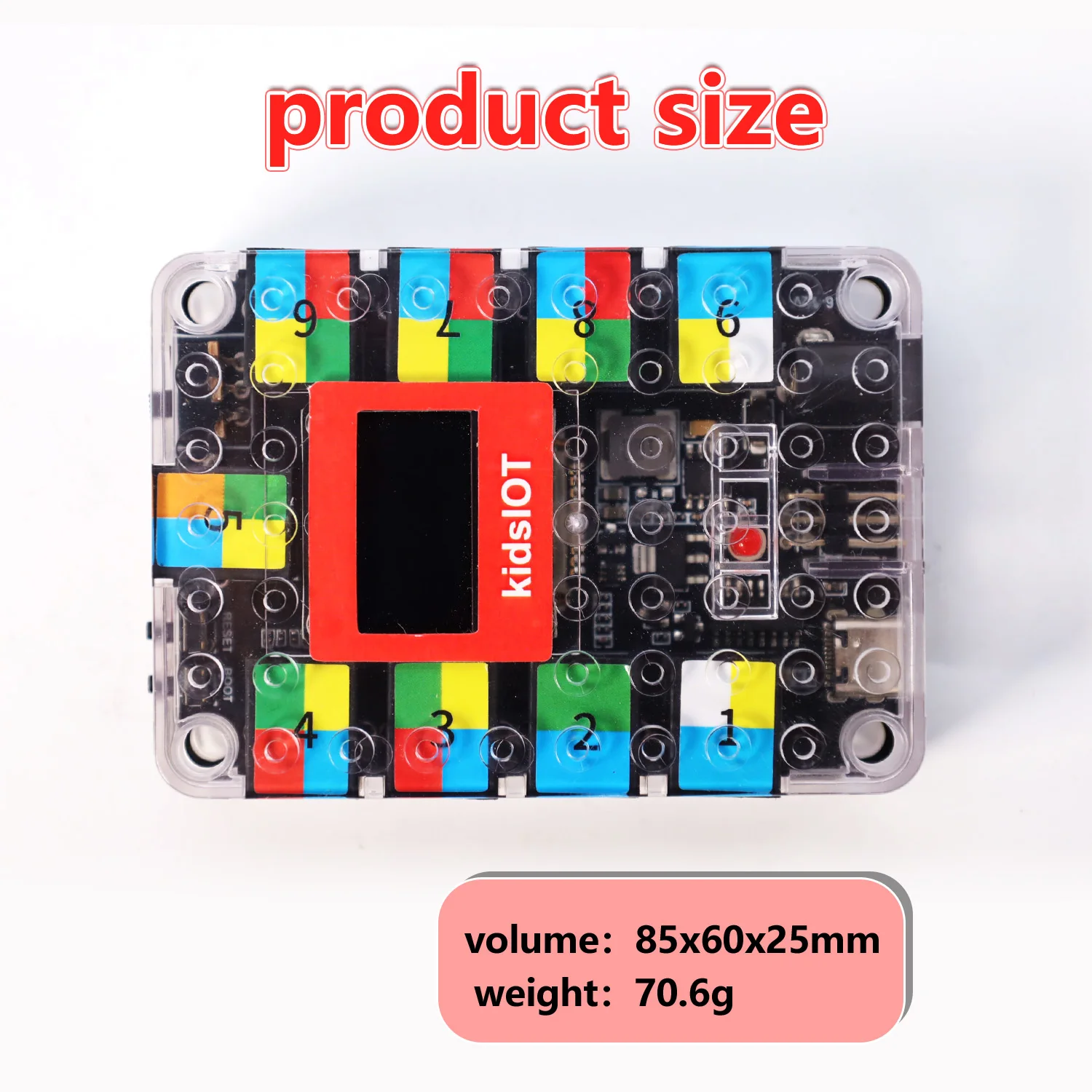
Its ESP32 chip provides complete solutions for various IoT applications. What’s more, its Wi-Fi and BT/BLE functions are fully compatible with the Arduino IDE development environment. By the way, it has 21 digital input/output pins (16 of which can be used as PWM output), 4 analog inputs, 7 sets of I2C interfaces, two servo pin interfaces as well as a 128*64 OLED display.
-
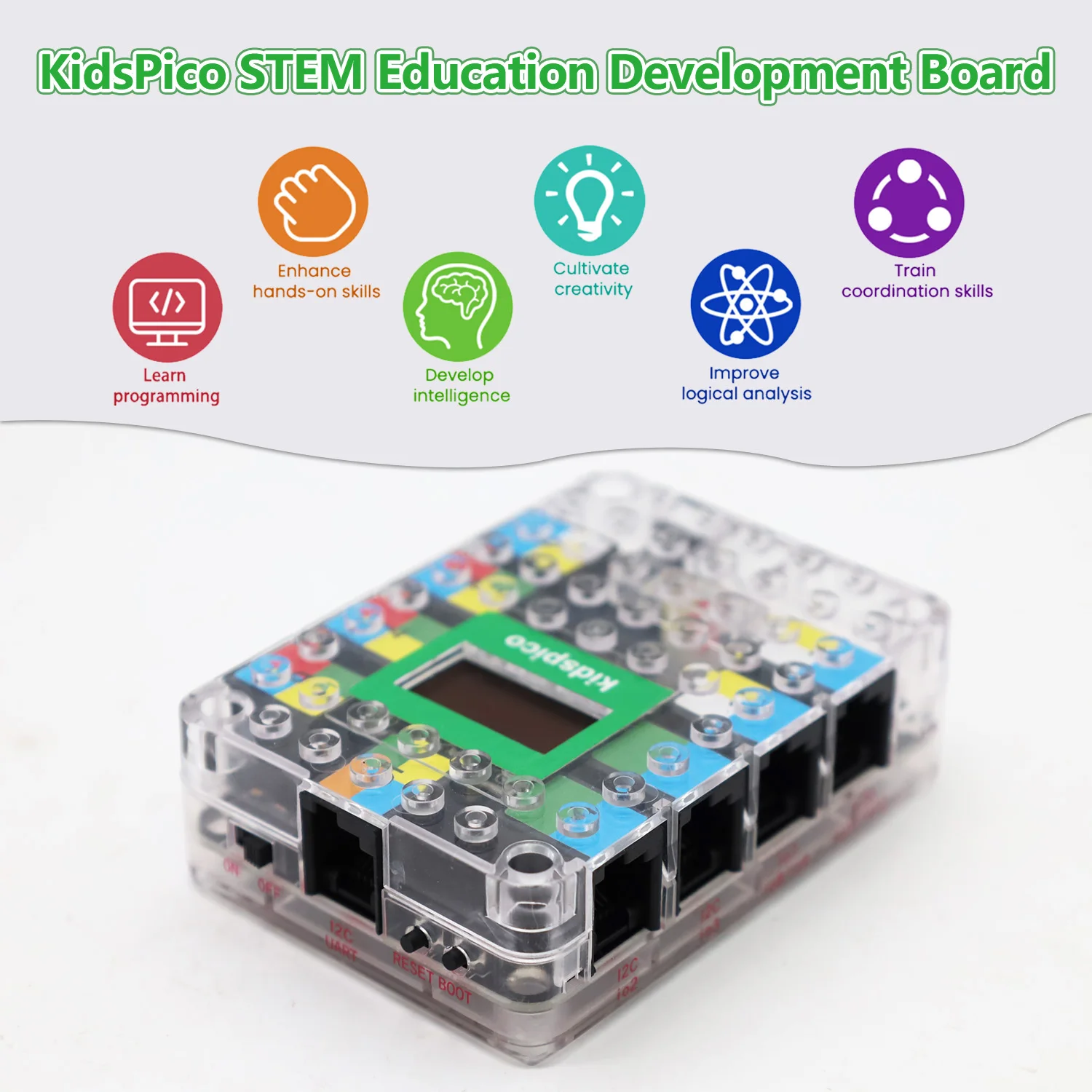
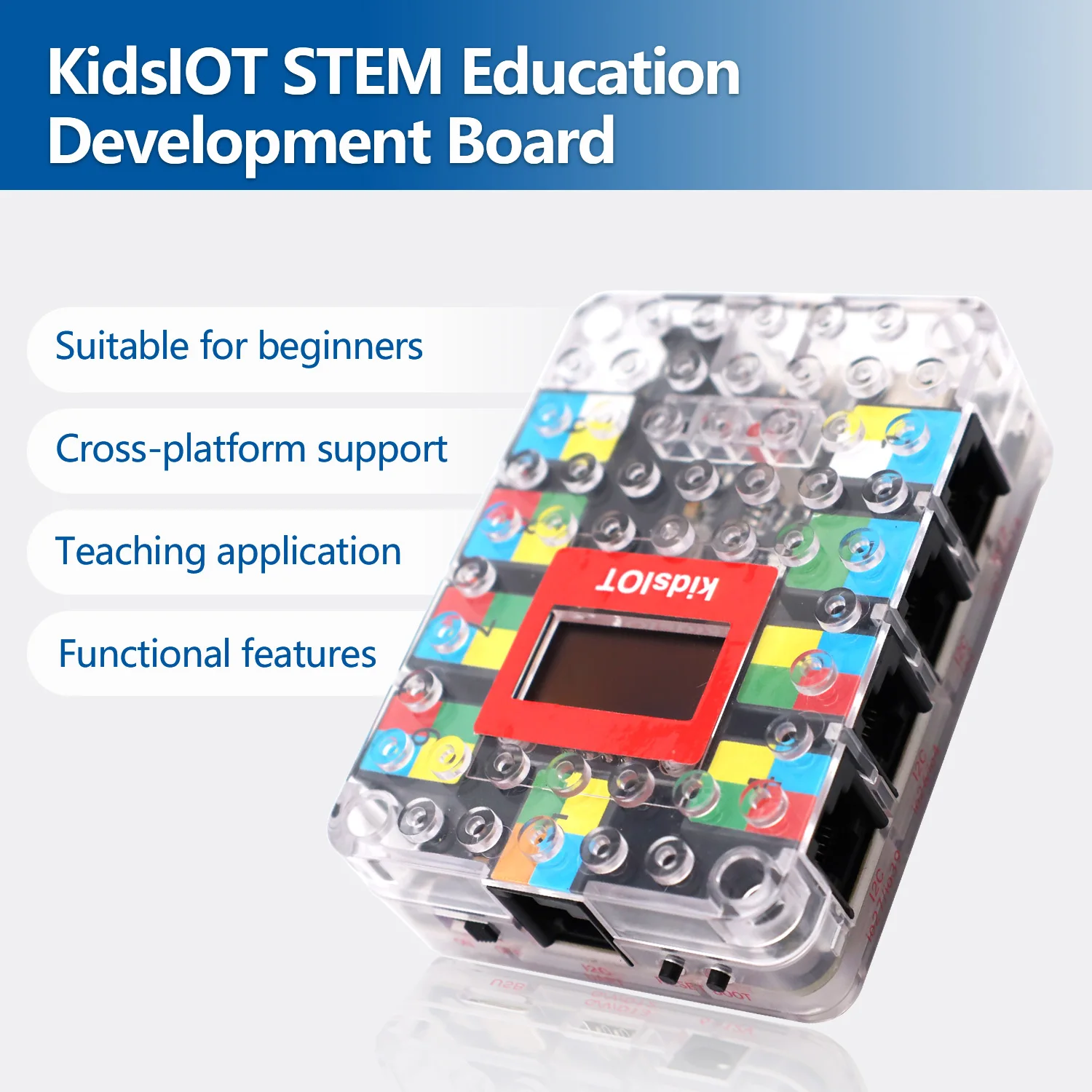
Suitable for beginners: The design is simple and easy to understand, which is suitable for beginners in the STEM field to get started quickly. It provides rich learning resources, tutorials and projects to help students gradually master programming and electronic principles.
-
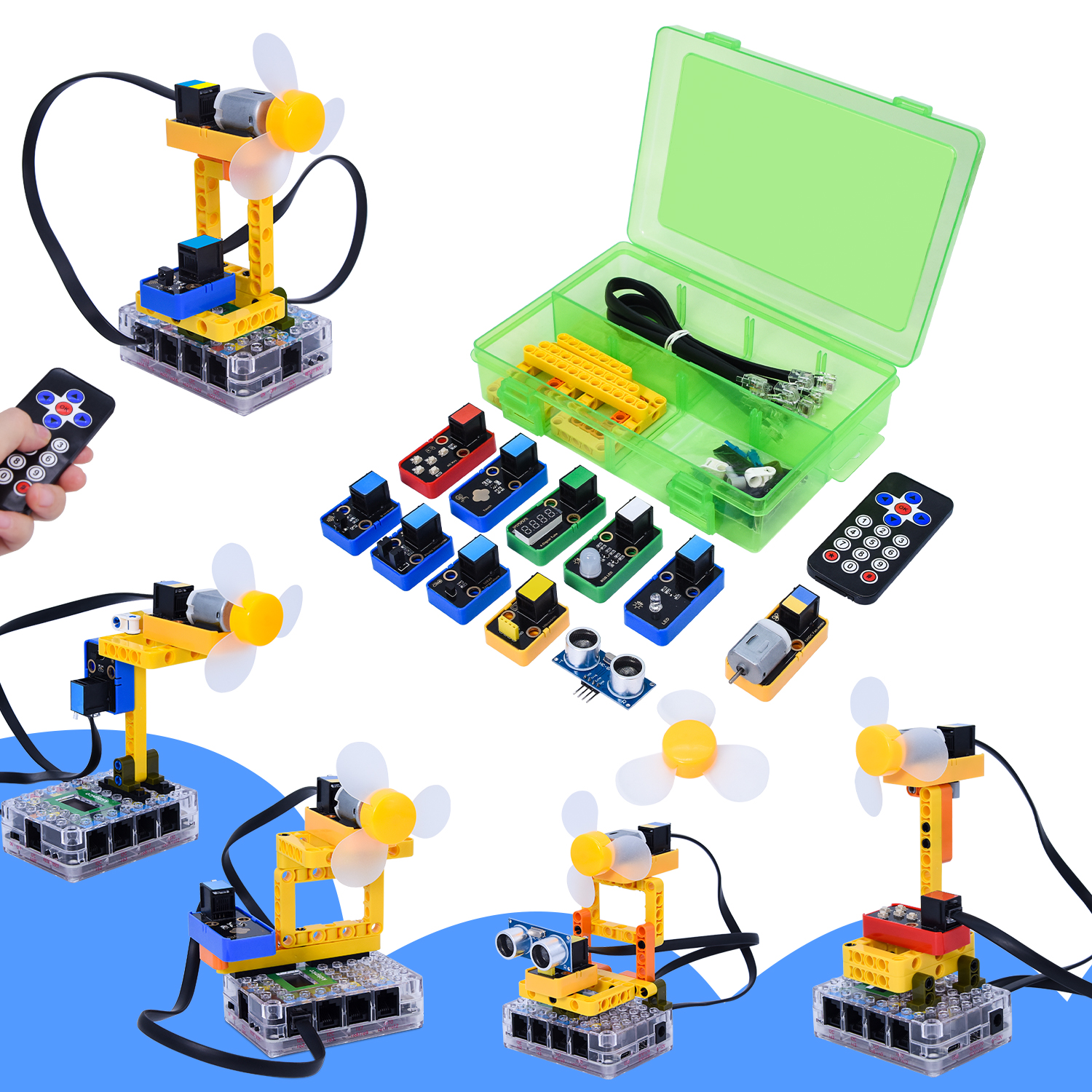
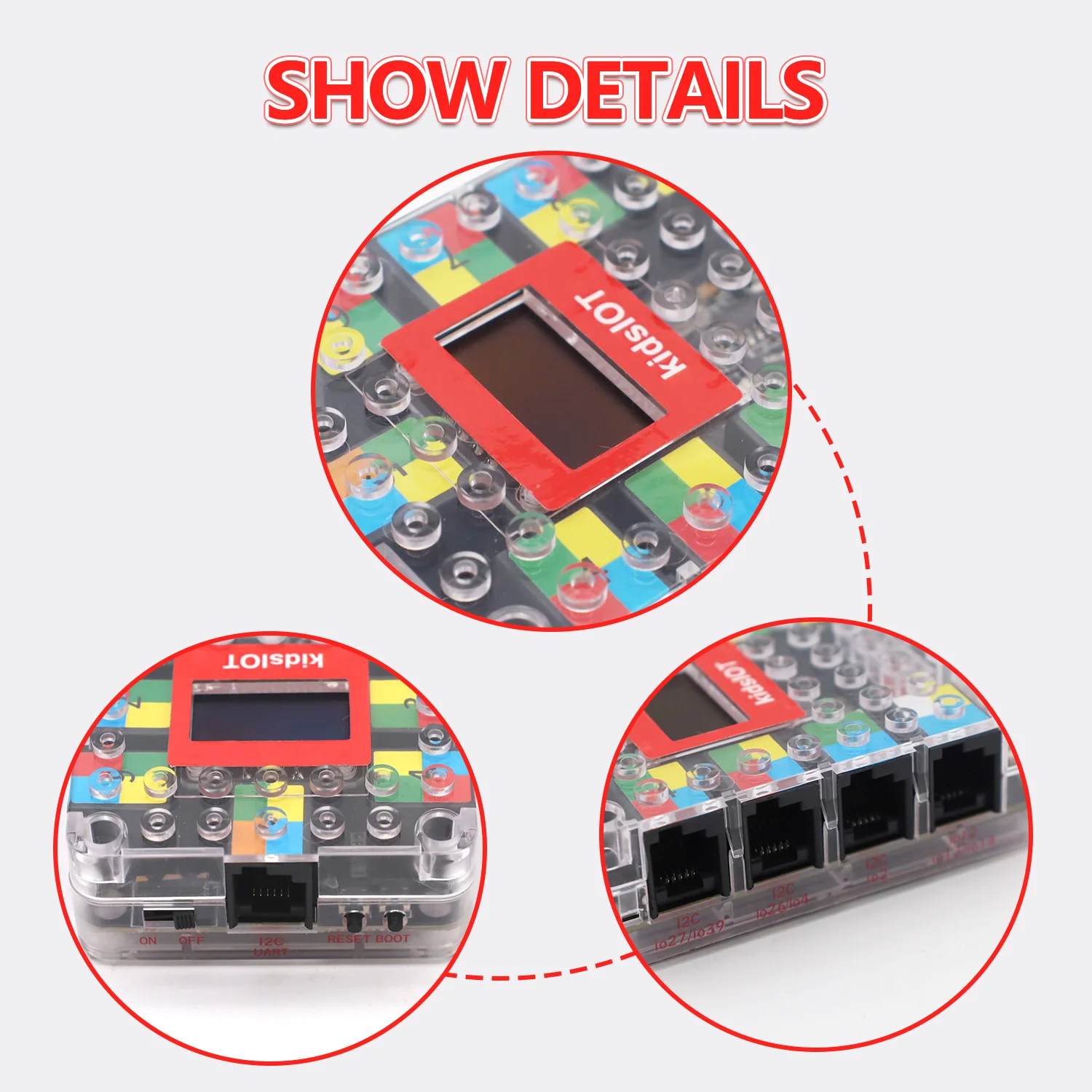
Functional features: It boasts a 128*64 OLED screen, which is convenient for experiments and projects. It supports kidsblock graphical programming, making programming more intuitive and interesting. Furthermore, its extended interfaces can be used to connect additional modules and sensors, thus expanding students’ creativity and project scope.
-
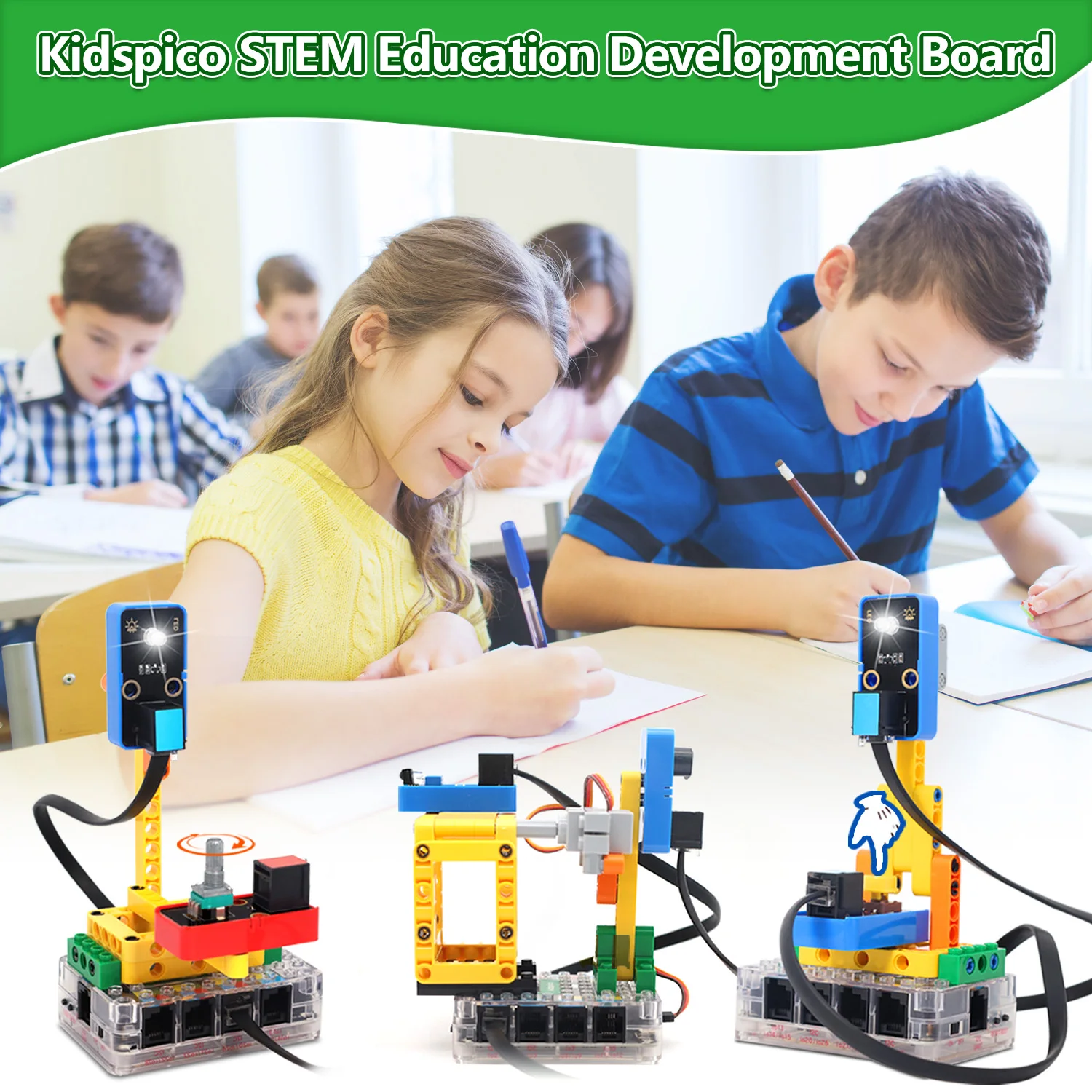
Teaching application: It can be used in STEM courses in schools to help students learn programming, electronic principles and engineering concepts. Students are encouraged to conduct practical projects and experiments to develop their problem-solving skills and innovative thinking.
-
Cross-platform support: It supports multiple programming languages and development environments such as Arduino IDE and Python.
KidsIOT Specifications
|
Microcontroller |
ESP32-D0WDQ6 |
|
Operating voltage |
3.3V |
|
Input voltage |
USB power:3.3V, DC power:6-12V |
|
Digital I/O pins |
21(Among them, 3 pins are used only for input) |
|
PWM digital I/O |
18 |
|
Analog input pins |
13 |
|
DC current per I/O pin |
20MA |
|
Flash memory |
4MB |
|
SRAM |
520KB |
|
Clock speed |
Integrated crystal(40MHZ),default speed is 80MHZ, maximum is 240MHZ. |
|
WIFI Protocol |
802.11 b/g/n(802.11n,speed is up to 150 Mbps) |
|
WIFI Frequency |
2.4 GHz ~ 2.5 GHz |
|
Bluetooth Protocol |
Compliant with Bluetooth V4.2 BR/EDR and BLE standard |
|
Bluetooth RF |
NZIF receiver with -97dBm sensitivity, Class-1, Class-2 and Class-3 transmitters, AFH |
|
Total Current |
400mA (max output) for USB power, 1.6A (max output) for DC power. |
|
Maximum Power |
5.28W |
|
Operating temperature range |
-10~50 degrees Celsius |
|
Weight |
50g |


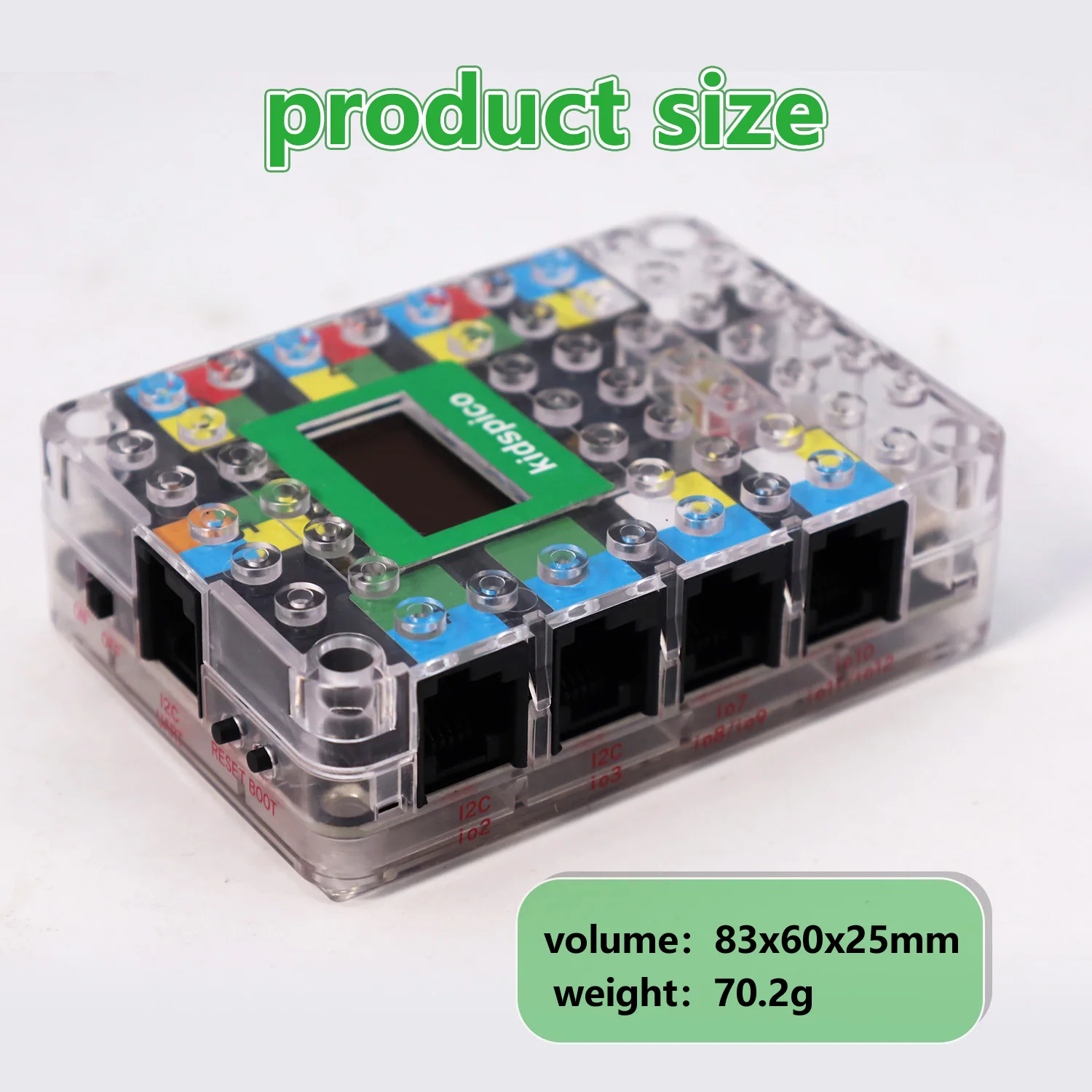
 What is KidsPico?
 What is KidsPico?
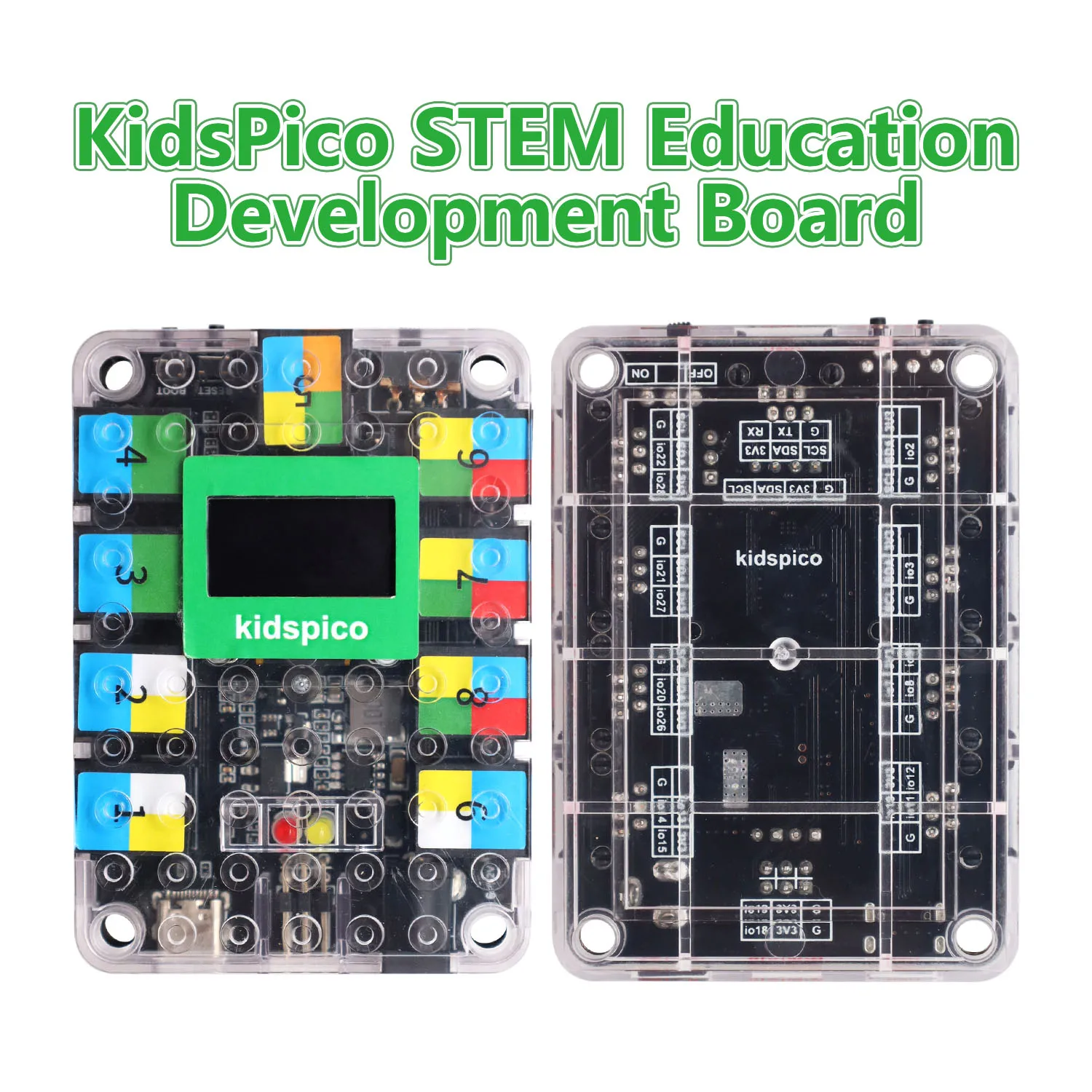
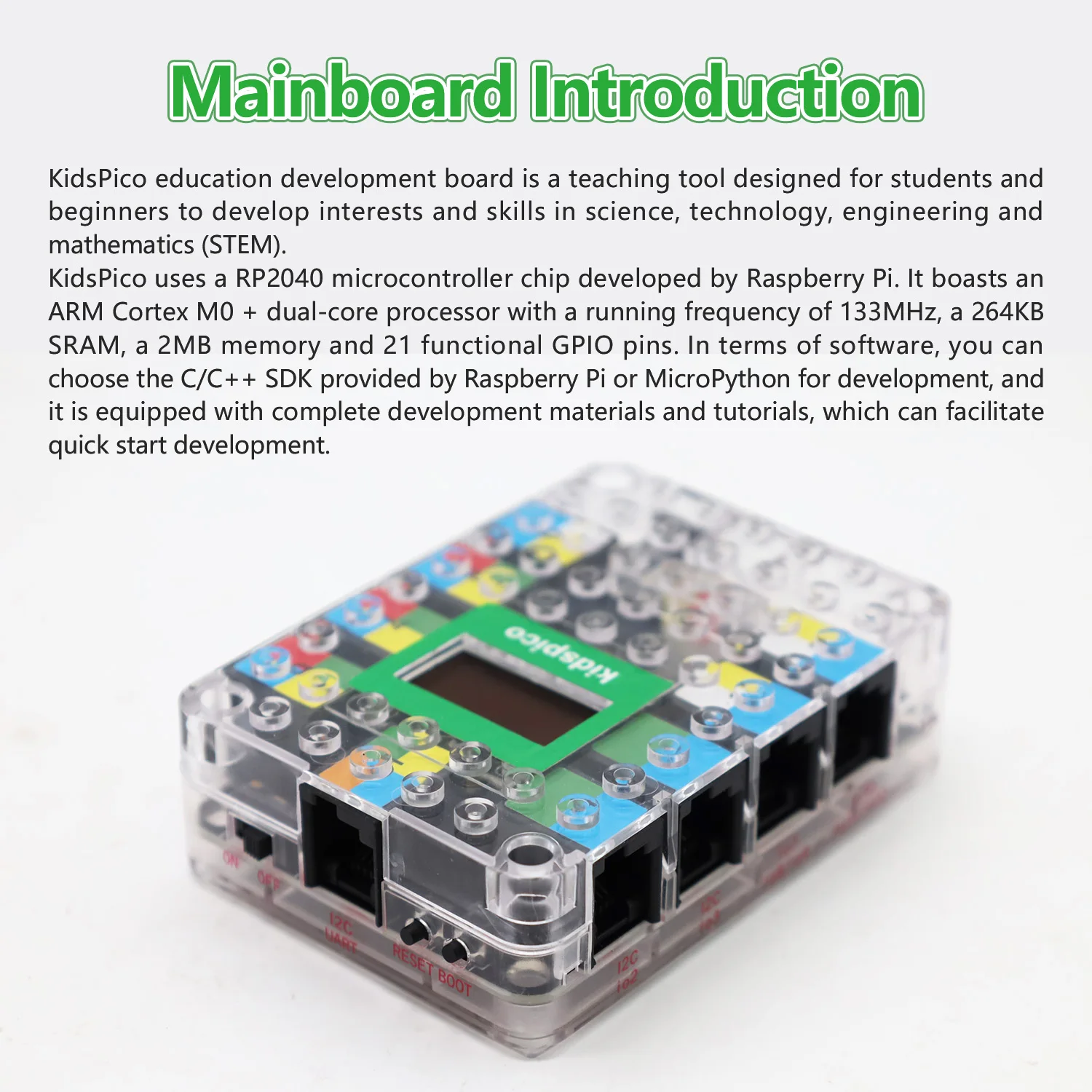
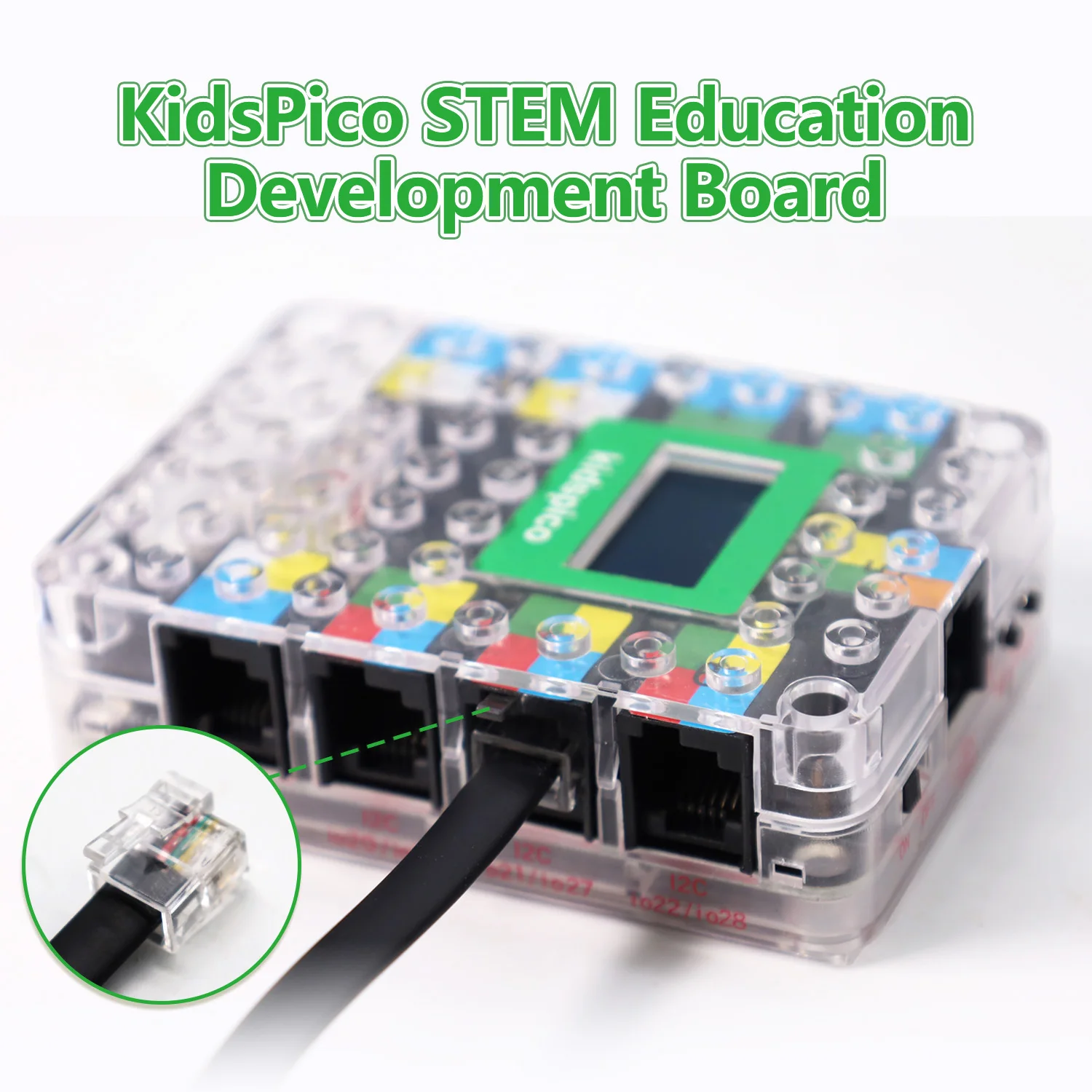
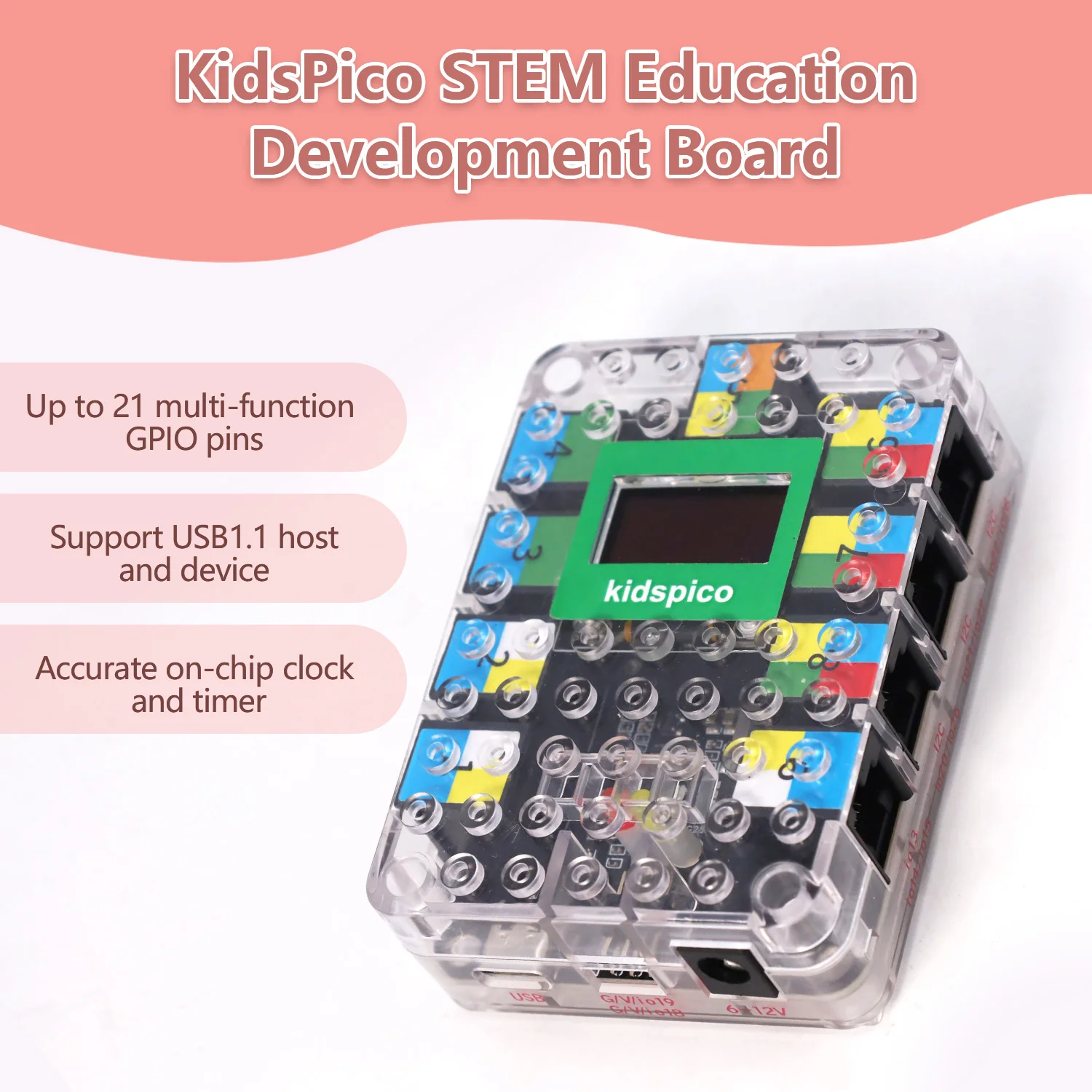
KidsPico education development board is a teaching tool designed for students and beginners to develop interests and skills in science, technology, engineering and mathematics (STEM).
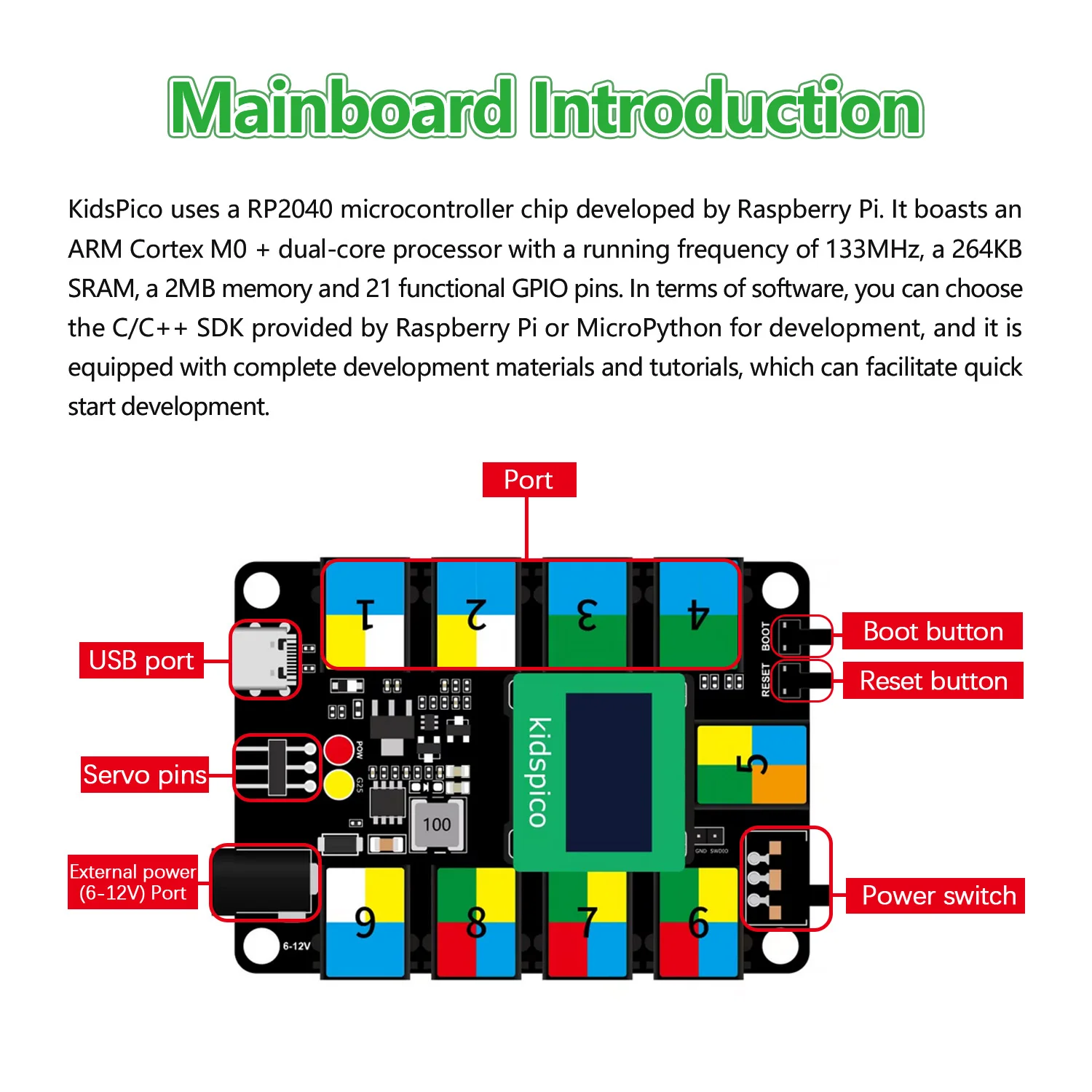
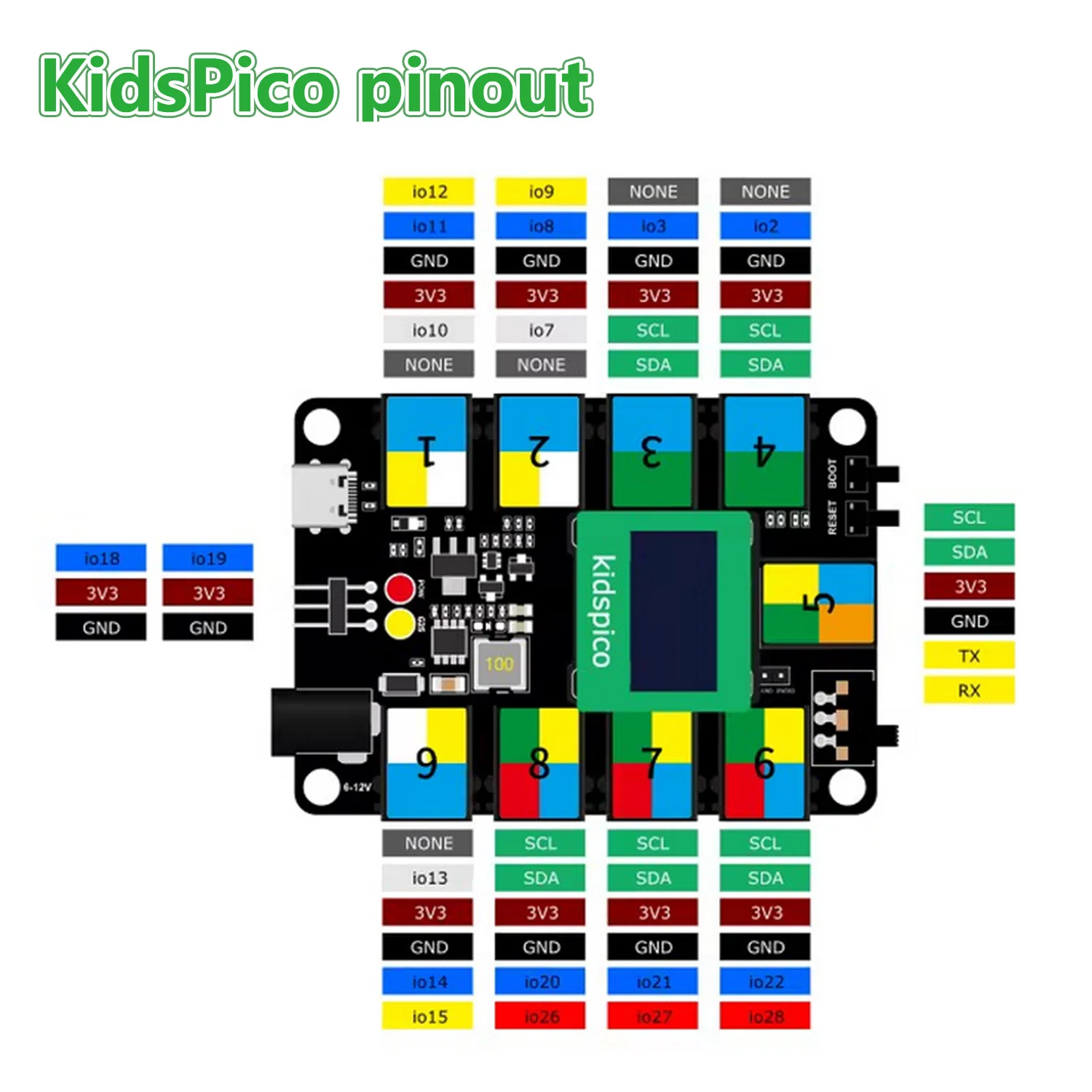
KidsPico uses a RP2040 microcontroller chip developed by Raspberry Pi. It boasts an ARM Cortex M0 + dual-core processor with a running frequency of 133MHz, a 264KB SRAM, a 2MB memory and 21 functional GPIO pins. In terms of software, you can choose the C/C++ SDK provided by Raspberry Pi or MicroPython for development, and it is equipped with complete development materials and tutorials, which can facilitate quick start development.
Features:
※ Use the RP2040 microcontroller chip designed by Raspberry Pi
※ Equipped with dual-core ARM Cortex M0 + processor, running frequency is up to 133MHz flexible clock
※ The chip has built-in 264KB SRAM and 2MB on-chip Flash
※ Support USB1.1 host and device
※ Support low-power sleep and hibernation mode
※ Can be recognized as mass storage via USB for drag-and-drop downloading
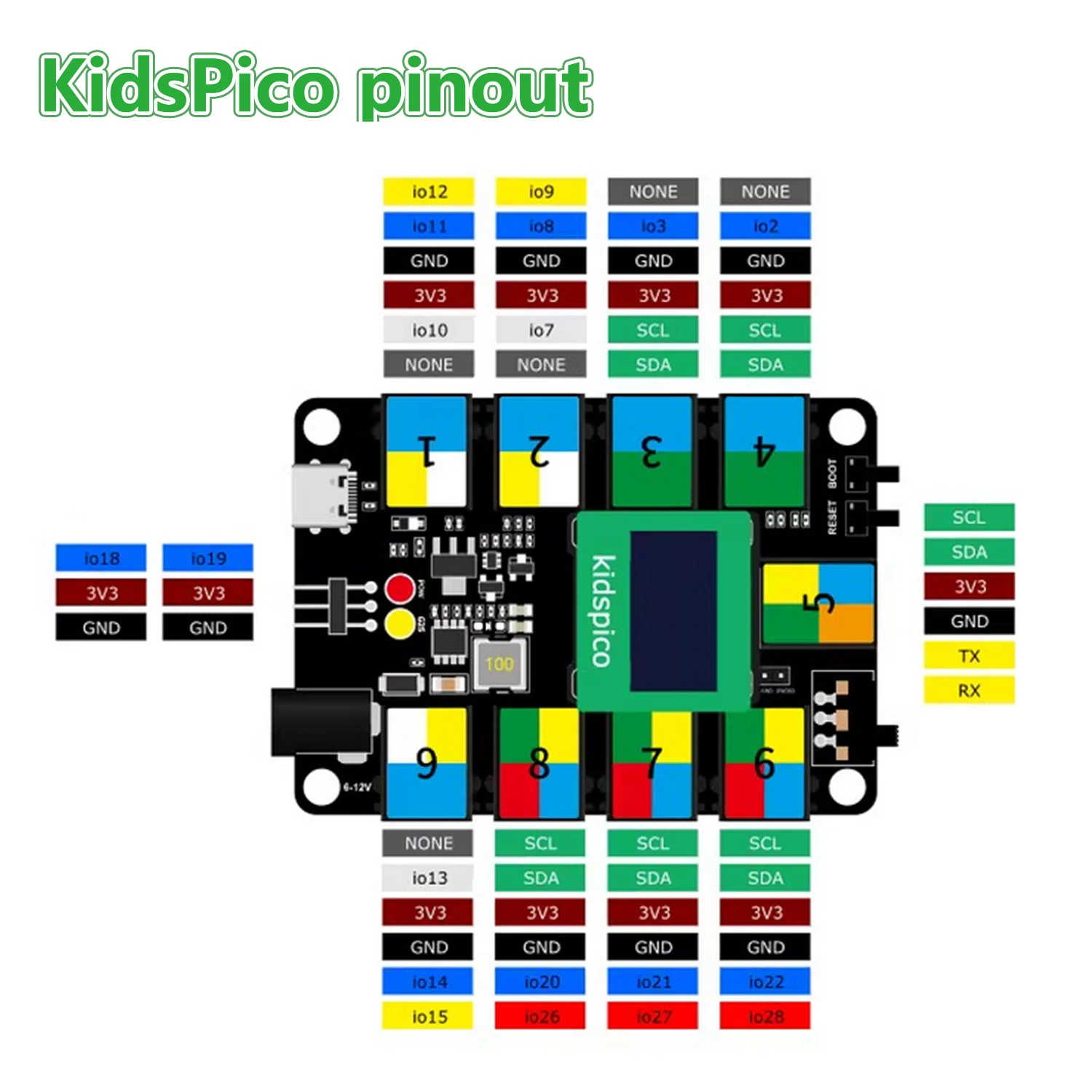
※ Up to 21 multi-function GPIO pins
※ Accurate on-chip clock and timer
※ Temperature sensor
※ 8 programmable I/O (PIO) state machines for custom peripheral device
KidsPico Specifications
|
Microcontroller |
RP2040 |
|
Operating voltage |
3.3V |
|
Input voltage |
USB power:3.3V,DC power:6-12V |
|
Digital I/O pins |
21(Among them, 3 pins are used only for input) |
|
PWM digital I/O |
16 |
|
Analog input pins |
The Raspberry Pi Pico board has 5 ADCs with a resolution of 12 bits, which are ADC0 (GP26), ADC1 (GP27), ADC2 (GP28), ADC3 (GP29), and ADC4. Among them, ADC3 (GP29) is used to measure VSYS on the Pico board; ADC4 is directly connected to the temperature sensor built into the RP2040. ADC_VREF can be connected to an external accurate voltmeter as the ADC reference. The ADC_GND pin serves as the ground reference point. |
|
DC current per I/O pin |
20MA |
|
Flash memory |
2MB |
|
SRAM |
264KB |
|
Clock speed |
Up to 133MHz |
|
Total Current |
400mA (max output) for USB power, 1.6A (max output) for DC power. |
|
Maximum Power |
5.28W |
|
Operating temperature range |
-10~50 degrees Celsius |
|
Weight |
36g |