⚠️ WARNING: This product contains small components. Therefore, children under 8 years old must use it under adult supervision. In addition, do not swallow small parts to avoid the risk of suffocation.
🌟 Product Overview
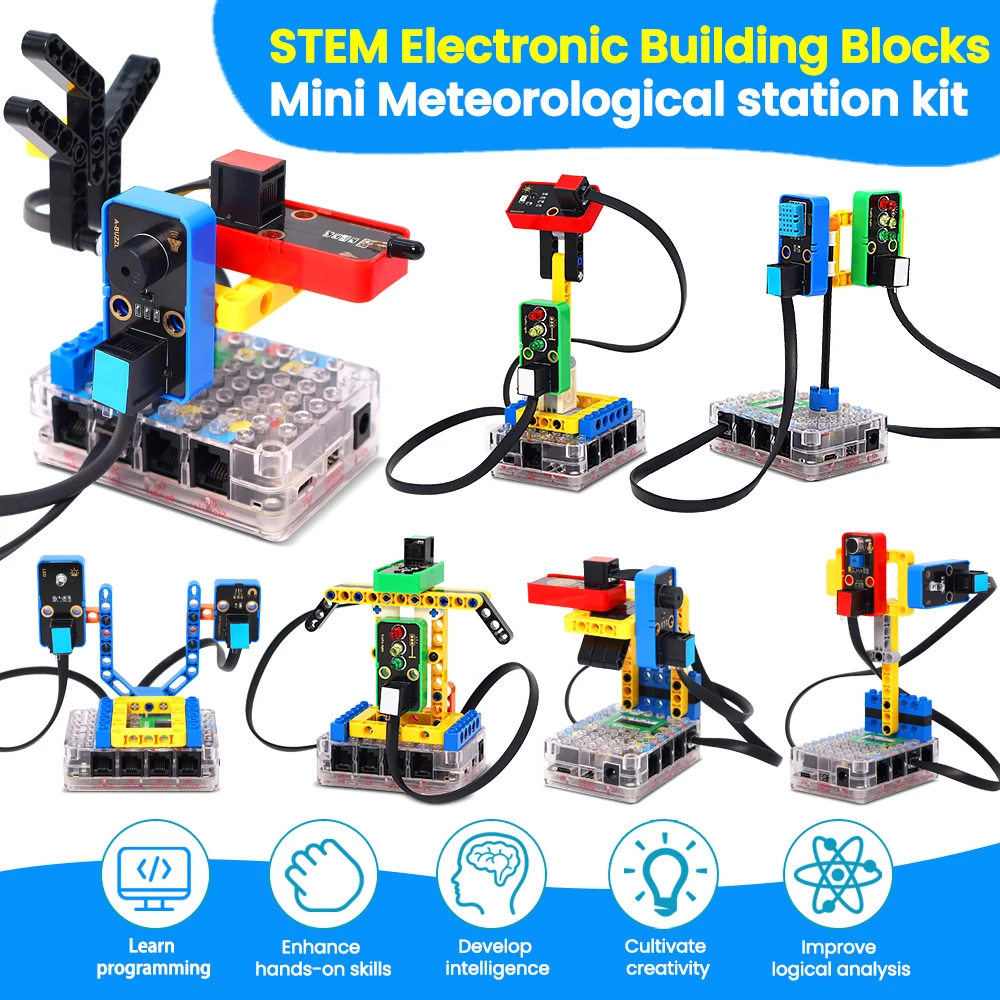
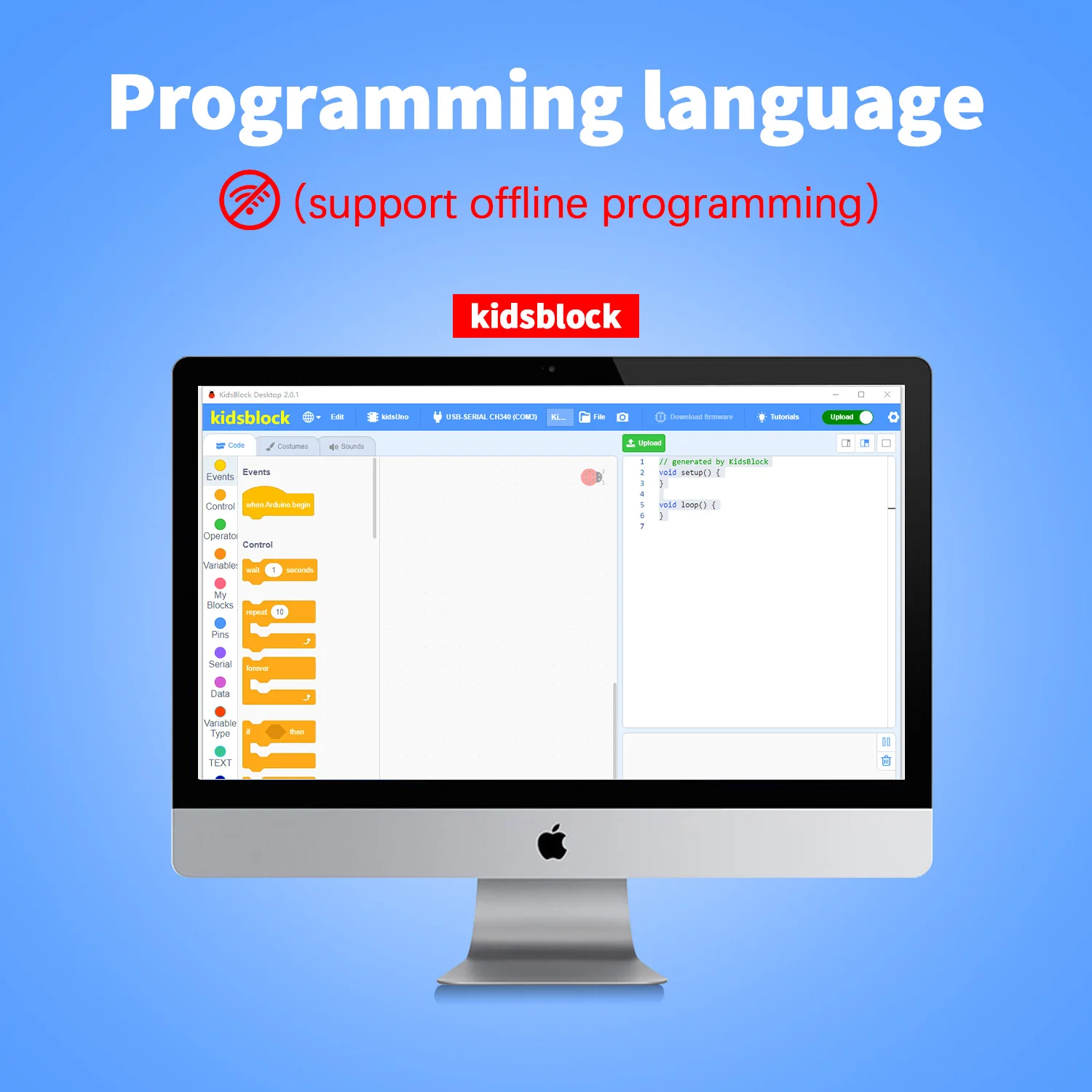
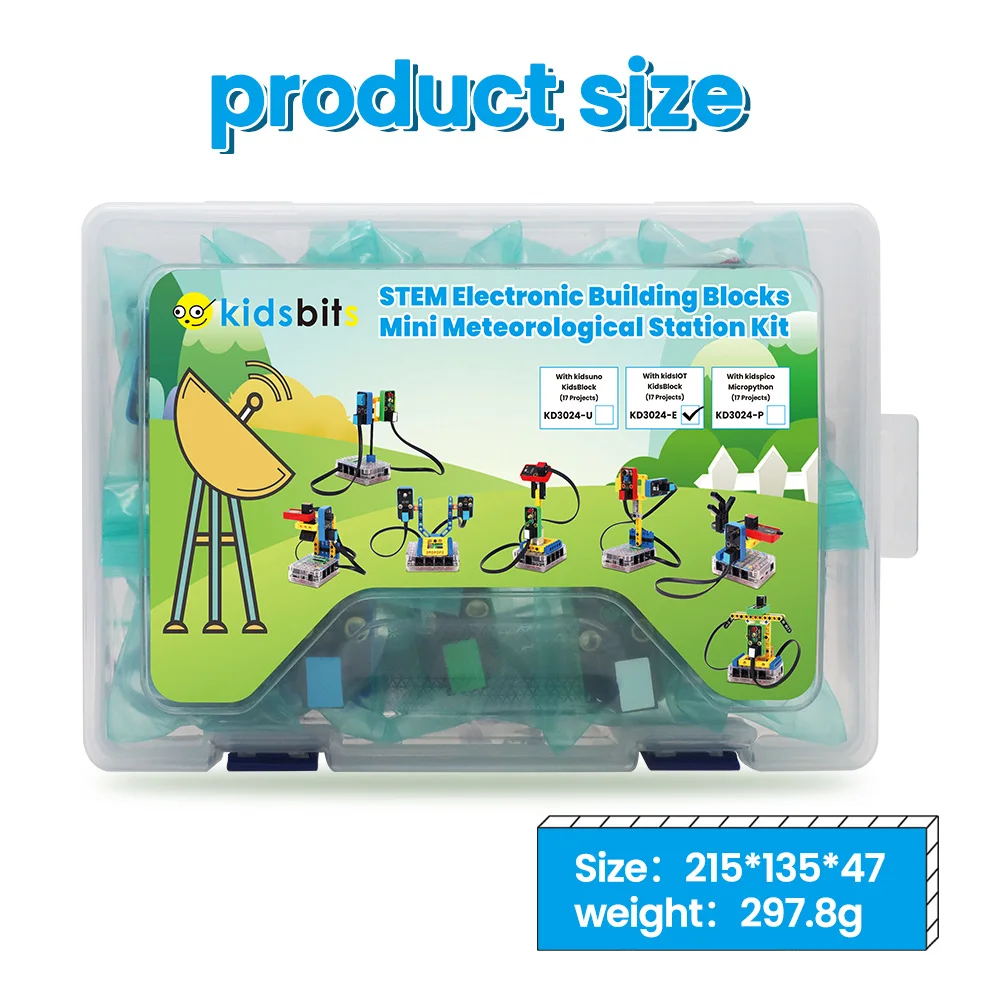
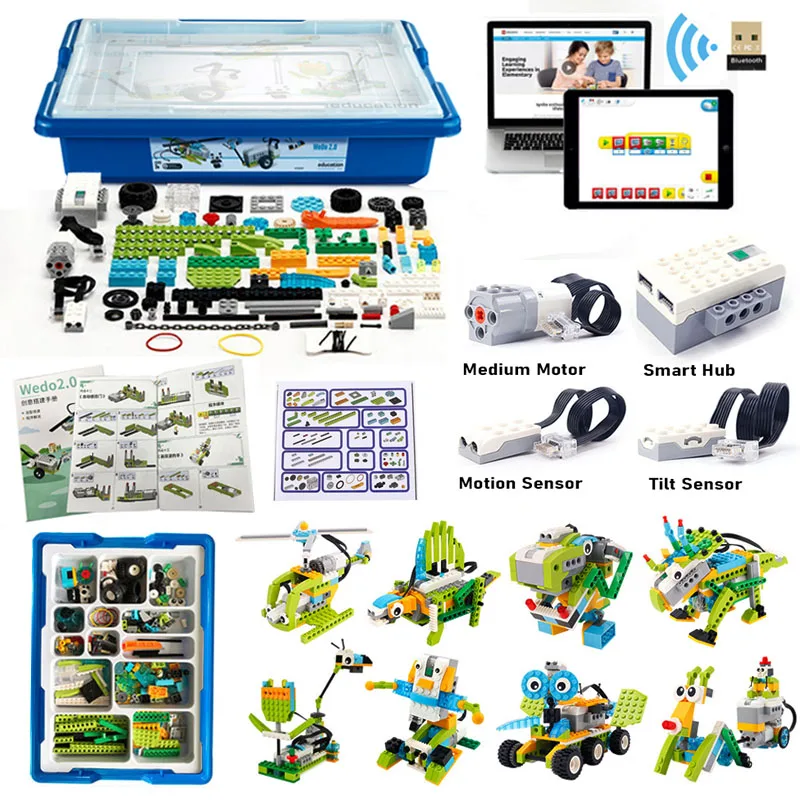
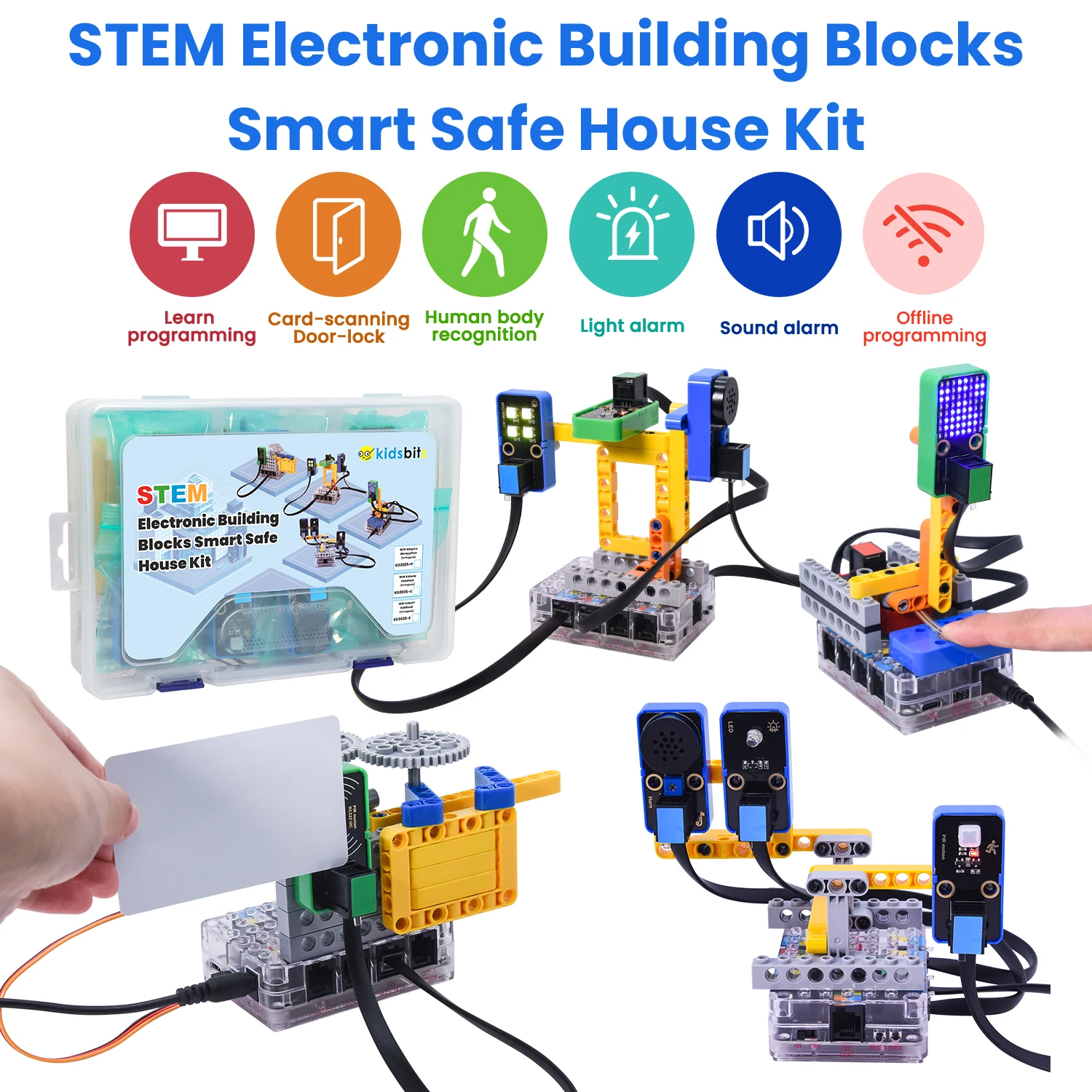
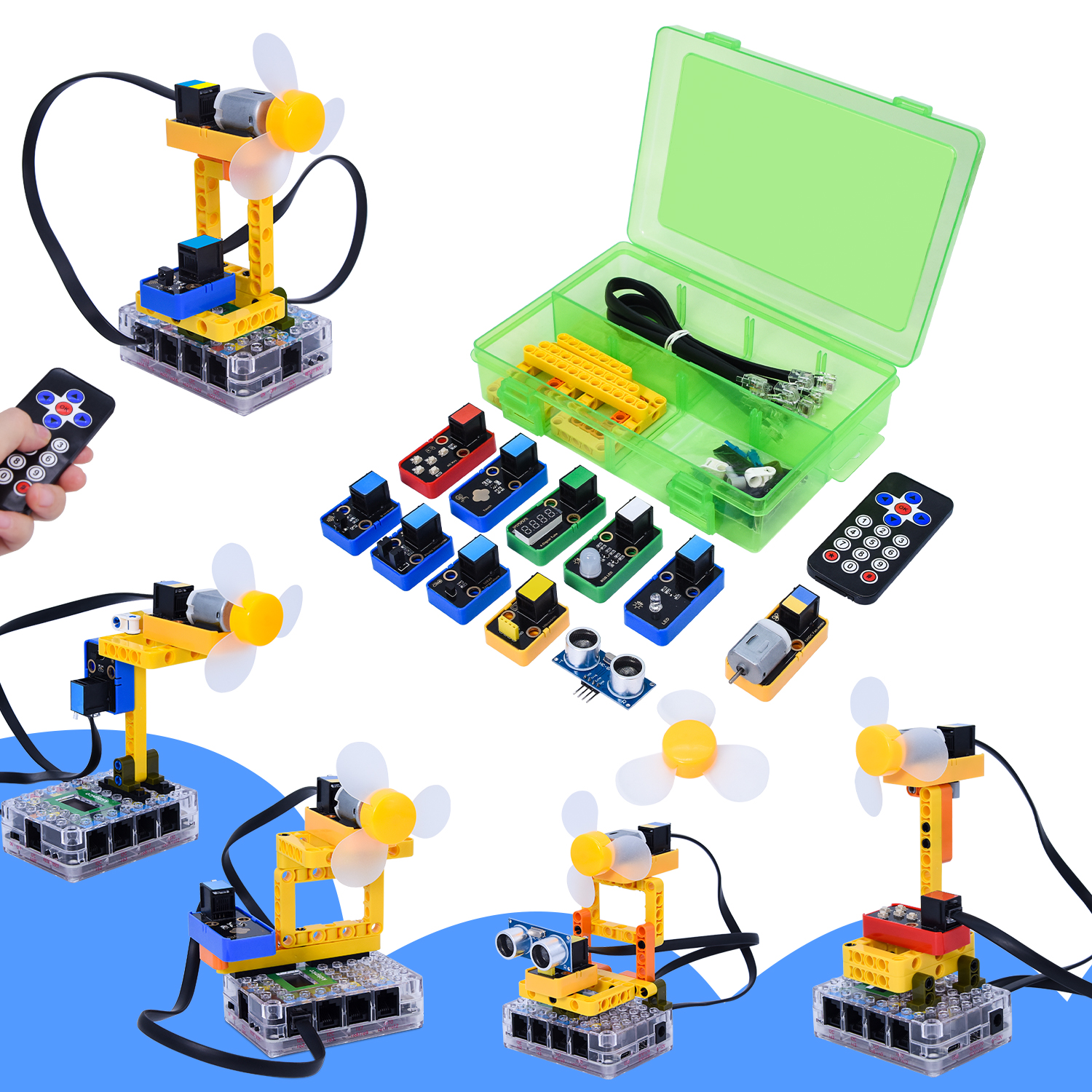
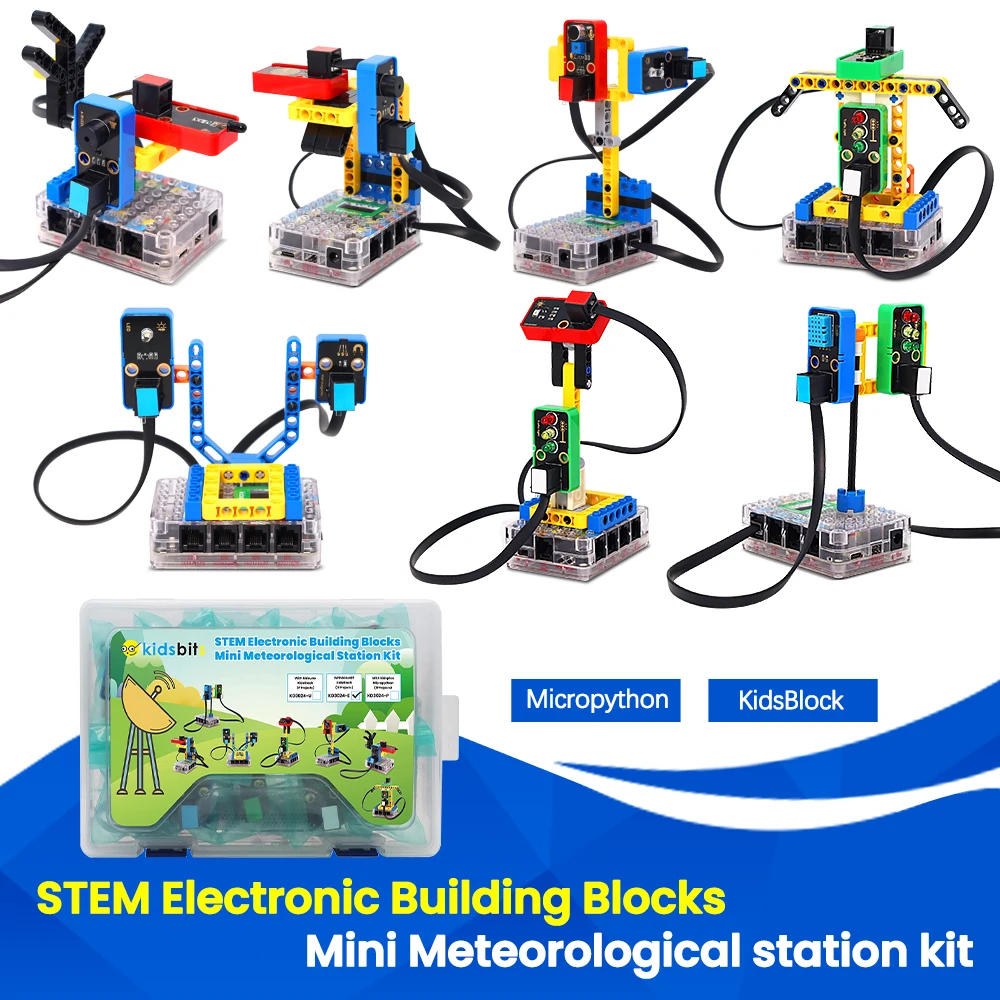
Designed especially for children aged 9–12, this STEM Electronic Building Blocks Mini Meteorological Station Kit provides a fun and educational introduction to electronics and programming. First of all, it is based on KidsBlock and the Python programming language. Moreover, the kit is fully compatible with LEGO building blocks, allowing children to learn while building creatively.
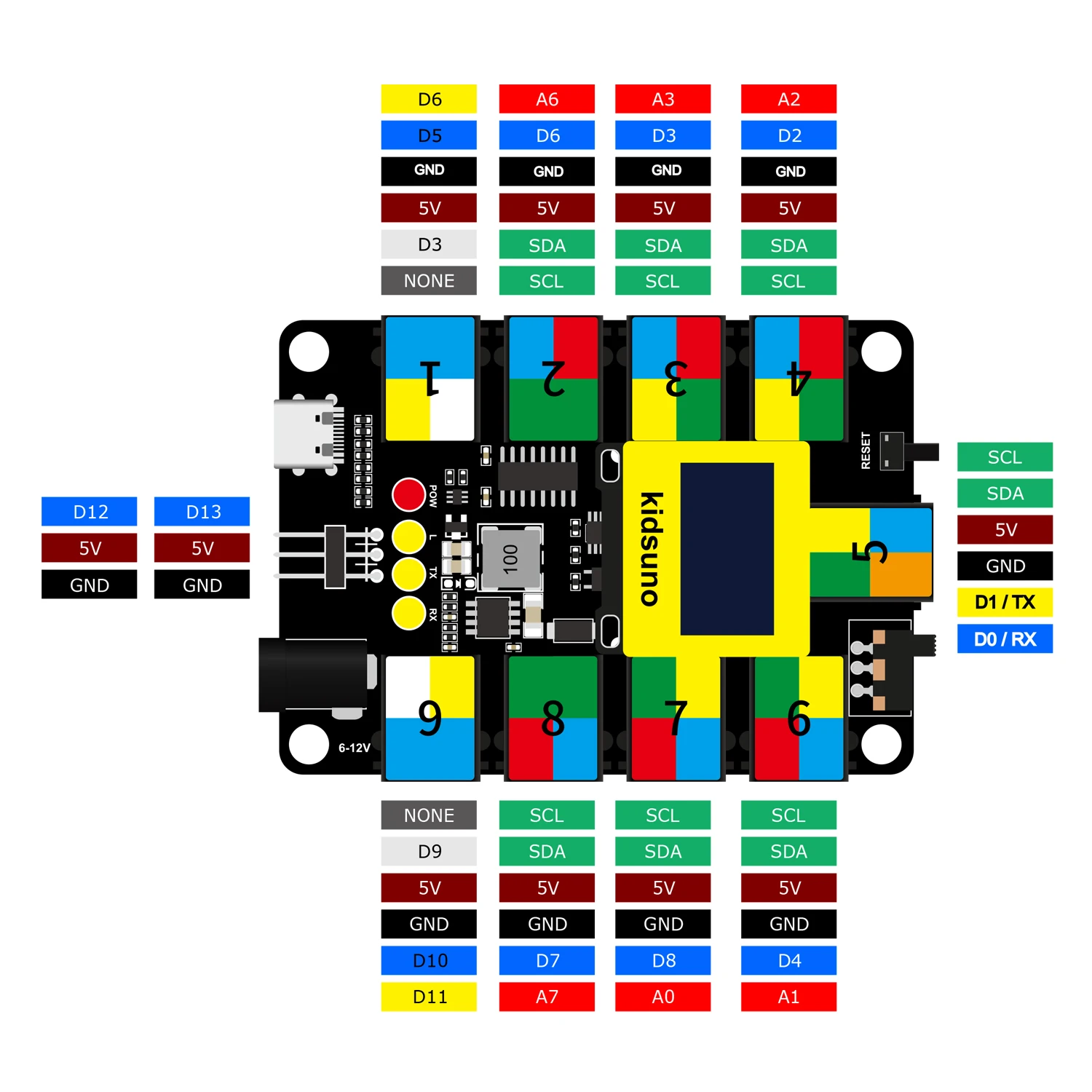
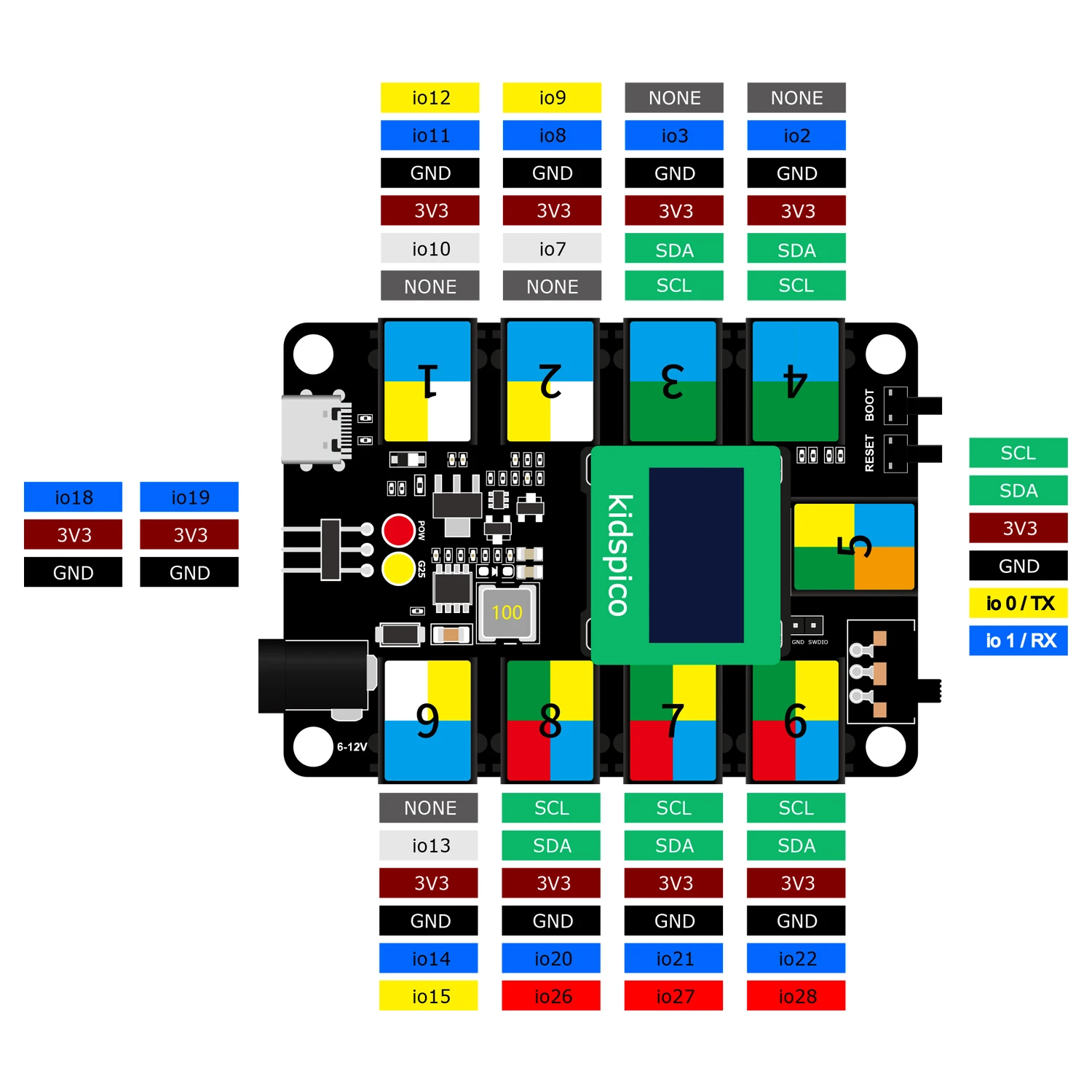
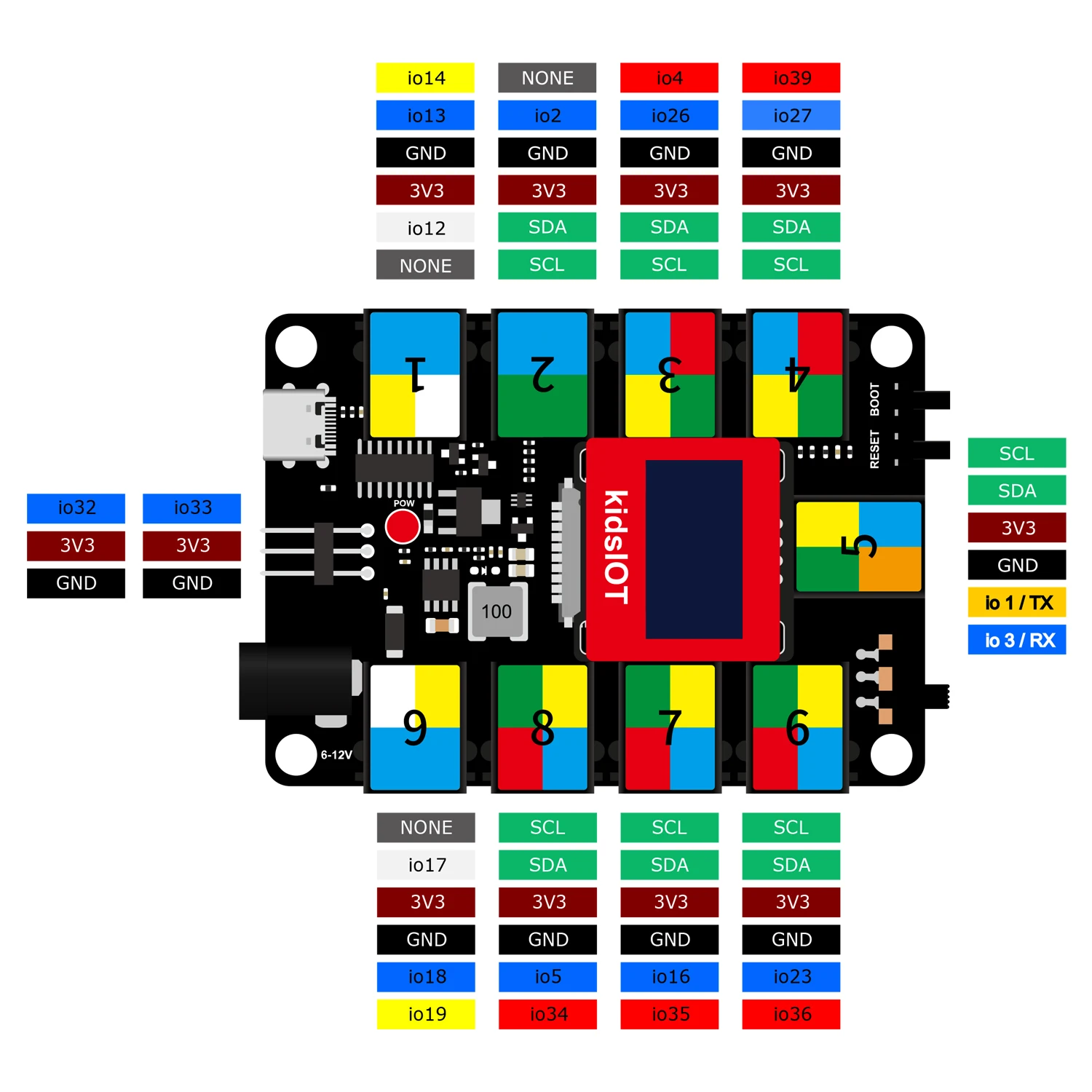
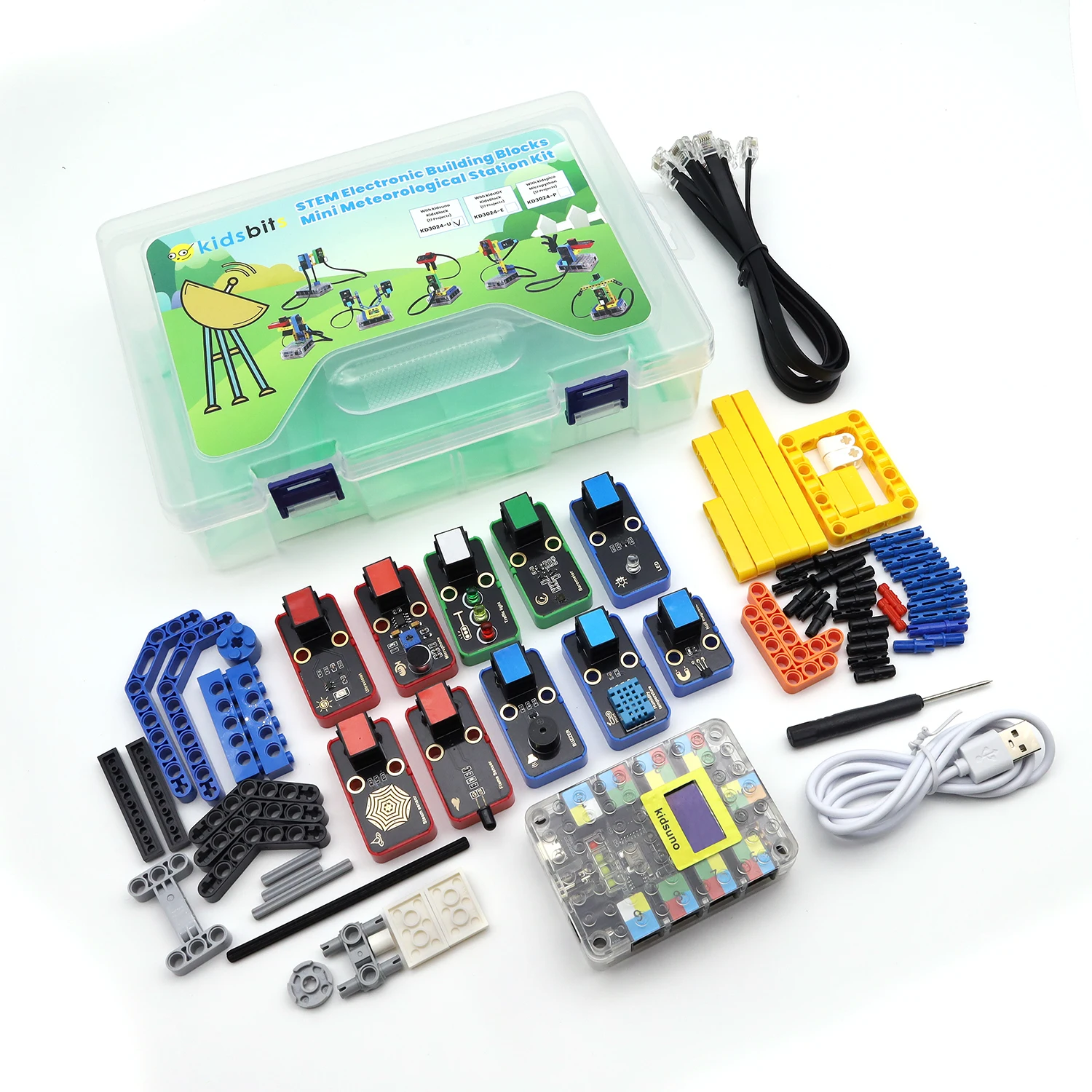
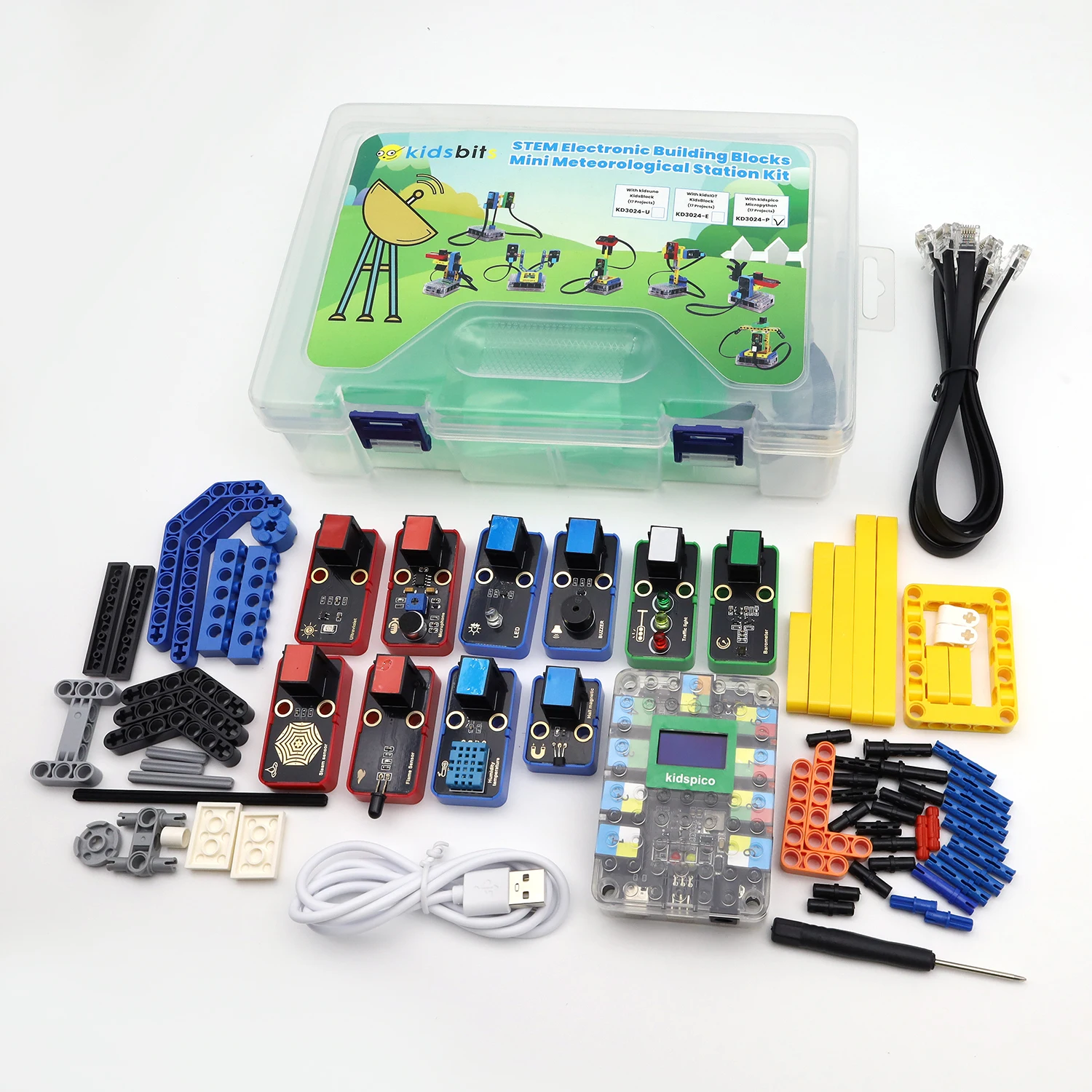
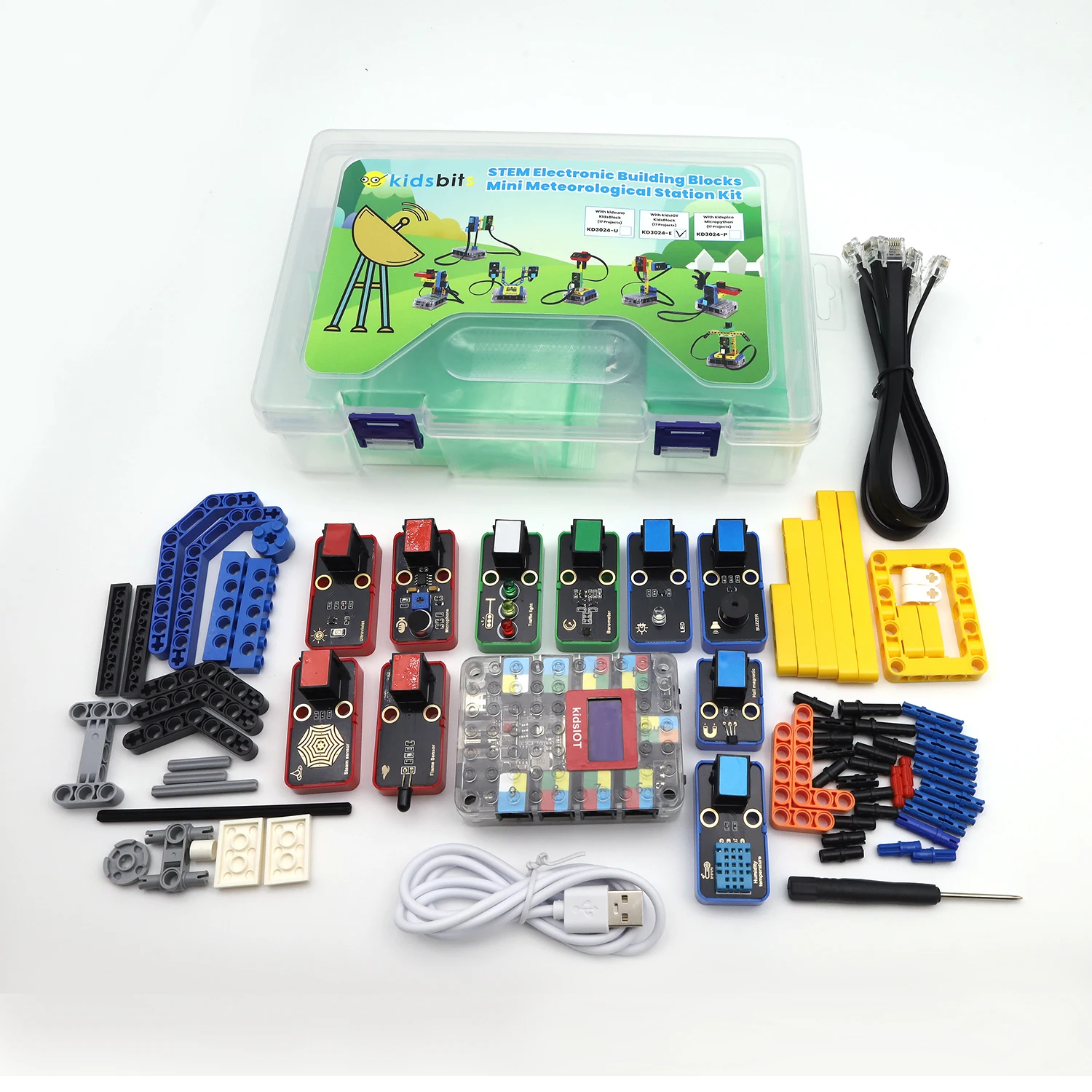
At the same time, the kit supports three mainboards: kidsUNO, kidsIOT, and kidsPico. As a result, learners can easily expand their projects and explore more advanced applications.
💡 Easy Programming for Beginners
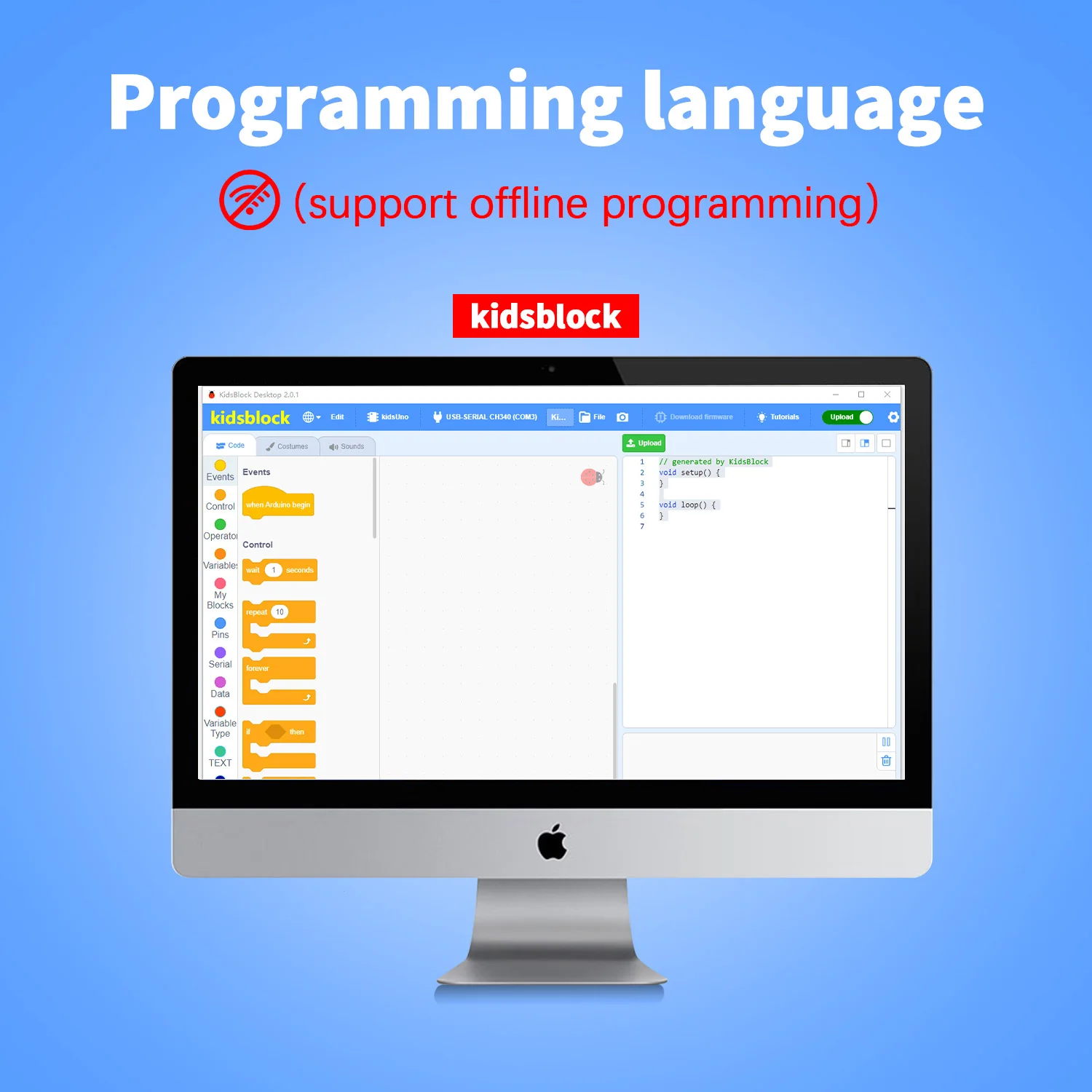
To begin with, KidsBlock uses a visual, drag-and-drop programming system. Instead of writing complicated code, users simply connect blocks together. Therefore, beginners can start programming immediately without prior experience.
Furthermore, this visual method makes learning more intuitive and enjoyable. As a result, children stay engaged while developing logical thinking skills.
Meanwhile, Python serves as the core programming language. Because Python is simple and concise, it is ideal for beginners. Over time, learners gradually build systematic programming knowledge and confidence.
🔧 Included Sensors and Modules
To support hands-on STEM learning, the kit includes multiple sensors and electronic modules, such as:
-
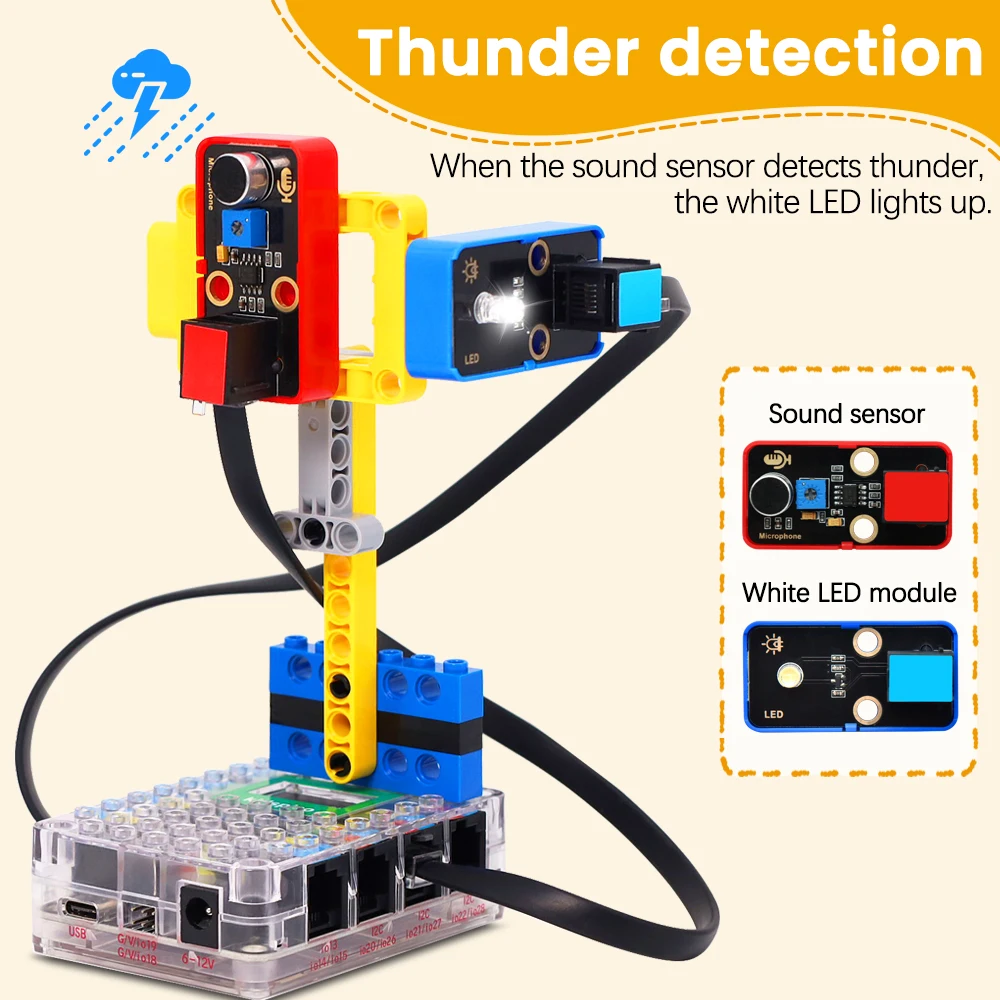
White LED module
-
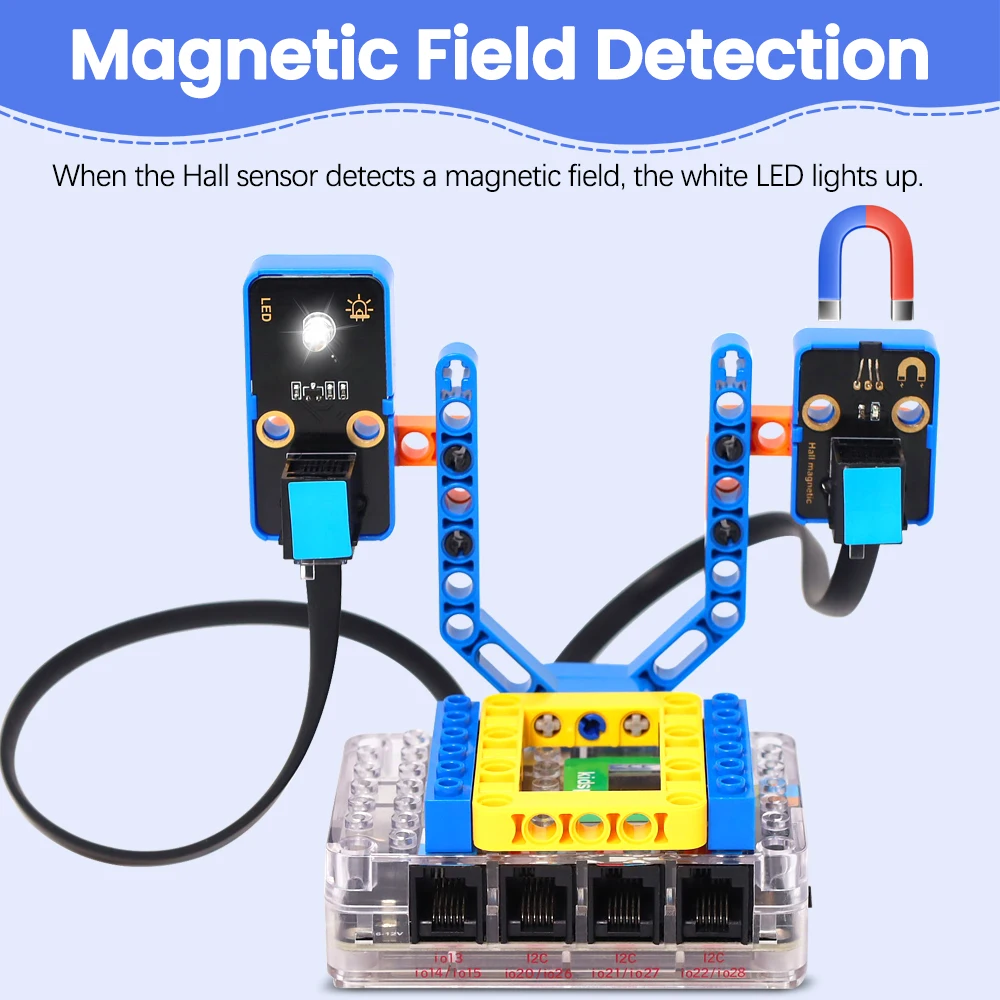
Hall sensor
-
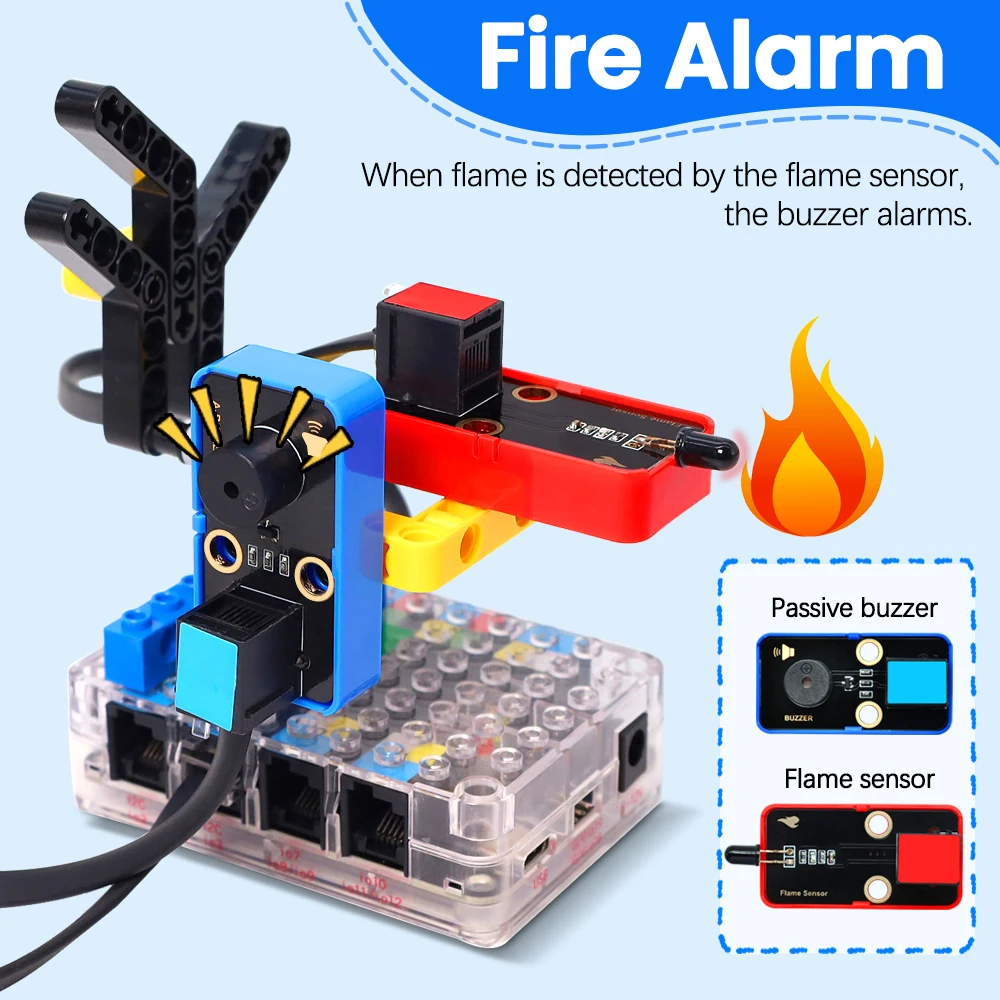
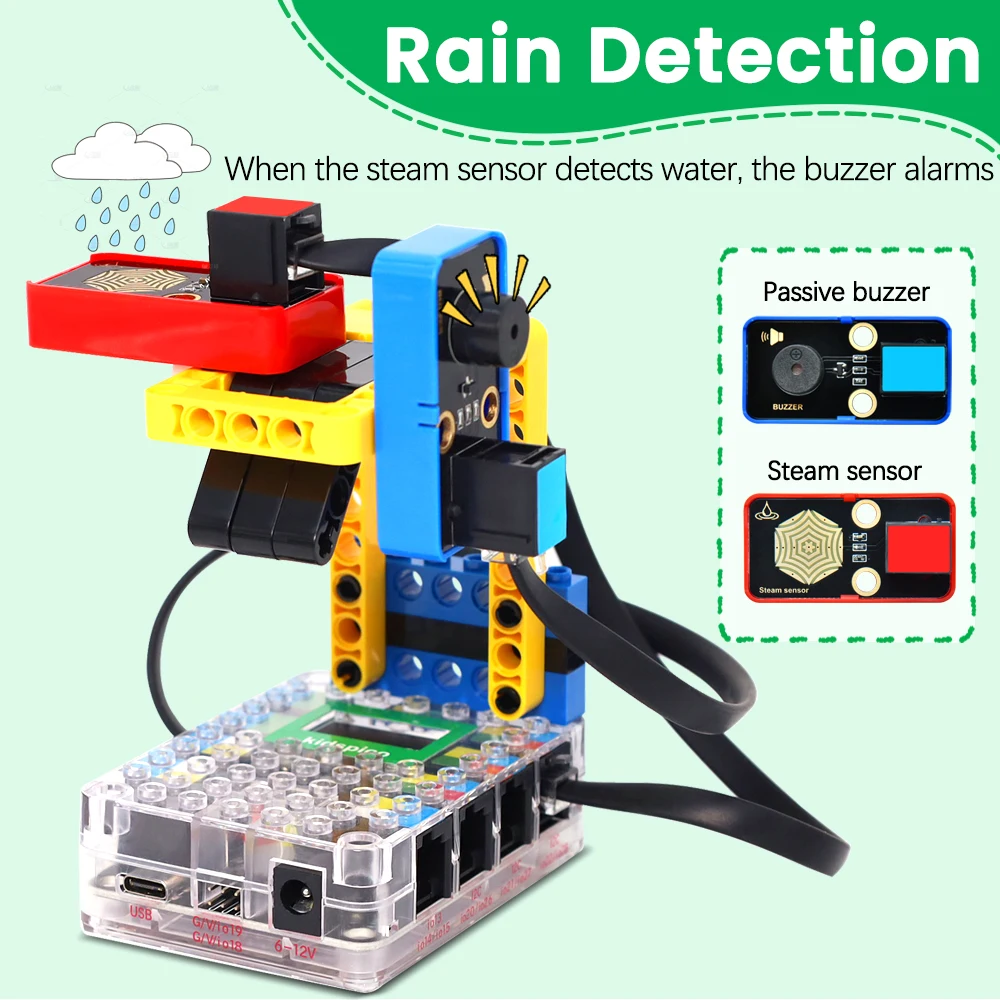
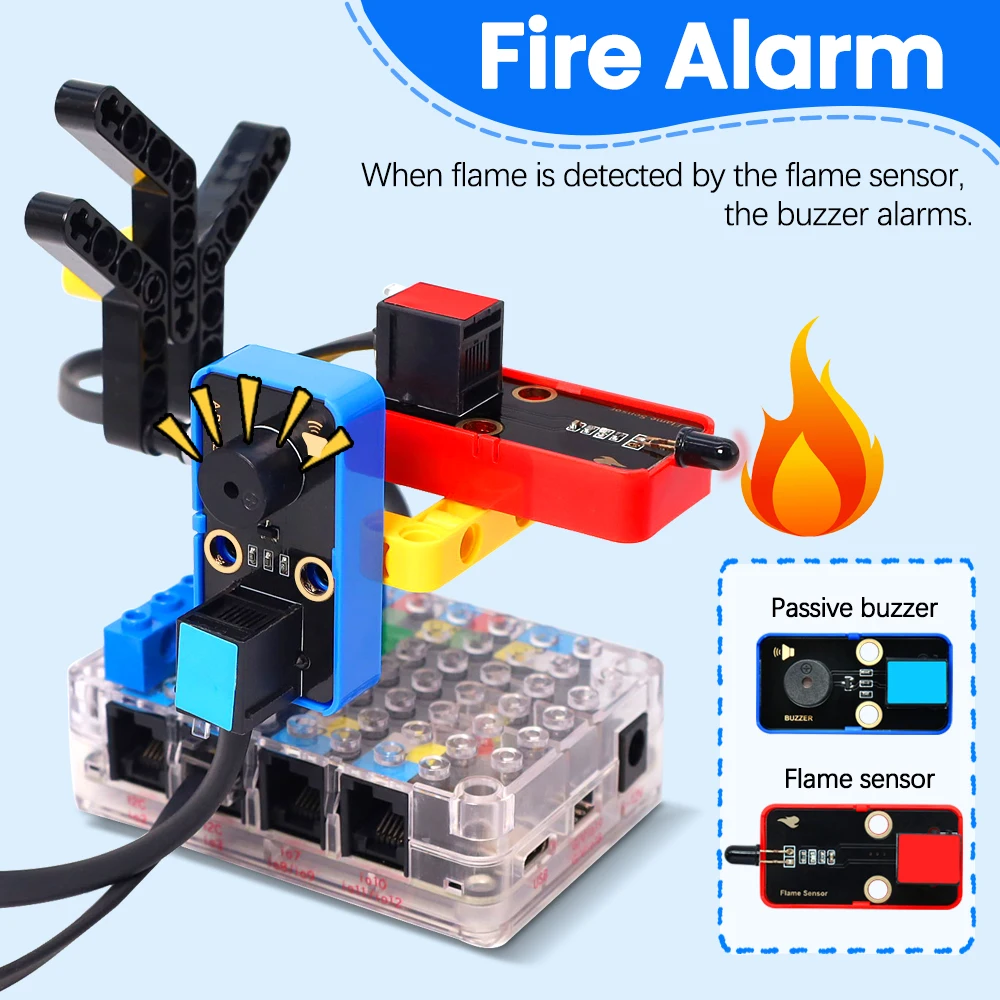
Passive buzzer
-
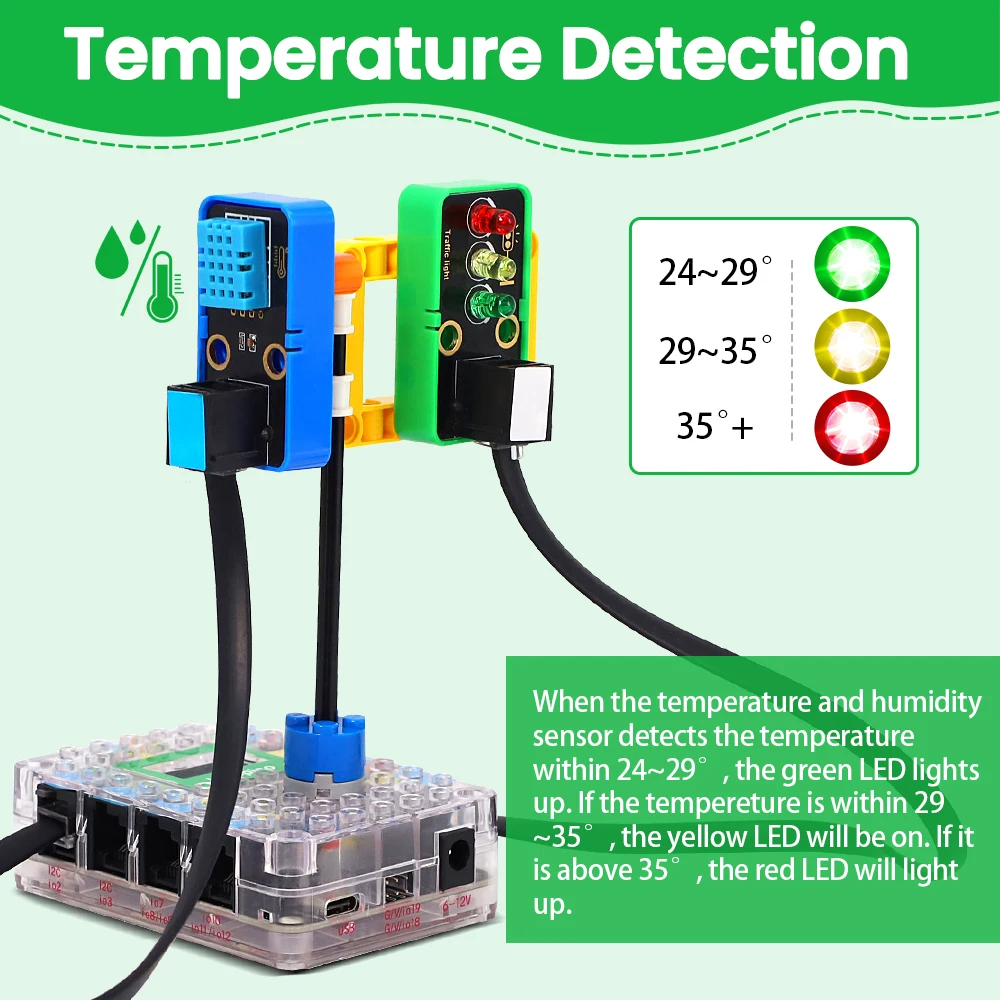
XH11 temperature & humidity sensor
-
Steam sensor
-
Flame sensor
-
Sound sensor
-
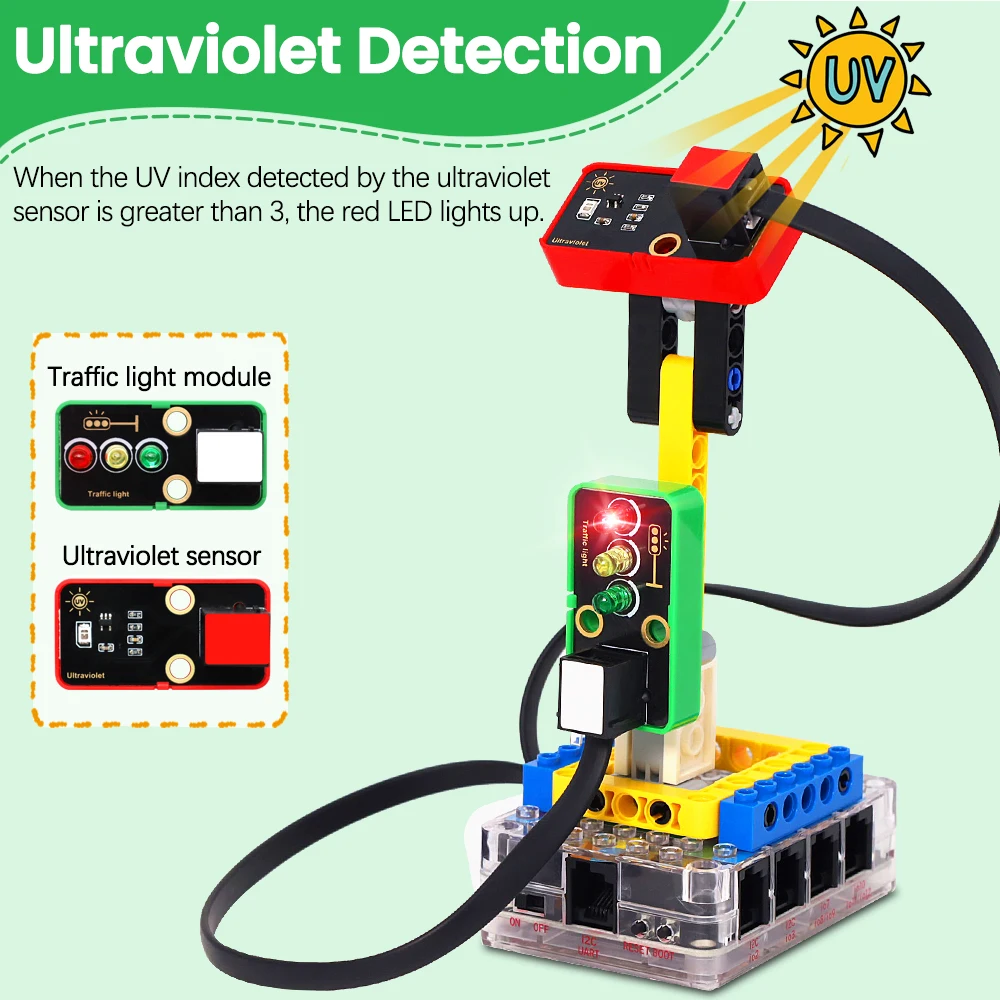
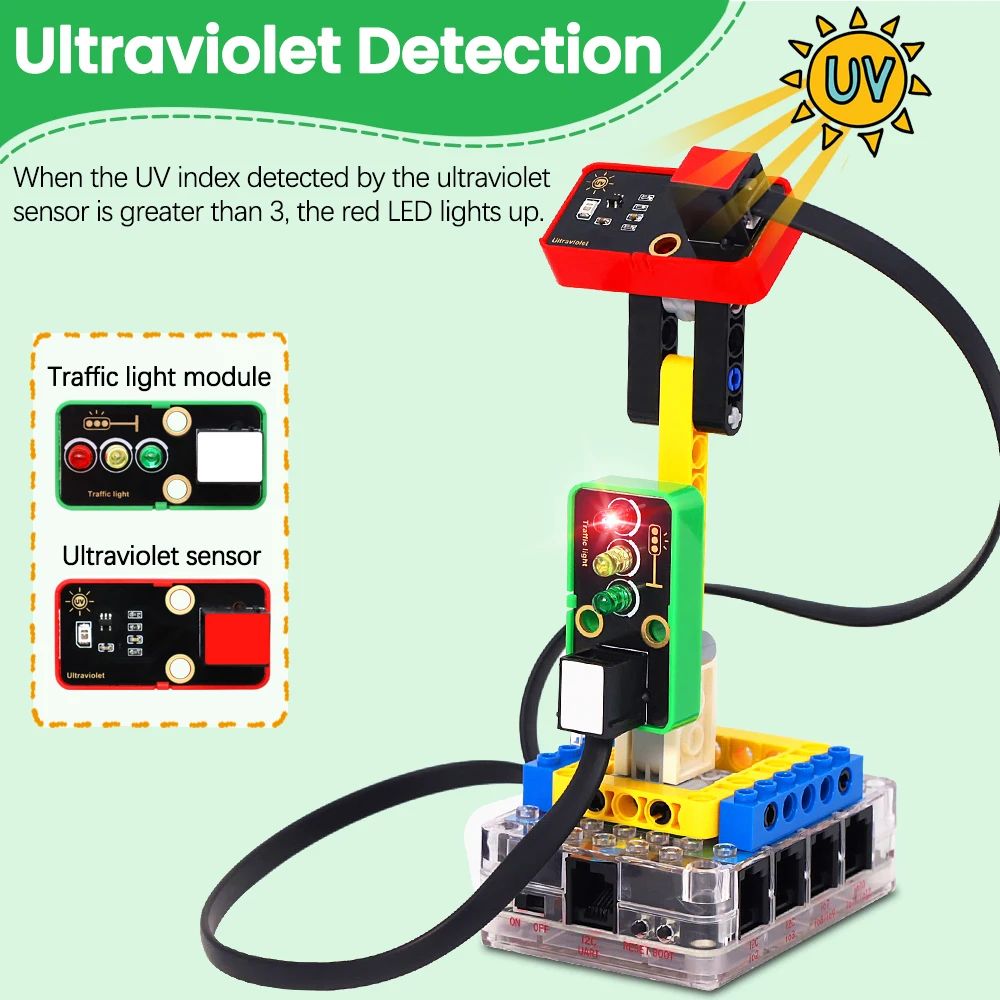
Ultraviolet sensor
-
Traffic light module
-
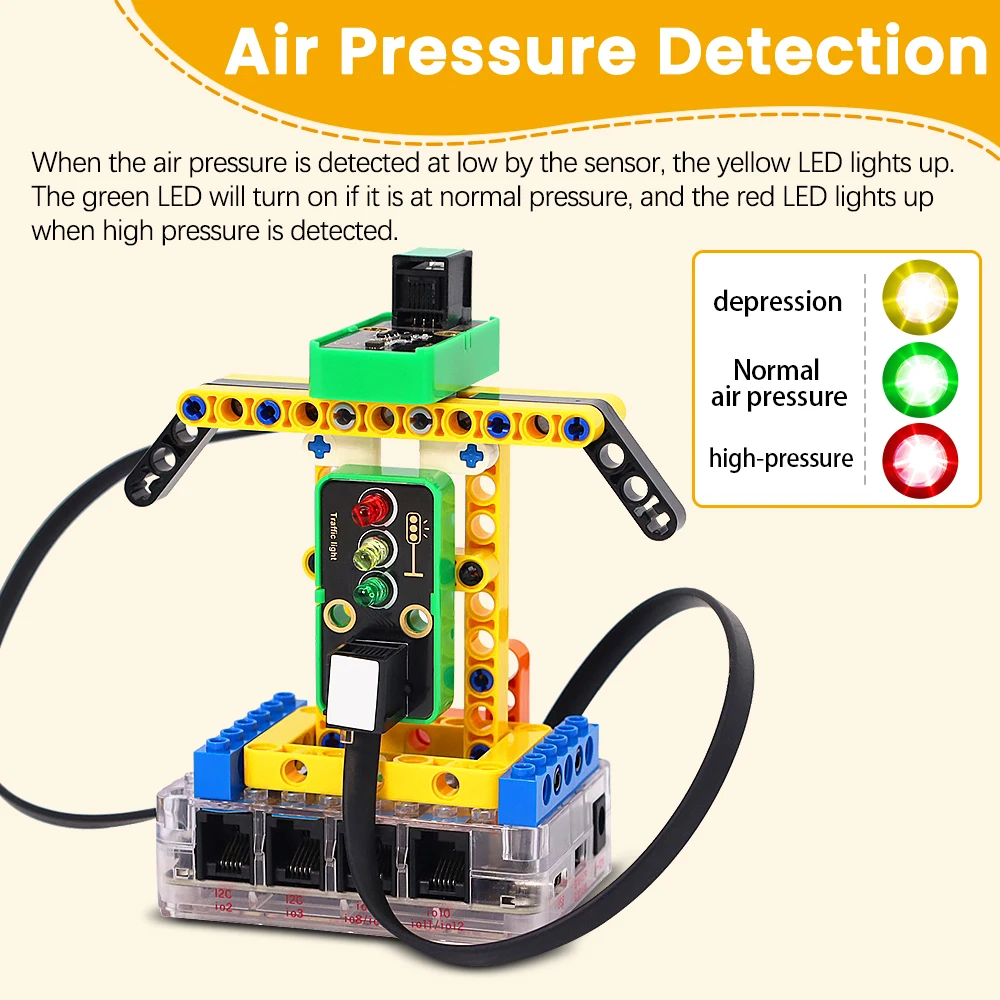
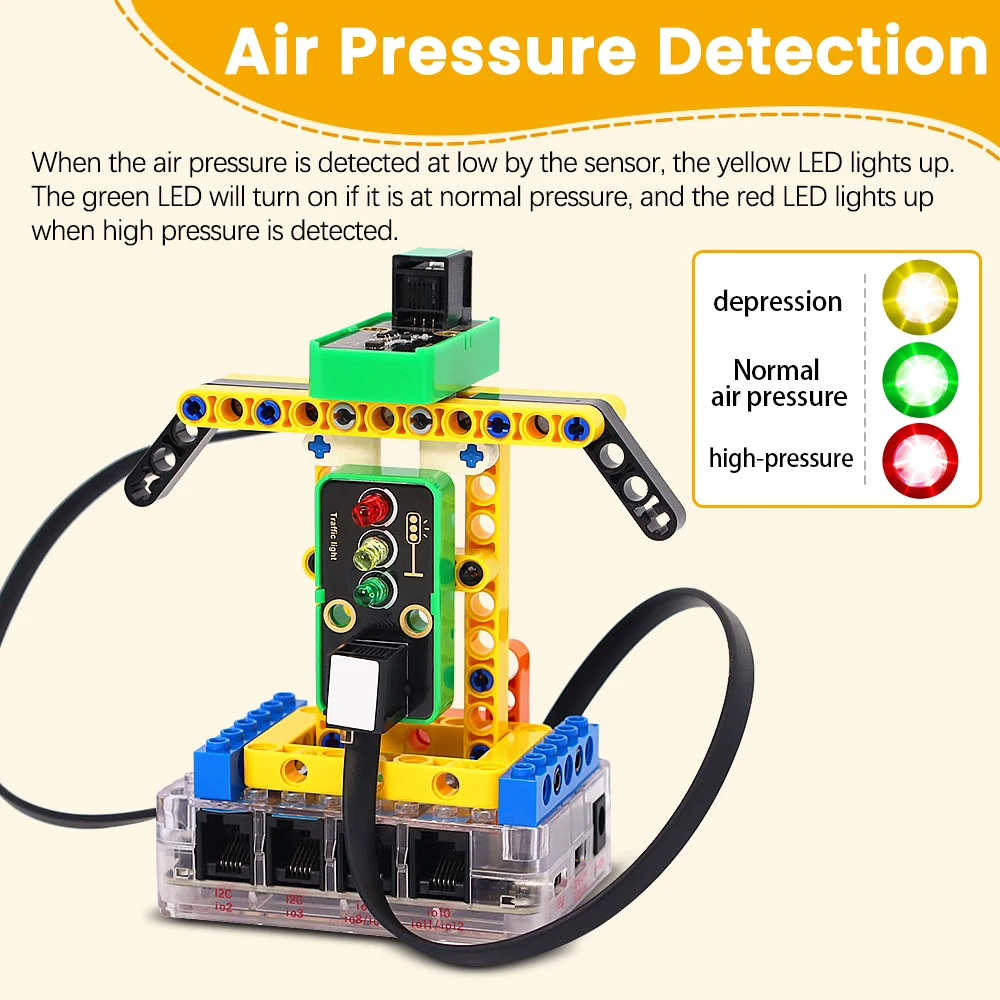
Air pressure sensor
Thanks to this wide selection, users can explore real-world environmental monitoring projects. Additionally, these modules allow repeated experimentation and creative expansion.
🧪 Hands-On Experiments
To reinforce learning, the kit includes 7 guided experiments, including:
-
Rain detection
-
Fire alarm
-
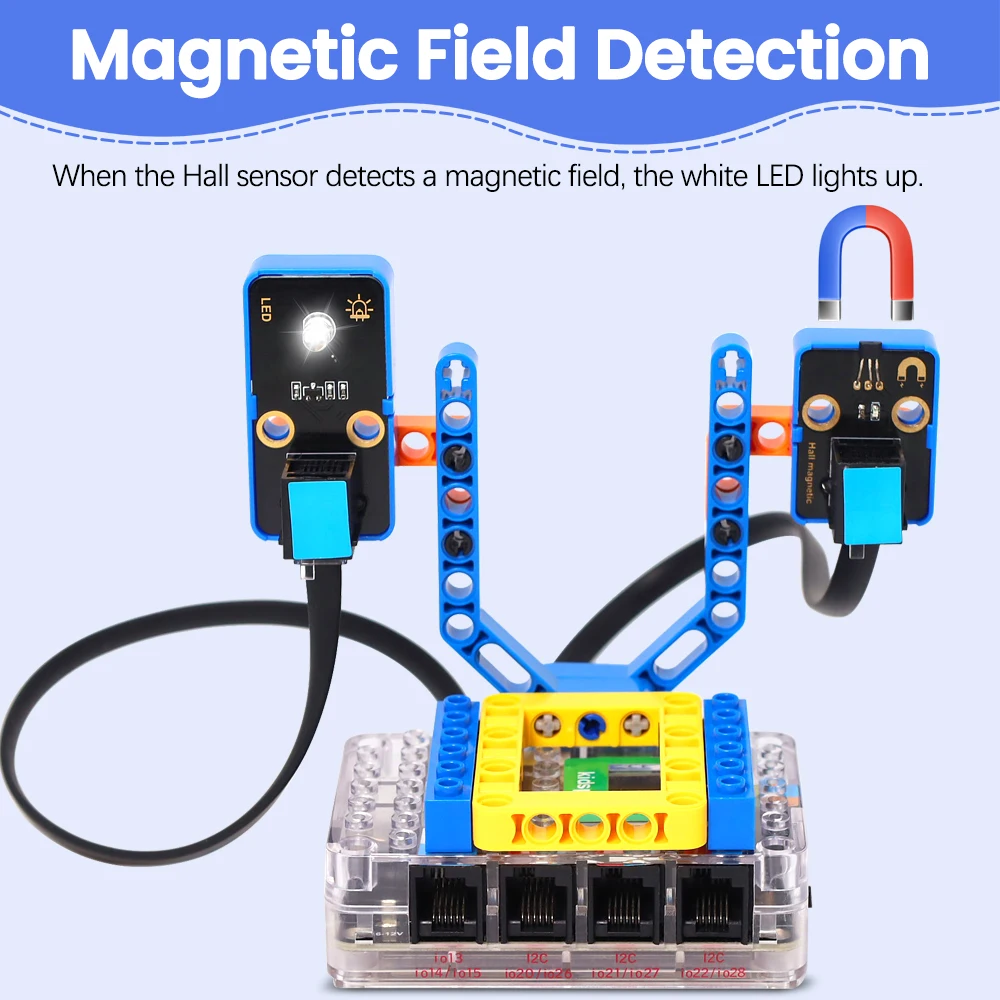
Magnetic field detection
-
Thunder detection
-
Temperature detection
-
Ultraviolet detection
-
Air pressure detection
Beyond these experiments, users are encouraged to design their own projects. As a result, creativity, problem-solving skills, and practical ability are significantly improved. Moreover, hands-on building makes STEM learning more effective and enjoyable.
📚 Tutorials & Learning Resources
For step-by-step instructions, please visit:
👉 //wiki.kidsbits.cc/projects/KD3024/en/latest/docs/index.html
However, if the tutorial link is not working, please feel free to contact us for support.
Additionally, learn more about the supported mainboards:
-
What is kidsUNO:
//wiki.kidsbits.cc/projects/KD2075/en/latest/docs/kidsUno.html#what-is-kidsuno -
What is kidsIOT:
//wiki.kidsbits.cc/projects/KD2076/en/latest/docs/kidsIOT.html#what-is-kidsiot -
What is kidsPico:
//wiki.kidsbits.cc/projects/KD2077/en/latest/docs/KidsPico.html#what-is-kidspico
✅ Why Choose This Kit?
✔ Encourages STEM education
✔ LEGO-compatible for creative building
✔ Beginner-friendly programming
✔ Multiple sensors for real projects
✔ Ideal for home learning and classrooms